Groundbreaking observations from a formidable figure in the field of industrial ecology on the fundamental role energy and materials play in the economy.
With the climate disaster upon us, many are revisiting the seminal work of a pioneer in the field of sustainability, INSEAD Technology Management and Economics Professor Robert (“Bob”) Ayres.
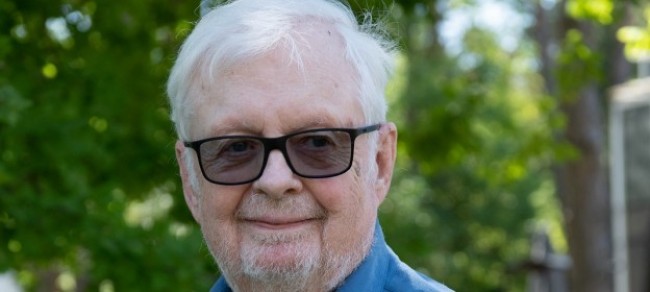
On 29 June, INSEAD celebrated Ayres’s 90th birthday by hosting a conference in recognition of his life’s work. Among the attendees were several of the 15 renowned academics who have supported Ayres’s nomination for a Nobel Prize in Economic Sciences.
Ayres’s extensive research underlines the importance of energy as a major driver for the economy. Since the 1960s he has ceaselessly warned that standard economic models misrepresent and underestimate the role of energy in the economy and its growth, and on associated environmental and climate impacts.
His work demonstrates that our economic and political systems have paid insufficient attention to the physical by-products of consumption and production – including pollutive waste and emissions. This oversight, including the lack of attention paid to minimising the physical consequences of economic activities, has fuelled the current environmental crisis.
Ayres’s findings and warnings, even though published in prestigious economic journals, were not truly heard nor sufficiently integrated in mainstream economic thinking.
In celebration of Ayres’s 90th year, we take a closer look at some of his fundamental observations.
Energy makes the world go around
For decades, Ayres has stressed that energy is uniquely necessary for any useful work to be done and therefore a fundamental prerequisite for any economic activity.
Ayres sees energy as the single important driver of the overall economy. Without energy, he argues, labour and capital cannot produce anything. One of Ayres’s mentees and co-authors, Professor Steve Keen, summed this up at the “Bob@90” conference with a metaphor: “Labour without energy is a corpse; capital without energy is a sculpture.” Or, more simply: a human without food or a machine without fuel cannot do any useful work.
Mainstream economic models regard “useful energy” as a product or an “intermediate good” created by an accumulation of capital and labour. This results in capital and labour being credited with almost all the value added in the economy, while the role of energy and its value-add are marginalised.
To address this error, Ayres introduces the thermodynamic concept of “exergy” – the share of energy flows that can be put to productive use. Ayres argues – in line with other towering figures such as Nicholas Georgescu-Roegen and Herman Daly – that economics must account for the first law of thermodynamics. This law states that energy transforms into different forms, but is neither created nor destroyed by human activity.
Ayres’s unique contribution was to calculate exergy measurements to arrive at a better understanding of material cycles – such as carbon, nitrate, and phosphorus – that are fundamental to life on earth, and thus obtain an improved understanding of the true economic value of energy and resources.
Based on such an approach, Ayres and Benjamin Warr were able to explain the “Solow residual” – the portion of economic growth that could not be attributed in Solow’s original growth model to increasing inputs of capital stock and labour supply over time. They concluded that the increasing use of energy was the missing explanatory factor that contributed to higher growth, higher productivity, as well as a more complex economy.
Distinguishing useful energy from wasted energy
From a thermodynamic perspective, energy consists of the sum of two components: a useful component (exergy) and a non-useful component (anergy). In every action or transformation a fraction of exergy is converted to anergy, but the sum total remains the same. Energy is thus not destroyed, but becomes less useful after every interaction in the global system, whether carried out by humans or not.
Economists tend to think of markets as places where certain exchange interactions – such as buying and selling – occur. Each party supposedly becomes better off after the exchange if it is voluntary. In theory, exchanges like that do not affect other “actors”.
But in the real world “third parties” can be affected, leaving them better or worse off. These unintended consequences are called externalities. Examples of externalities include the dissipation of toxic waste materials (pollutants) into the environment or the spread of an infectious disease (like Covid-19).
Ayres first sounded the alarm on these harmful by-products of production and consumption more than 50 years ago, in a widely cited article in the American Economic Review entitled “Production, Consumption and Externalities”. Together with co-author Allen Kneese, Ayres pointed out that economic models of physical processes cannot neglect the physical characteristics of materials and transformation processes. The models need to be “opened up” to fully account for the material flows associated with economic activity.
In his work on material cycles, Ayres relies on mass-balance techniques to trace the flow of materials in the environment. The method estimates emissions by calculating the difference between known material inputs into the process and its useful material outputs.
One of Ayres’s landmark studies applied this technique to calculate pollution levels in the Hudson-Raritan basin on the East Coast of the United States. Ayres used agricultural and industrial production data to reconstruct the accumulation of pollution in the basin. This conclusively demonstrated that pollution levels were much higher than previously estimated through spot checks. This work inspired similar studies in river basins around the world, resulting in significant policy changes.
The efficient use of resources
One of Ayres’s early contributions was a book published in 1972 about alternative technologies – including electrical propulsion – as future substitutes for internal combustion engines. Ayres observed that the energy from fossil fuels converted into the powertrain of an ordinary car was extremely inefficient, yet the auto industry and society in general accepted this waste as normal. It is only recently that the industry has taken on board his observations by greatly improving the efficiency of thermic engines and making a radical shift to electric cars.
More recently, Ayres, in collaboration with Eric Williams, demonstrated the high inefficiencies involved in the manufacturing of semiconductor devices, which are now part of even the most basic industrial products. They found that geologically scarce metals, such as “rare earths”, are being recklessly used up without any recovery or recycling. This, he notes, is just one example of an unsustainable and increasingly complex manufacturing process that requires plenty of energy and generates considerable byproducts.
Ayres makes clear that the more complex the economy becomes, the greater the risk of it becoming unsustainable. Reversing these trends is the major challenge facing our planet today. Applying Ayres’s insights on exergy and material flows will be crucial in guiding current environmental and economic policies towards a more sustainable future.
Reid Lifset, Honorary Member, Yale School of the Environment; Jeroen van den Bergh and Gara Villalba Mendez, Institute of Environmental Science and Technology, Autonomous University of Barcelona; Uwe Schulte, Senior Advisor of the European Governance and Sustainability Center, The Conference Board; Atalay Atasu, Ludo Van der Heyden, Luk Van Wassenhove, and Prashant Yadav, Technology and Operations Management Faculty Area, INSEAD. With the collaboration of Brian Henry, PhD.