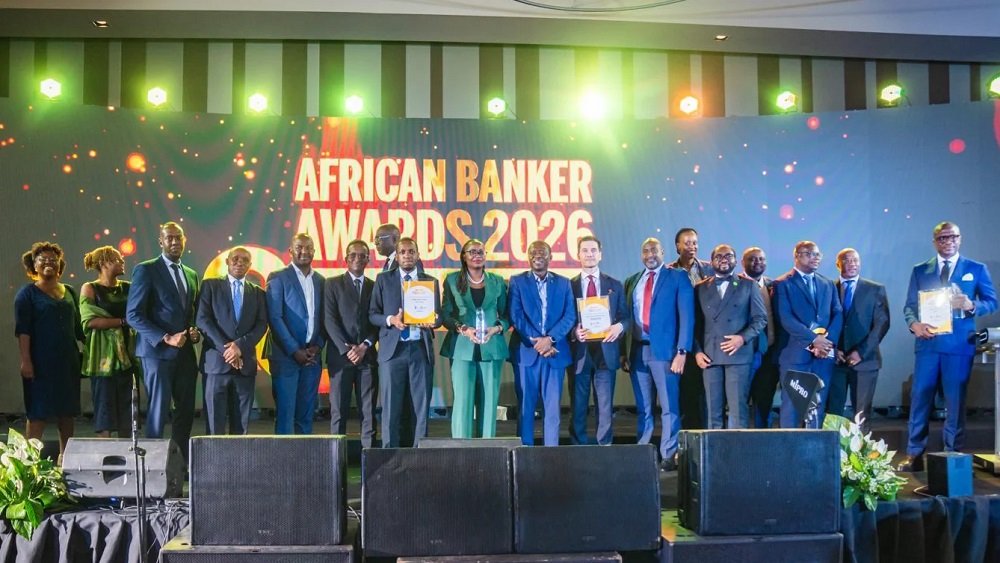
The 20th edition of the annual African Banker awards was held in Brazzaville Congo, on the sidelines of the African Development Bank (AfDB) annual meetings. Banking behemoths on the continent carted home different categories of awards. Key takeaways from the organisers include, lenders whose operations engender financial sovereignty, promote infrastructure projects, and show eclectic and continental spread, which reflect a healthy banking sector. This translates to a situation where a given banking institution’s operation directly impacts on the economic growth and transformation of its immediate environment.
Hence, the organisers said honourees are banks and bankers from across the continent in a clear reflection of a financial sector that is not only healthy and resilient but one that is maturing and contributing significantly to the continent’s economic development.
Eighteen winners were announced on a night of recognition, celebration and acclamation. Omar Ben Yedder, chair of the awards committee, emphasised the importance of financial sovereignty for banks in Africa.
“Nothing significant will move on this continent without strong banks and strong financial institutions at the centre. The coming decades will be defined by how courageous our business leaders are, and by how willing our banks are to walk with them into new sectors, new markets and new models of collaboration,” Yedder explained.
That strength and ability to structure and intermediate deals that impact on economic development and transformation were evident in the list of winners especially as deals around infrastructural development took home many awards from the Red Rocket Holdco renewable energy deal in South Africa, to the innovative NBET Finance Company PLC N501.02 billion ($346.7 million) bond issuance to resolve the debt crisis in Nigeria’s power sector, and the successful Arise IIP Exit/Equity raise to accelerate the push for industrialisation on the continent.
Ecobank’s announcement as Bank of the Year, presented by former lifetime achievement winner, Felix Bikpo, chairman of the African Guarantee Fund, was in many ways validation and affirmation for the pan-African bank’s full return to growth and profitability, as well as payment of dividends to its shareholders after several years.
Surprisingly, Ecobank was the only Nigerian bank that received an award, a development that threw up mind-boggling concerns among financial experts about the economic impact of the country’s scores of big lenders which have been posting trillions of naira as gross earnings, profits before-and-after taxation (PBT and PAT) year-on-year.
Some financial experts told Business A.M. that the impressive rise of Payment Service Banks (PSBs) and fintechs like OPay, Moniepoint, and PalmPay is a direct response to the operational, technological, and infrastructural shortcomings of traditional Nigerian banks. The gap between traditional banks and PSBs stems from several distinct core banking and service differences: legacy systems vs. modern tech: running on older, rigid information technology (IT) architecture that struggles to handle millions of simultaneous transactions.
These are against fintechs utilisation of agile cloud-based systems capable of processing instant transfers with significantly higher uptime.
The other factors financial experts have advanced include failed transactions & downtime: long queues at physical branches, hanging ATM machines, and frequent network downtimes on traditional banking apps have historically pushed millions of Nigerians to seek more reliable daily payment alternatives.
Network transparency: fintech apps differentiate themselves by offering features that show the receiving bank’s network status before you initiate a transfer, allowing users to avoid sending money into ‘pending’ voids.
“Additionally, the PSBs stripped away the intimidating paperwork, high maintenance charges, and strict tier-requirements of traditional banks, making digital accounts easily accessible to everyone from corporate professionals to rural traders,” one analyst said.
In the individual categories, Zambia’s Situmbeko Musokotwane won the coveted Minister of Finance of the Year, highlighting the country’s robust economic turnaround. DRC’s Central Bank Governor, André Wameso, was also recognised for supporting the growth of its banking sector as well as creating the conditions that supported its recent eurobond issuance, the last ‘big’ African country to tap international capital markets.
Two banks from DRC were also on the roster. TMB won Best Bank in Central Africa; and Rawbank won the The Affirmative Finance Action for Women in Africa (AFAWA) Bank of the Year Award. The AFAWA awards which is in its fourth year recognises and celebrates African financial institutions that are making significant strides in advancing access to finance for women-led businesses across the continent.
Investment banker and now president of the Banque Ouest-Africaine de Développement (BOAD), Serge Ekué, won the prestigious African Banker of the Year.
The 2026 edition of the African Banker awards was organised by African Banker magazine and IC Events under the high patronage of the African Development Bank.