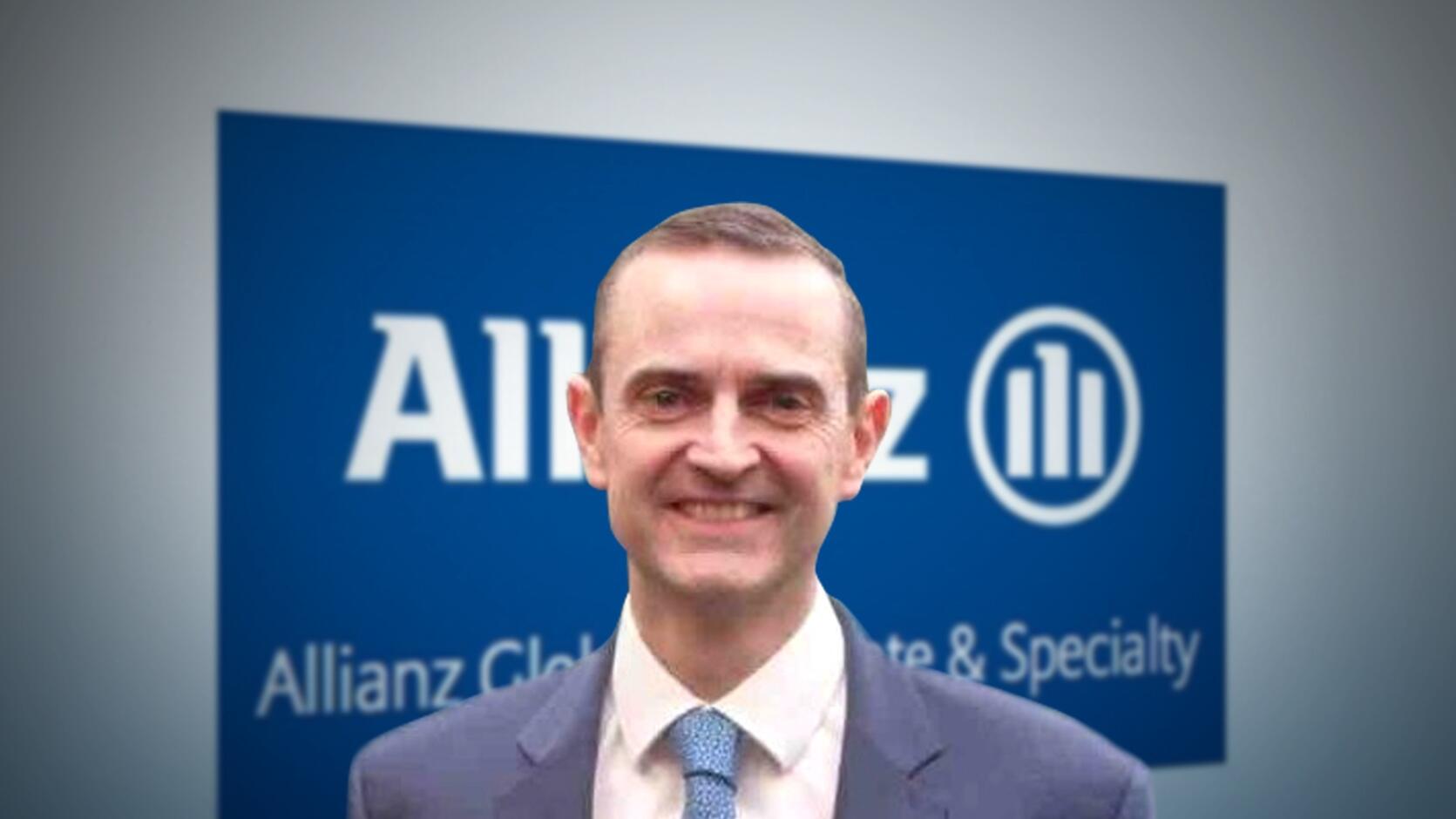
TOM FADDEN
Tom Fadden is the global head of aviation at Allianz Global Corporate & Specialty
The aviation sector has pledged, like most, to reach Net Zero by 2050. From the International Air Transport Association (IATA) commitment to ‘Fly Net Zero’ to the declaration from the International Aviation Climate Ambition Coalition at COP 26, the air transport industry is not short of promises to dramatically reduce its carbon footprint. Compared with some other sectors, aviation is a relatively small contributor to global greenhouse emissions – in 2019 it was estimated to account for around 2.5% of the world’s CO2 emissions. However, it is also one of the fastest growing, and there is little doubt that every major airline and aerospace manufacturer in the world now has its environmental impact front and centre, a topic that is not creeping but is vertiginously ascending the corporate priority ladder. But what does the flight path to a more sustainable future look like for the industry? And how realistic are the lofty goals that have been set?
The first, and most obvious, conclusion is that there is no silver bullet. Potential solutions abound (more on those below), but there is no answer likely to single-handedly push aviation to net zero. The second, is that pressure groups and activists aside, intermediate decarbonization goals are linked to commercial aims – stating the obvious, the more efficiently an aircraft burns fuel the better for all concerned. Longer term, however, the aviation industry may need assistance from both its insurance, and other financial, partners in de-risking the transition as the costs associated with change are a significant, but not insurmountable, barrier to progress.
Clearing the runway for Sustainable Aviation Fuels
The sector certainly abounds with initiatives to aid the transition. The first likely to have a tangible effect is Sustainable Aviation Fuels (SAFs), with many airlines looking to increase their usage (10% is a commonly selected target). As part of the ‘Fit for 55’ package, which sets out an initial target of a reduction in emissions by 55% in 2030 (compared with the level of 1990), the EU will require every flight leaving its airports to carry a minimum amount of SAF (2% in 2025 and 5% by 2030). Meanwhile, the US wants to increase the production of SAFs to three billion gallons per year by 2030. While these commitments and progress is welcome, the production of these alternative fuels remains small.
SAFs can be split into three buckets – those recycled from waste products (for example, from used cooking oil), those created directly from crops, and synthetic fuels (created by processing recovered carbon dioxide with green electricity). With the commercial aviation world requiring approximately 95 billion gallons of traditional kerosene aviation fuel in 2019, according to IATA, the recycled or grown SAFs suffer from a lack of available resources (short of diverting all global agriculture towards the endeavour) while large scale production of synthetic fuels will require cheap, high volume green electricity.
The price of SAFs is double that of fossil fuels price today, so the dramatic ramp up of SAF production will require significant capital expenditure and initially government incentives are likely to be required to offset the price premium. It will be worth the time, cost and effort. SAFs can result in an 80% reduction of lifecycle emissions (as the only true emissions come from processing steps). The technology is proven and certified (having already been used on over 200,000 flights) and no changes are required to existing aircraft – SAFs can be used interchangeably with kerosene.
There is also a key role for insurers to play in helping their clients de-risk the transition to SAFs – supporting the construction of new infrastructure and the adoption of different fuels. For example, ensuring the construction of SAF manufacturing facilities, or the installation of SAF refuelling infrastructure at airports. Insurers may even be able to assist their clients with hedging to allow airlines to protect themselves against SAF price fluctuation in future.
Ready for take-off? Electric and hybrid aircraft While SAFs will be the short- to medium-term workhorse, perhaps the more exciting future developments are the new air travel technologies that remain nascent but capture the imagination more than a simple fuel switch. The electric aircraft revolution is firmly underway with more than 200 global companies developing concepts. Several have even completed test flights and the appeal is obvious: electric aircraft have no climate impact during operations. They are a thrilling proposition.
However, the biggest issue remains technological maturity – in particular battery density and the associated range. Batteries will need to be at least five times denser than current lithium-ion batteries and it is not currently thought that true electric aircraft will ever have a range greater than 500 to 1,000km – although it is estimated that half of all global flights are shorter than 500 miles. They also remain relatively far off with 2040 probably a realistic date for entry into service. There will also be an arduous process of certification of such new types of aircraft, with regulators (quite rightly) needing to know that the new technology is safe before allowing consumer usage – more on this below.
So, what for the long haul? The answer may rest with hybrid aircraft. A concept familiar with road vehicles, but likely to be a blend of electric technology and hydrogen propulsion rather than involving traditional fossil fuels. This is certainly the approach being taken by Airbus, which hopes to develop the world’s first zero emission aircraft by 2035, with its three ZEROe concepts. The aircraft are powered by hydrogen combustion through modified gas turbine engines. In addition, hydrogen fuel cells create electrical power that complements the gas turbine, resulting in a highly efficient hybrid-electric propulsion system. While not as efficient as pure electric aircraft, hybrid aircraft will be able to provide a range out of reach of electric alone. They will also be able to carry a greater number of passengers and offer a realistic alternative to kerosene-powered long-haul routes.
Such hybrid aircraft may seem like nirvana, but they are not without drawbacks. Hydrogen storage and usage of course brings safety concerns. While hydrogen processing has been used for years in oil refineries and the fertiliser industry, aviation represents a new road to travel. Happily for its passengers, the aviation world is safety obsessed. All parts of the industry (transport, storage, usage etc.) must pass rigorous safety tests. Current aviation protocol is based on the fossil fuel powered jet engine – a technology that has been around for decades. There will need to be a wholesale shift from regulators and companies to embrace a new safety environment.
Insurers can of course help by providing cover for new and test products and assisting their clients in de-risking the evolution to new technology. This could include insuring electric and hybrid aircraft types through their testing phases and as they move into service, or creating an insurance safety net for a company’s R&D operations. Such a technological leap is not without risk and companies (both manufacturers and end users) will hugely benefit from the support of their trusted partners as they adapt for the future.
Don’t forget marginal gains and design efficiencies
While they are the future, both electric and hybrid technologies will not be available tomorrow and, along with SAFs, there are shorter-term more mundane gains to be made from the aviation industry. One of the key areas for such gains is operational efficiency and there is nothing to stop all aircraft operators looking at this side of their business and making changes now. A combination of operational levers can drive emission reductions at scale. Examples can include pre-flight via mission tailoring and fuel planning (i.e. ensuring the right aircraft is being used for the right flight); on the ground via traffic management (to reduce the time engines are on in traffic); during approach and descent via better air traffic management (to reduce holding time) and adapting climb and descent procedures (to spend longer at optimal cruise altitude); during cruise via dynamic routing (responding to changing weather patterns); and after flight via preventative maintenance and cleaning.
There are plenty of airlines already embracing these marginal gains. Over 40 airlines have partnered with Sky Breathe – big data technology that uses artificial intelligence (AI) to analyze billions of data records from all types of data sources, including flight data recorders, operational flight plans and Aircraft Communications Addressing and Reporting Systems (ACARS), before combining them with environmental data from actual flight conditions (such as payload, weather conditions, Air Traffic Control (ATC) constraints, etc.). It then identifies the most relevant saving opportunities and provides a series of recommended actions which it claims can reduce total fuel consumption by up to 5%.
There are also improvements that can be made to existing aircraft design to drive fleet efficiencies. This mostly comes through the incremental introduction of enhancements (for example, wingtip, blended winglets, or increased wingspan) and improvements to engine efficiency. None of these improvements will drive the industry to net zero, but they will all play a vital role in reducing emissions intensity of the aircraft and inch aviation further on its journey towards a more environmentally friendly future.
This is the broader picture in a nutshell. There are many exciting developments each with a part to play. Some will grab the headlines and appear to be futuristic leaps; others will go unremarked but are just as important. No one development can help the industry singlehandedly. Instead aviation will look at multiple solutions and there are risks and barriers to each. Given the uncertainty, there has never been a more important time for insurers and other financial partners to support their clients as they take the steps necessary for a net zero future.