By Ben Eguzozie, in Calabar
Calabar and other Eastern Ports are on the verge of significantly ramping up their maritime business as agencies operating at the ports increase adherence to standard operating procedures (SOPs).
This is the outcome of recent port reforms, series of trainings, and advocacies by the Nigerian Shippers’ Council (NSC), Technical Unit on Governance and Anti-Corruption Reforms (TUGAR), Independent Corrupt Practices and other Offences Commission (ICPC), in collaboration with the Maritime Anti-Corruption Network (MACN) and Convention on Business Integrity (CBI), which have built momentum by working to institutionalise ongoing port reforms.
Key elements of these efforts include facilitating collective action from the private, public and civil society sectors and working with port agencies to strengthen their compliance function.
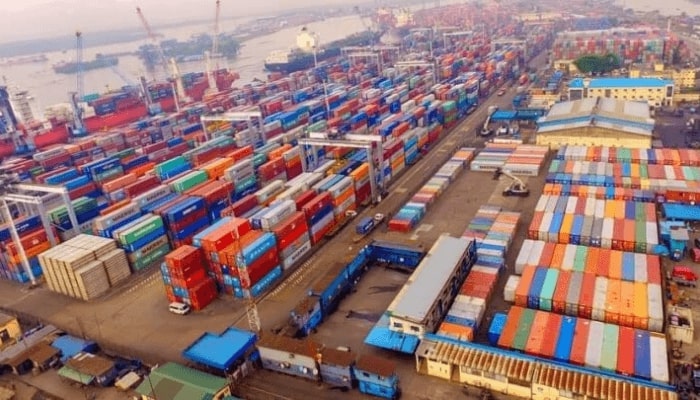
The Eastern Ports comprises six seaports: Port Harcourt Port, Warri, Koko, Calabar, Onitsha Inland River Port, Onne Port (where the Federal Lighter and Ocean Terminals – FLT, FOT are domiciled). These ports have generally laid comatose for many decades on account of a strange federal government policy perception that keeps most port activities in the Lagos area. The latter’s three ports have remained congested year-on-year for several decades.
According to Vivek Menon, associate director, global operation and industry engagement at MACN, it was commendable that Nigeria was witnessing significant reductions in the cases of noncompliance to SOPs at the Nigerian ports. For example, in 2019 incidents of noncompliance to SOPs by port agencies was 266. By 2020, it dropped to 128, in 2021, it was only 84, while it came down significantly to 51 last year.
Menon speaking in Calabar, Cross River State during a capacity-building on compliance function for government port agencies, said, incidents of non-compliance to SOPs by port agencies at the Nigerian ports, cost huge economic strain on the economy.
The Nigerian Economic Summit Group (NESG) estimates that Nigeria’s maritime sector, if properly harnessed, could generate N7 trillion revenue yearly and create up to 4 million jobs over the next five years. This consideration is especially important under the current Nigerian economic landscape, which continues to deteriorate.
Emmanuel Bosah, programme manager at the CBI Nigeria, said in a note to Business A.M. that, incidents of non-compliance to standard operating procedures by port agencies have thrown up challenges in ports administration where users and operators at the ports continue to face lingering challenges that include: infrastructure gaps, regulatory inconsistencies, the duplication of roles by Ministries, Departments and Agencies (MDAs), high rate of infractions by MDAs, cumbersome cargo clearing processes, absence of indigenous ship ownership, foreign exchange scarcity, multiple taxation, and poor state of roads to the ports.
These challenges, particularly in cargo clearance processes and nodal transportation, have created circumstances of excessive delays to import/export processes, red tape, rent seeking and corrupt demands, human and vehicular congestion in and around the ports, and illegal charges leading to high costs of business operations, Bosah added.
Estimates indicate that the economic costs of these inefficiencies to the Nigerian government and private sector is as high as $7 billion annually. The Lagos Chamber of Commerce and Industry (LCCI) further calculates these annual losses to amount to N600 billion in customs revenues, $10 billion in non-oil exports, and some N2.5 trillion in corporate revenues, including a drop of 38-40% in industrial capacity utilisation.
However, the government-led reforms in infrastructure, policy, and operations, especially through the establishment of a ports ombudsman —the Ports Sector Task Team (PSTT) —has brought about some sanity. Presently, port administration is such that port users are able to demand, track, and ensure greater compliance with standard operating procedures (SOPs) by port agencies. This situation has led to a steady decline in the incidence of corrupt demands in vessel clearance processes, while governmental capacity to establish compliance systems and collaborate with the private sector and civil society to improve trade flows and the ease of doing business continues to be strengthened.
According to Victoria Tarfa, principal manager corporate and strategic communications at the Nigerian Ports Authority (NPA) head office, Lagos, there are severe consequences now for noncompliance to SOPs by any port agency, unlike in the past.
Tarfa, who is also a key member of the PSTT, informed that, “there are a lot of progress and impact that the reform has taken place in the port sector”.
The PSTT is made up of Nigerian Shippers’ Council, NIMASA, ICPC, TUGAR, NPA, and private sector groups represented by MACN and CBI, and civil society groups.
Despite all these successes, Tarfa concedes that a lot of work still needs to be done to drive down the SOP compliance framework. There are still lots of undocumented trades going on in Nigeria. But Tarfa gave assurance that the nation was making significant progress in its ports sector to come up to speed with the international best practices in maritime business.
For Jane Onwumere, head of the TUGAR, which is domiciled in the Presidency, she said the port agencies’ training across the regions will improve port operations in Nigeria. “Since the conduct of the Corruption Risk Assessment (CRA) in 2013-2014 in the six Nigerian seaports of Lagos (Apapa and Tincan), Port Harcourt, Onne, Calabar and Warri), TUGAR and the Port Steering Committee (PSC) of the CRA project have been working assiduously in driving the implementation of the recommendations/ integrity plan of the CRA report,” she said.