POLITICAL COMEBACK for disgraced, disparaged, disenfranchised or previously dismissed politicians in Africa is usually not an easy one. It has taken very interesting forms in contemporary times, with the consequences varying from the mild to the melodramatic and sometimes to the malignant. Often, political alliances that were apparently built on friendship or strategic power games turn out to produce personality clashes between two political heavyweights in power. The aftermath of such clashes has resulted in battles in the form of courtroom litigation, cooked up legislation or outright combat on the battlefield. What usually begins as disagreements between two powerful titans in the palace have turned out to become like when two elephants fight: the grasses suffer.
From Pretoria to Khartoum, Abuja to Dakar, to Juba, the crisis that led to the initial ouster of one prominent politician or another has raised the stakes, leading to what could be described as unintended consequences, the outcome becoming new political phases in such circumstances. Nigeria’s former Vice President Abubakar Atiku fought a landmark, year-long legal battle while in office against then-President Olusegun Obasanjo. Abubakar was a great relevance, recognised for his powerful influence in the party that brought him and Obasanjo into the office. In late 2006, after Atiku reportedly opposed Obasanjo’s controversial bid for a third term in office, Atiku defected to the Action Congress (AC), an opposition party, to run for president. President Obasanjo and the ruling party declared Atiku’s vice-presidential seat vacant and stripped him of his official security and privileges, whereupon Atiku sued Obasanjo, challenging the legality of the sack and his loss of immunity.
The keenly fought legal battle rested on the argument that the 1999 Constitution did not grant the President the power to remove his deputy without an impeachment by the National Assembly. On April 19, 2007, the Supreme Court of Nigeria ruled in Atiku’s favour, declaring the government’s action unconstitutional, null and void, affirming that a vice president cannot be arbitrarily removed from office by the president. In the same period, Atiku was accused of being corrupt, diverting more than $100 million (£51 million) in public funds to private interests. The allegation of corruption brought against Abubakar by the Economic and Financial Crimes Commission (EFCC) and Nigerian senators was eventually thrown out by the court. For Abubakar, it was a spirited battle of political survival. A Senate impeachment would have stripped Abubakar of his protection and disqualified him from the subsequent April’s presidential elections. He could also then have faced criminal charges. He managed to escape.
How Jacob Zuma became the president in South Africa after his sack as vice president is a unique example of a political comeback in recent history. Charismatic Zuma was a former anti-apartheid activist, member of uMkhonto weSizwe and was elected into office with President Thabo Mbeki. Although Zuma adheres to many traditional Zulu customs, including polygamy (more precisely, polygyny), endearing him to some segments of the population, the ANC party upon which he rode to power even had doubts about his character. Zuma lost his political positions under duress. At Mbeki’s prompting, Zuma was sacked as the country’s deputy president in 2005 amid a major corruption trial. Local politics can sometimes be entertaining, sometimes disgusting how it plays out as Zuma fought his way back to the top of the ANC and became president in 2009, a position he retained until he was forced to resign as his embarrassing character and misconduct could no longer be tolerated. ANC, the same political party upon which he rode back to power was aware of his corrupt tendencies, looked away until it became practically expedient to dispense with him to save the party from going into irrelevance.
In a damning judgment, Judge Hillary Squires found “not only convincing but overwhelming”, evidence of a corrupt relationship between one Mr. Schabir Shaik and Mr. Zuma. Although Jacob Zuma has been forced to resign as President after a nine-year tenure ridden with scandal, he nonetheless still fought his way back into public reckoning.
The crisis that erupted between Salva Kiir Mayardit, president of South Sudan since the country gained its independence in 2011, and his First Vice President, Dr Riek Machar Teny, has shaped the political future of the entire country. Riek Machar was first dismissed in July 2013 when President Salva Kiir sacked him and his entire cabinet, following a growing political power struggle, a move that ultimately triggered the armed struggles leading to South Sudanese Civil War that lasted between December 2013 and September 2018 when a major peace deal was signed after hundreds of people had been killed. A transitional unity government formed in 2020 officially ended the conflict. Even then, the dismissal has happened multiple times throughout their volatile political history. In July 2016, after being reinstated in a peace deal, Machar was dismissed again following renewed violence and fighting in the capital, Juba.
The case of Sudan — from which South Sudan was carved out — is quite different. Sudan’s ongoing brutal civil war is a product of power struggle between two uniformed men, which has led to what is presently a devastation of Sudan. Mohamed Hamdan Dagalo, widely known by his nom de guerre “Hemedti,” is the leader of the paramilitary Rapid Support Forces (RSF) established by Omar al-Bashir in 2013 to serve as paramilitary and border-guard force, specifically tasked with fighting anti-government rebel groups and maintaining state control over marginalised regions. Over time, RSF transformed itself into a mainstream military force rather than one of fringe relevance. After defeating those rebel forces, the RSF grew into a powerful force itself and the leader, Dagalo, has become a formidable figure in Sudan’s political space.
Sudan’s army chief and de facto head of state, Abdel Fattah al-Burhan, in an obvious attempt to contain Dagalo and reduce his political influence, has succeeded in achieving the opposite. After Omar al-Bashir was ousted and his government toppled on April 11, 2019, the military gave semblance of what could be described as quasi democracy, bringing in a prime minister to head a transitional government. On October 25, 2021, in a military coup, al-Burhan detained Prime Minister Abdalla Hamdok, dissolved the transitional government, and declared a state of emergency. The globally respected economist — Abdalla Hamdok — was reinstated as prime minister two months later, on November 21, after rubbishing and disgracing him. Hamdok voluntarily resigned within the next five weeks on January 2, 2022, citing an inability to bridge the political deadlock and growing mass protests that followed.
War broke out on April 15, 2023, as escalating political and power struggles between the al-Burhan’s Sudanese Armed Forces (SAF) and Dagalo’s paramilitary RSF erupted into violent clashes in the capital city of Khartoum before rapidly spreading nationwide. Since the outbreak of war, an estimated 150,000 or more people have died and up to 14 million people have been displaced. That is the outcome of two people fighting over dominance in high office.
Bassirou Diomaye Faye, current president of Senegal, was relatively unknown to the general public until a few weeks before his 2024 presidential victory. A mentee of the firebrand opposition leader and opposition figure, Ousmane Sonko, Faye worked quietly in the shadow of the charismatic Sonko. His campaign famously used the Wolof slogan “Diomaye mooy Sonko” (“Diomaye is Sonko”) to transfer Sonko’s popularity to him. The Sonko-Diomaye duo, formed by President Faye and his prime minister Sonko, used to speak with one voice until they got to power. On May 22, President Faye “terminated the functions” of his Prime Minister and former mentor Sonko and his government by decree, after months of tension between the two men, confirming the speculation that the two men’s political alliance had hit the rocks and as Senegal faces growing economic challenges linked to debt and the fallout from the Iran war.
Sonko was a popular opposition figure under the previous regime of Macky Sall and fiercest critic of the president. He was barred from running in the 2024 presidential election due to a legal conviction. The “war” between former president Sall and Sonko as opposition leader defined Senegal’s political landscape from 2021 to 2024. The period was marked by intense crackdowns, deadly street protests and institutional maneuvering to prevent Sonko from contesting the presidency. At some point in time, Sonko — leader of the PASTEF party — accused Sall of plotting to subvert the constitution to seek a controversial third term. Sonko championed a massive youth movement and anti-establishment crusade, presenting himself as Sall’s principal antagonist. He was, however, charged with fomenting insurrection and his party dissolved.
When — in July 2023 — President Sall ended months of tense uncertainty by saying he would not seek a third term in 2024, the way was cleared for open contest. Undaunted and realising the narrowness of his own prospects on the path to the presidency, Sonko chose little-known Faye, a longtime aide and member of the PASTEF party, as his replacement candidate.
Faye then appointed Sonko as prime minister. But the cold war between Faye and Sonko got to a crescendo, leading the former to dismiss the latter from office. Sonko, appointed Prime Minister by President Faye on April 3, 2024, served in that role until his dismissal on May 22, 2026. But the political acrobatics that spun a surprise afterwards must have stunned Faye as Speaker El Malick Ndiaye announced shortly afterwards that he was resigning, two days after his close ally, Sonko, was fired as prime minister. It was instructive, considering that Sonko was elected as the Speaker of Senegal’s National Assembly, securing 132 out of 133 votes.
Since March, Sonko has disclosed his willingness to take his party out of the government and return to opposition if Faye broke with PASTEF’s vision. But Faye differed, saying “if PASTEF’s supporters do not change course, the party risks collapsing,” adding that the party garnered broad support because Senegalese people backed its ideals rather than any individual’s personal ambitions. However, it must be admitted that Sonko’s election as Speaker of the National Assembly is an unprecedented political comeback that shifts his influence to the legislature following his dismissal as Prime Minister. The election has fundamentally reshaped Senegal’s political dynamics. One of the possible immediate or remote outcomes will be Executive-Legislative gridlock. With Sonko’s party, PASTEF, holding a commanding 130 out of 165 seats in the Assembly, it gives him the power to block, amend or significantly delay the policies and budget proposed by President Faye’s newly appointed government. In a way, as democratic realities, Sonko as Speaker serves as
institutional counterweight with the second-highest political position in Senegal, positioning himself as a primary rival and check on presidential power heading into the 2029 elections.
Considering the constitutional line of succession, Sonko is already well placed. By heading parliament, he becomes the constitutionally designated acting president in the event of any vacancy or incapacity of the head of state. Whereas this has fractured the previously tight alliance between Faye and Sonko, it remains to be seen how this fracture will affect governance, the peace and social cohesion of Senegalese as friction between the two political gladiators is sustained and this friction slows down governance.
A major commonality in the various instances of forcing a deputy out of office has almost always forced the subordinate into greater rivalry and a determination to remain relevant and even occupy the same office the superior office holder uses to attempt to diminish the subordinate. The fallouts and consequences, notwithstanding, the political survival instinct has led to battles beginning from the confines of the political office to the fields, affecting lives and livelihoods of ordinary Africans in profound ways.
- business a.m. commits to publishing a diversity of views, opinions and comments. It, therefore, welcomes your reaction to this and any of our articles via email: comment@businessamlive.com

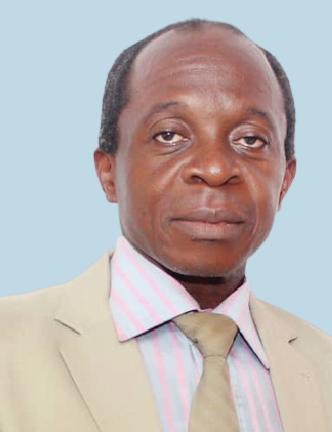
Dr. Olukayode Oyeleye, Business a.m.’s Editorial Advisor, who graduated in veterinary medicine from the University of Ibadan, Nigeria, before establishing himself in science and public policy journalism and communication, also has a postgraduate diploma in public administration, and is a former special adviser to two former Nigerian ministers of agriculture. He specialises in development and policy issues in the areas of food, trade and competition, security, governance, environment and innovation, politics and emerging economies.