


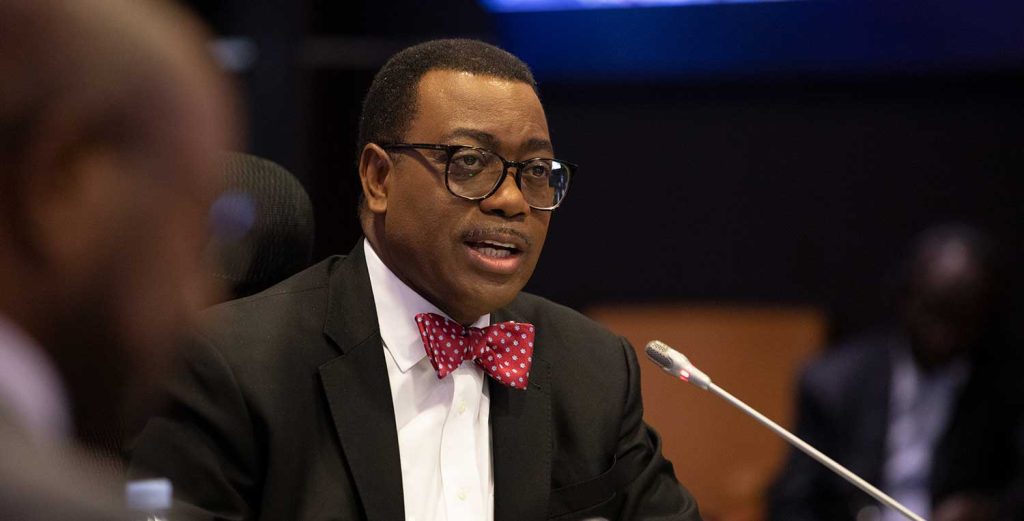
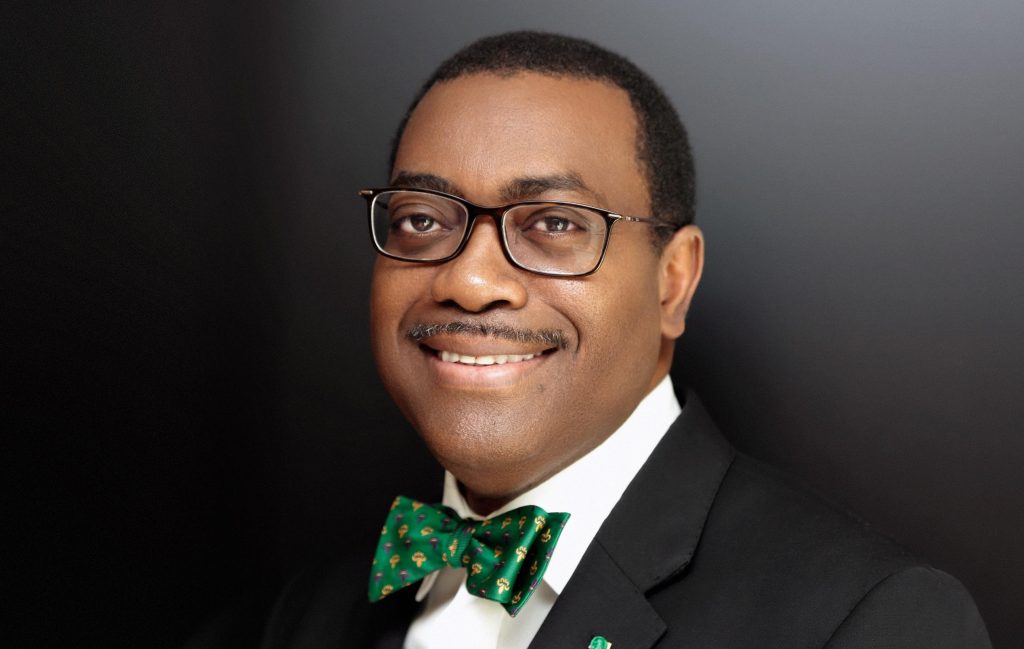
Akinwumi Adesina rarely appears in public without his signature bow tie neatly fastened above a crisp, well-pressed suit. The look has become part of his identity, a visual shorthand for his brand of polished professionalism. Yet beyond the sartorial elegance lies one of Africa’s most remarkable reformers, an economist whose influence on agriculture, finance, and development over the last four decades has left an indelible mark on the continent.
From his groundbreaking reforms as Nigeria’s Minister of Agriculture to his decade-long presidency of the African Development Bank (AfDB), Adesina has consistently embodied the role of what many describe as Africa’s Optimist-in-Chief. But his optimism is not simply rhetoric; as it is grounded in a career of technocratic achievement, institutional transformation, and a relentless commitment to proving that Africa is not a charity case but a continent of opportunity.
Born in 1960 in Ibadan, Oyo State, into a farming family, Adesina’s trajectory is rooted in the soil. Unlike many who entered economics through abstract theory, he understood early the daily struggles of smallholder farmers. This grounding would later inform his reformist zeal in agriculture and development finance.
He attended Ejigbo Baptist High School and graduated in 1981 with a first-class honours degree in Agricultural Economics from the University of Ife (now Obafemi Awolowo University). He was the first student in the university’s history to earn that distinction.
Determined to pursue advanced studies, Adesina enrolled at Purdue University in Indiana, United States, where he earned both his master’s (1985) and PhD (1988) in Agricultural Economics. His doctoral dissertation won Purdue’s award for the outstanding PhD thesis of the year;a harbinger of his future recognition. In the same year, he won the prestigious Rockefeller Foundation Social Science Fellowship, which propelled him onto the international stage.
Adesina’s early academic brilliance was matched by his communication skills. At Purdue, he became known not just for statistical rigour but also for his ability to frame economics in ways that inspired non-specialists. This combination of intellect and charisma would later define his career.
His professional journey began with roles in international agricultural research institutions. He worked at the International Crops Research Institute for the Semi-Arid Tropics (ICRISAT), then at the West Africa Rice Development Association (WARDA), and later at the International Institute of Tropical Agriculture (IITA). These positions allowed him to blend fieldwork with policy thinking.
But it was his decade at the Rockefeller Foundation that marked his rise. As Associate Director and later Regional Director for Southern Africa, Adesina oversaw initiatives that connected African farmers to markets, improved education access, and encouraged philanthropy among African business leaders.
By 2008, he had become Vice President of Policy and Partnerships at the Alliance for a Green Revolution in Africa (AGRA). There, he led financing efforts, securing over $4 billion in banking commitments to support African agriculture. This experience positioned him as a bridge-builder between governments, international organisations, and private investors. It also set the stage for his entry into Nigerian politics.
Minister of Agriculture: Breaking fertiliser cartels
In 2010, then-President Goodluck Jonathan appointed Adesina as Nigeria’s Minister of Agriculture and Rural Development. Many doubted whether an international technocrat could survive Nigeria’s notoriously challenging political environment. He proved them wrong.
Adesina tackled corruption in the fertiliser sector, a racket that had siphoned billions of naira for decades. He introduced the innovative electronic wallet (e-wallet) system, which allowed farmers to receive subsidised fertiliser and seed directly through mobile phones, cutting out middlemen. Within four years, the programme reached 15 million farmers, transforming productivity and incomes.
He reframed agriculture from a subsistence activity to a viable business, attracting $5.6 billion in private-sector investments. Nigeria’s food production increased by 21 million metric tonnes during his tenure.
By 2013, Adesina was named Forbes African Man of the Year, the first serving minister to receive such an accolade. His tenure showcased that bold, data-driven reforms were possible in Nigeria’s often dysfunctional policy environment.
AfDB presidency: Scaling Up Africa’s economic development
Adesina’s election in May 2015 as president of the African Development Bank is considered both a personal triumph and a strategic victory for Nigeria, which had lobbied hard for its candidate. He became the first Nigerian to lead the institution since its founding in 1964.
Adesina inherited an institution that, while respected, was sometimes seen as a cautious lender. He thereafter brought dynamism and scale. His “High 5” agenda — Light up and Power Africa, Feed Africa, Industrialise Africa, Integrate Africa, and Improve the quality of life for Africans, gave the bank a clear focus. According to AfDB estimates, fully implementing the High 5s could achieve 90 per cent of Africa’s Sustainable Development Goals (SDGs).
One of his most significant achievements was securing the AfDB’s largest-ever capital increase. In October 2019, shareholders from 80 member countries raised the bank’s general capital from $93 billion to $208 billion, a 125 per cent increase. This expansion positioned the AfDB to play a much bigger role in financing Africa’s development.
When COVID-19 struck in 2020, the AfDB under Adesina responded with speed and innovation. It launched a $3 billion social bond, the largest US dollar-denominated social bond at the time, and created a $10 billion crisis response facility.
Global recognition and awards
Adesina’s visibility grew steadily. In 2017, he received the World Food Prize, widely regarded as the Nobel Prize for Agriculture. Rather than pocket the $250,000 prize, he used it to establish the World Hunger Fighters Foundation to support young Africans entering agriculture.
He was later named African of the Year by the All Africa Business Leaders Awards in 2019, and Forbes Africa Person of the Year. Bill Gates listed his decision to devote his World Food Prize to African youth as one of the seven most inspiring global moments of 2017.
Honorary doctorates also poured in from universities across the globe, including Purdue, Michigan State, Obafemi Awolowo, and more. He was awarded Nigeria’s national honour of Commander of the Order of the Niger (CON) in 2012, and several African countries, including Senegal, Cameroon, and Liberia, conferred their highest national honours on him.
Leadership style and controversies
Adesina’s leadership style blends charisma, optimism, and meticulous preparation. He is as comfortable addressing global leaders at Davos as he is engaging farmers in rural Nigeria. His bow tie, more than a fashion statement, signals his belief in discipline and consistency.
Yet his presidency was not free of controversy. In 2020, just before his re-election, whistleblowers accused him of ethical breaches and favouritism. The AfDB’s ethics committee cleared him, and an independent panel led by former Irish president Mary Robinson upheld the verdict. Adesina went on to secure unanimous re-election.
Critics argue that his relentless optimism sometimes borders on boosterism, glossing over structural challenges. Others question whether the AfDB, despite its expanded capital, has done enough to address Africa’s growing debt burdens. Still, even sceptics concede that Adesina elevated the bank’s profile and gave Africa a stronger voice in global development finance.
Adesina’s defining trait remains his optimism. He consistently frames Africa not as a continent of problems but of opportunities. His speeches often emphasise Africa’s potential to feed the world, power its industries with renewable energy, and create wealth through integration.
“Africa will not fail,” he often declares, with the cadence of both economist and preacher. To some, this rhetorical style risks oversimplifying challenges. To others, it is exactly the kind of vision needed to galvanise hope in a continent where pessimism has too often dominated.
He has also been a strong advocate for climate justice. He insists that Africa, which contributes just 3 per cent of global emissions, should not be forced to pay disproportionately for climate adaptation. Under his watch, the AfDB has invested heavily in climate finance, renewable energy, and resilience projects.
Legacy and future prospects
As his decade-long presidency of the AfDB concluded in 2025, assessments of his legacy began to crystallise. He will likely be remembered for accomplishments such as; expanding the AfDB’s financial capacity and global influence, championing agricultural transformation in Nigeria and Africa, as well as building Africa’s reputation as an investment destination rather than an aid-dependent region.
Speculation has often swirled around whether Adesina might enter Nigerian presidential politics. However, he has consistently downplayed such talk, insisting that his mission remains continental. Still, his track record makes him one of the most respected Nigerians on the world stage.
For Africa, Adesina remains a symbol of what is possible when technical brilliance meets political courage. His career is considered a perfect illustration of how one individual, armed with vision and discipline, can reshape Africa’s narratives and institutions.


