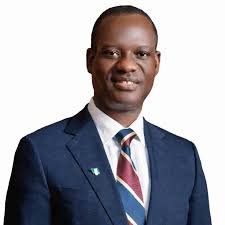
In sovereign economics, not all appointments are created equal. While many are treated as routine political reshuffles, some are read as signals of policy direction. Nigeria’s latest fiscal appointment falls into that latter category, with investors and analysts interpreting the elevation of a tax reform architect to a central economic role as a possible inflection point in how fiscal policy will be coordinated and executed in Africa’s fourth largest economy.
When President Bola Tinubu quietly replaced Wale Edun, his finance minister, with Taiwo Oyedele, a fiscal policy technocrat, he did more than reshuffle cabinet portfolios. He effectively repositioned the centre of gravity of Africa’s most populous nation at a moment when its macroeconomic equilibrium remains fragile, politically sensitive, and heavily exposed to both domestic discontent and external financial scrutiny.
The decision, announced on April 21, has been interpreted in financial and diplomatic circles as an attempt to resolve what has been termed as an ambitious structural adjustment on paper, but strained coordination in execution; an increasingly visible contradiction at the heart of Nigeria’s reform agenda.
For investors watching globally, the shift is less about personalities than about whether Nigeria can finally convert its reform narrative into a coherent and deliverable fiscal architecture.
What makes the moment particularly consequential is not just the departure of Edun, but the elevation of Oyedele, a tax reform architect and former PricewaterhouseCoopers senior partner, into the combined role of finance minister and coordinating minister of the economy. That consolidation effectively places fiscal policy, revenue mobilisation, and macroeconomic coordination under a single technocratic umbrella at a time when Nigeria’s economic system has been struggling with fragmentation across institutions.
The presidency has described the move as part of efforts to strengthen cohesion under the Renewed Hope Agenda. Yet multiple officials familiar with internal discussions showcase months of friction within the economic team, breakdowns in coordination across agencies, and growing concern at the highest levels of government about policy execution bottlenecks.
One senior official, speaking informally, described a ministry where alignment between political appointees had deteriorated to the point where “policy rhythm was being lost at the centre of execution”. Another noted that tensions between Edun and ministers of state had become “a constraint on operational coherence at a sensitive time in the reform cycle”.
The most frequently cited example relates to working relationships within the finance ministry itself. Officials pointed to difficulties between Edun and his minister of state counterparts, including Doris Uzoka-Anite, former minister of state, where overlapping mandates and divergent approaches reportedly slowed decision-making.
Against this backdrop, Oyedele’s appointment is being interpreted as an attempt to streamline authority rather than simply replace personnel.
Oyedele’s elevation is notable not just for the office he inherits, but for the institutional signal it sends. As chairman of the presidential fiscal policy and tax reform committee, he has already been central to one of Nigeria’s most ambitious attempts in decades to overhaul its tax architecture.
Now, as finance minister and coordinating minister of the economy, he moves from advisory influence to direct control over fiscal levers, budget execution oversight, and macroeconomic coordination across ministries, agencies, and subnational governments.
For a country where policy fragmentation has long been a structural constraint, the consolidation is significant. Yet it is also risky. This is as it concentrates expectations, accountability, and political exposure in a single office at a time when Nigeria’s macroeconomic conditions remain under severe strain including weak real incomes, and rising debt service costs.
Edun’s departure, according to officials, was not preceded by formal notice before he returned from the IMF–World Bank Spring Meetings in Washington, where he had led Nigeria’s delegation. In his exit statement, he thanked President Tinubu and defended the reform programme, describing it as a necessary structural adjustment process despite short-term social pain.
Nigeria’s reforms, under his watch, particularly fuel subsidy removal and foreign exchange unification, have been praised by international investors for correcting long-standing distortions, but they have also contributed to inflationary pressure and cost-of-living shocks.
Edun described the reforms as “necessary structural adjustments”, insisting that while much remains to be done, the direction of policy was clear and firmly anchored.
Markets respond: credibility premium emerges
If the political system is still absorbing the implications of the reshuffle, financial markets have reacted with unusual speed.
Equities momentum has remained strong, with analysts attributing part of the bullish sentiment to renewed confidence in fiscal governance under a more technocratic leadership structure.
In sovereign economics, not all appointments are created equal. While many are treated as routine political reshuffles, some are read as signals of policy direction. Nigeria’s latest fiscal appointment falls into that latter category, with investors and analysts interpreting the elevation of a tax reform architect to a central economic role as a possible inflection point in how fiscal policy will be coordinated and executed in Africa’s fourth largest economy.
When President Bola Tinubu quietly replaced Wale Edun, his finance minister, with Taiwo Oyedele, a fiscal policy technocrat, he did more than reshuffle cabinet portfolios. He effectively repositioned the centre of gravity of Africa’s most populous nation at a moment when its macroeconomic equilibrium remains fragile, politically sensitive, and heavily exposed to both domestic discontent and external financial scrutiny.
The decision, announced on April 21, has been interpreted in financial and diplomatic circles as an attempt to resolve what has been termed as an ambitious structural adjustment on paper, but strained coordination in execution; an increasingly visible contradiction at the heart of Nigeria’s reform agenda.
For investors watching globally, the shift is less about personalities than about whether Nigeria can finally convert its reform narrative into a coherent and deliverable fiscal architecture.
What makes the moment particularly consequential is not just the departure of Edun, but the elevation of Oyedele, a tax reform architect and former PricewaterhouseCoopers senior partner, into the combined role of finance minister and coordinating minister of the economy. That consolidation effectively places fiscal policy, revenue mobilisation, and macroeconomic coordination under a single technocratic umbrella at a time when Nigeria’s economic system has been struggling with fragmentation across institutions.
The presidency has described the move as part of efforts to strengthen cohesion under the Renewed Hope Agenda. Yet multiple officials familiar with internal discussions showcase months of friction within the economic team, breakdowns in coordination across agencies, and growing concern at the highest levels of government about policy execution bottlenecks.
One senior official, speaking informally, described a ministry where alignment between political appointees had deteriorated to the point where “policy rhythm was being lost at the centre of execution”. Another noted that tensions between Edun and ministers of state had become “a constraint on operational coherence at a sensitive time in the reform cycle”.
The most frequently cited example relates to working relationships within the finance ministry itself. Officials pointed to difficulties between Edun and his minister of state counterparts, including Doris Uzoka-Anite, former minister of state, where overlapping mandates and divergent approaches reportedly slowed decision-making.
Against this backdrop, Oyedele’s appointment is being interpreted as an attempt to streamline authority rather than simply replace personnel.
Oyedele’s elevation is notable not just for the office he inherits, but for the institutional signal it sends. As chairman of the presidential fiscal policy and tax reform committee, he has already been central to one of Nigeria’s most ambitious attempts in decades to overhaul its tax architecture.
Now, as finance minister and coordinating minister of the economy, he moves from advisory influence to direct control over fiscal levers, budget execution oversight, and macroeconomic coordination across ministries, agencies, and subnational governments.
For a country where policy fragmentation has long been a structural constraint, the consolidation is significant. Yet it is also risky. This is as it concentrates expectations, accountability, and political exposure in a single office at a time when Nigeria’s macroeconomic conditions remain under severe strain including weak real incomes, and rising debt service costs.
Edun’s departure, according to officials, was not preceded by formal notice before he returned from the IMF–World Bank Spring Meetings in Washington, where he had led Nigeria’s delegation. In his exit statement, he thanked President Tinubu and defended the reform programme, describing it as a necessary structural adjustment process despite short-term social pain.
Nigeria’s reforms, under his watch, particularly fuel subsidy removal and foreign exchange unification, have been praised by international investors for correcting long-standing distortions, but they have also contributed to inflationary pressure and cost-of-living shocks.
Edun described the reforms as “necessary structural adjustments”, insisting that while much remains to be done, the direction of policy was clear and firmly anchored.
Markets respond: credibility premium emerges
If the political system is still absorbing the implications of the reshuffle, financial markets have reacted with unusual speed.
Equities momentum has remained strong, with analysts attributing part of the bullish sentiment to renewed confidence in fiscal governance under a more technocratic leadership structure.
Uche Uwaleke, professor of Finance and Capital Markets at Nasarawa State University, told Business A.M. that while Edun provided a steady hand during a volatile adjustment period, Oyedele’s appointment carries a different kind of signalling power.
According to him, investors are distinguishing sharply between political appointments and technocratic credibility, and Oyedele falls firmly into the latter category.
He argued that markets are already pricing in what he described as a credibility dividend, reflected in strong equity performance and improved sentiment toward Nigerian risk assets. The perception, he said, is that fiscal coordination is likely to become more coherent under a consolidated leadership structure.
“The bullish response we’ve seen with the equities market capitalization crossing N140 trillion and year-to-date returns exceeding 40%, is a reflection of renewed confidence. In that sense, his appointment materially strengthens Nigeria’s fiscal credibility almost immediately,” he added.
However, he cautioned that credibility gains will depend less on appointment optics and more on execution discipline.
One of Nigeria’s persistent fiscal weaknesses, he noted, has been overly optimistic revenue assumptions embedded in budget planning. Oyedele’s tax reform background, he argued, positions him to correct this structural bias by anchoring projections in more realistic tax base expansion pathways rather than aspirational targets.
The 2026 budget, already passed under previous leadership, remains an immediate constraint. But Uwaleke expects that early indicators,particularly capital expenditure execution rates and revenue performance in the first two quarters, will serve as a litmus test for whether the new fiscal leadership is reshaping implementation dynamics.
“Budgets fail less in formulation than in execution,” he observed, noting that market attention will shift quickly to delivery metrics rather than headline allocations.
He also pointed to the potential benefits of centralising fiscal authority, provided it is matched with institutional discipline. Nigeria’s historical challenge, he said, has been fragmentation across fiscal, monetary, and revenue agencies. According to him, a more unified command structure could improve coordination,but only if supported by data transparency and inter-agency alignment.
On debt management, Uwaleke anticipates a shift toward greater efficiency in borrowing strategy rather than a reduction in borrowing itself.
He expects increased emphasis on concessional financing, improved cost management, and tighter linkage between borrowing and productive investment outcomes. The key issue, he stressed, is not borrowing per se but the quality of debt utilisation.
In his (Uwaleke’s) assessment, Oyedele’s appointment could act as a catalyst for renewed investor interest, but only within a framework of macroeconomic stability, exchange rate clarity, and policy predictability.
Without those conditions, he warned, even technocratic credibility would have limited transmission into sustained capital inflows.
Anthony Kila, Jean Monnet professor of Strategy and Development and director general of the Commonwealth Institute of Advanced and Professional Studies (CIAPS), offered a more cautious interpretation of market sentiment.
His view is that markets do not respond to appointments themselves, but to the behavioural signals that follow them.
“Politics aside, this appointment says the Nigerian government recognises its fiscal issues: weak revenue, inconsistent policies, and credibility gaps. It also shows a willingness to bring in expertise rather than just political favours. But credibility in fiscal matters is earned through consistent action, not reputation. For now, the appointment is symbolically strong but untested. Investors look for clear policy, predictable execution, and alignment between words and results. Until then, the response is hopeful but tentative,” he stated.
Oyedele, he argued, enters office with strong reputational capital in tax reform and fiscal discipline, but that capital must now be converted into observable policy consistency.
At present, he said, investor sentiment is “cautiously optimistic rather than decisively bullish”.
Kila emphasised that Nigeria’s fiscal challenge is not recognition of the problem but execution of solutions. While the appointment signals awareness of structural weaknesses, weak revenue mobilisation, inconsistent policy frameworks, and credibility gaps, the real test lies in implementation discipline.
He identified revenue realism as the first immediate pressure point. Nigeria’s historical reliance on optimistic oil and non-oil revenue projections, he argued, has created persistent gaps between budget assumptions and actual performance.
A more disciplined tax framework, he suggested, could shift the system toward more realistic budgeting and improved fiscal credibility. But that would require not just technical reform but political enforcement capacity.
On the 2026 budget, Kila was explicit. He pointed out that Oyedele inherits a fiscal structure that cannot be redesigned overnight. Instead, his influence will be measured through execution discipline rather than structural overhaul.
Markets, he said, will be watching closely for signals in expenditure patterns, deficit control, and transparency in fiscal reporting.
Perhaps more importantly, he argued that Nigeria’s deeper challenge lies in coordination failure across institutions, between federal ministries, subnational governments, and implementing agencies.
According to him, centralising authority under a strong technocrat may reduce fragmentation, but it is not a structural cure unless accompanied by institutional reform.
Muda Yusuf, chief executive of the Centre for the Promotion of Private Enterprise (CPPE), took a more operational view of the appointment.
He argued that Oyedele’s strength lies in his understanding of fiscal systems, particularly budgeting, taxation, and debt dynamics.
“I think the strength he will bring will be in finance, proper budgeting, managing debt, and overseeing fiscal operations, and more importantly, supervising the implementation of tax reform.
All of these are related to achieving fiscal consolidation,” he stated.
In his view, Nigeria’s fiscal challenge is fundamentally interconnected: weak revenue generation drives borrowing, which increases debt servicing costs, which then further constrains fiscal space.
A stronger revenue system, he argued, is therefore the most direct path to debt stabilisation.
Yusuf also stressed the importance of inter-ministerial coordination, particularly between finance, trade, agriculture, and customs, noting that fiscal policy cannot be effective in isolation.
Chiwuike Uba, a professor of economics with expertise in public financial management and public sector reforms, observed that investors are interpreting the appointment as a credible technocratic signal rather than a catalyst for immediate repricing of Nigeria’s fiscal outlook.
“Investors are distinguishing between the credibility of individuals and the credibility of institutions, and Nigeria’s historical experience has conditioned markets to be cautious. Competent reformers have been appointed in the past, but outcomes have consistently been constrained by weak institutional enforcement, political interference, and execution slippages.
“What makes this development notable is its timing, coming at a moment when Nigeria faces structurally weak revenue mobilisation, elevated debt service obligations, and lingering social pressures following recent macroeconomic reforms. Oyedele’s profile suggests a potential shift toward improving tax system efficiency rather than simply increasing rates, which is directionally positive,” he noted.
Uba, who chairs the board of ACUF Initiative for Policy and Governance Ltd/Gte, stressed that sovereign credibility will ultimately be determined by the alignment between revenue realism and expenditure discipline.
He observed that Nigeria’s fiscal credibility gap has historically been driven by overly optimistic revenue projections and inconsistencies in budget execution, including delayed releases, reallocations, and politically influenced spending patterns. While technocratic reforms may improve fiscal planning, he noted that credibility gains will depend on consistent delivery over time.
According to him, there is a likelihood that Oyedele’s approach could introduce more conservative, evidence-based revenue assumptions, alongside a stronger focus on tax administration efficiency and broadening the revenue base. However, he cautioned that the real test lies beyond budget approvals.
Uba pointed to persistent inefficiencies in implementation, particularly in capital expenditure, where a disconnect between approved budgets and actual spending has undermined outcomes. He noted that analysts will closely track whether revenue collections align more closely with projections and whether capital projects are executed on schedule.
He noted further that attention will also be on deficit management, including whether financing strategies remain disciplined in the face of revenue shortfalls, as well as improvements in fiscal transparency and reporting frequency. A sustained narrowing of the gap between planned and actual outcomes, he said, would signal a meaningful strengthening of fiscal discipline. For citizens, however, the benchmarks are more tangible in relation to timely completion of infrastructure projects, prompt payment of contractors, and measurable improvements in public service delivery.
On borrowing strategy, Uba indicated that while structural constraints such as high debt levels and significant debt servicing obligations may limit rapid changes, a qualitative shift is possible. This could include a stronger emphasis on revenue-led fiscal sustainability, increased reliance on concessional financing, and enhanced transparency in debt reporting.
He also highlighted the importance of ensuring that borrowed funds are channelled into productive investments rather than recurrent expenditure, noting that Nigeria’s fiscal challenges stem not only from rising debt levels but from the limited economic returns on that debt.
Uba also stated that for markets, the key consideration remains whether borrowing translates into capital formation and economic expansion, while for citizens, the focus is on whether debt-financed spending delivers visible improvements in infrastructure, employment, and living standards.
“Oyedele’s appointment may provide a modest confidence boost, but it is not sufficient on its own to trigger sustained foreign portfolio or direct investment inflows. Investors respond to systemic stability rather than individual appointments, and their decisions are shaped by the broader macroeconomic and institutional environment,” he added.
Beyond personalities and market sentiment, analysts point to Nigeria’s extremely low tax-to-GDP ratio, estimated at between 6 and 8 per cent, among the lowest globally, considered a deeper structural issue.
By comparison, South Africa exceeds 20 per cent, while OECD economies often surpass 30 per cent.
John Onyeukwu, a lawyer and public policy analyst, in a Business A.M. column titled “Nigeria’s Fiscal Reform Enters Command Phase”, described this gap as evidence of a fundamentally underdeveloped fiscal state relative to governance ambitions.
He argued that Nigeria’s long-standing reliance on oil revenues has weakened its fiscal social contract, reducing incentives for tax compliance and limiting state capacity.
For Onyeukwu, the Oyedele appointment represents an attempt to align policy design with execution, a convergence that has historically been difficult to achieve in Nigeria’s political economy. But he warned that structural reform requires political negotiation, not just technical expertise.
Across all analyst perspectives, a central question emerges on whether Nigeria’s economic governance system can finally achieve durable coordination.
They believe that if successful, Oyedele’s tenure could mark a shift toward more coherent fiscal management, improved revenue credibility, and stronger investor confidence. If unsuccessful, it risks reinforcing a familiar pattern of technocratic ambition constrained by institutional fragmentation.
For now, markets appear willing to test the optimistic scenario. But as several analysts noted in different formulations, credibility in fiscal governance is not declared;it is accumulated. And in Nigeria’s case, it will be earned one budget execution cycle at a time.
, professor of Finance and Capital Markets at Nasarawa State University, told Business A.M. that while Edun provided a steady hand during a volatile adjustment period, Oyedele’s appointment carries a different kind of signalling power.
According to him, investors are distinguishing sharply between political appointments and technocratic credibility, and Oyedele falls firmly into the latter category.
He argued that markets are already pricing in what he described as a credibility dividend, reflected in strong equity performance and improved sentiment toward Nigerian risk assets. The perception, he said, is that fiscal coordination is likely to become more coherent under a consolidated leadership structure.
“The bullish response we’ve seen with the equities market capitalization crossing N140 trillion and year-to-date returns exceeding 40%, is a reflection of renewed confidence. In that sense, his appointment materially strengthens Nigeria’s fiscal credibility almost immediately,” he added.
However, he cautioned that credibility gains will depend less on appointment optics and more on execution discipline.
One of Nigeria’s persistent fiscal weaknesses, he noted, has been overly optimistic revenue assumptions embedded in budget planning. Oyedele’s tax reform background, he argued, positions him to correct this structural bias by anchoring projections in more realistic tax base expansion pathways rather than aspirational targets.
The 2026 budget, already passed under previous leadership, remains an immediate constraint. But Uwaleke expects that early indicators,particularly capital expenditure execution rates and revenue performance in the first two quarters, will serve as a litmus test for whether the new fiscal leadership is reshaping implementation dynamics.
“Budgets fail less in formulation than in execution,” he observed, noting that market attention will shift quickly to delivery metrics rather than headline allocations.
He also pointed to the potential benefits of centralising fiscal authority, provided it is matched with institutional discipline. Nigeria’s historical challenge, he said, has been fragmentation across fiscal, monetary, and revenue agencies. According to him, a more unified command structure could improve coordination,but only if supported by data transparency and inter-agency alignment.
On debt management, Uwaleke anticipates a shift toward greater efficiency in borrowing strategy rather than a reduction in borrowing itself.
He expects increased emphasis on concessional financing, improved cost management, and tighter linkage between borrowing and productive investment outcomes. The key issue, he stressed, is not borrowing per se but the quality of debt utilisation.
In his (Uwaleke’s) assessment, Oyedele’s appointment could act as a catalyst for renewed investor interest, but only within a framework of macroeconomic stability, exchange rate clarity, and policy predictability.
Without those conditions, he warned, even technocratic credibility would have limited transmission into sustained capital inflows.
Anthony Kila, Jean Monnet professor of Strategy and Development and director general of the Commonwealth Institute of Advanced and Professional Studies (CIAPS), offered a more cautious interpretation of market sentiment.
His view is that markets do not respond to appointments themselves, but to the behavioural signals that follow them.
“Politics aside, this appointment says the Nigerian government recognises its fiscal issues: weak revenue, inconsistent policies, and credibility gaps. It also shows a willingness to bring in expertise rather than just political favours. But credibility in fiscal matters is earned through consistent action, not reputation. For now, the appointment is symbolically strong but untested. Investors look for clear policy, predictable execution, and alignment between words and results. Until then, the response is hopeful but tentative,” he stated.
Oyedele, he argued, enters office with strong reputational capital in tax reform and fiscal discipline, but that capital must now be converted into observable policy consistency.
At present, he said, investor sentiment is “cautiously optimistic rather than decisively bullish”.
Kila emphasised that Nigeria’s fiscal challenge is not recognition of the problem but execution of solutions. While the appointment signals awareness of structural weaknesses, weak revenue mobilisation, inconsistent policy frameworks, and credibility gaps, the real test lies in implementation discipline.
He identified revenue realism as the first immediate pressure point. Nigeria’s historical reliance on optimistic oil and non-oil revenue projections, he argued, has created persistent gaps between budget assumptions and actual performance.
A more disciplined tax framework, he suggested, could shift the system toward more realistic budgeting and improved fiscal credibility. But that would require not just technical reform but political enforcement capacity.
On the 2026 budget, Kila was explicit. He pointed out that Oyedele inherits a fiscal structure that cannot be redesigned overnight. Instead, his influence will be measured through execution discipline rather than structural overhaul.
Markets, he said, will be watching closely for signals in expenditure patterns, deficit control, and transparency in fiscal reporting.
Perhaps more importantly, he argued that Nigeria’s deeper challenge lies in coordination failure across institutions, between federal ministries, subnational governments, and implementing agencies.
According to him, centralising authority under a strong technocrat may reduce fragmentation, but it is not a structural cure unless accompanied by institutional reform.
Muda Yusuf, chief executive of the Centre for the Promotion of Private Enterprise (CPPE), took a more operational view of the appointment.
He argued that Oyedele’s strength lies in his understanding of fiscal systems, particularly budgeting, taxation, and debt dynamics.
“I think the strength he will bring will be in finance, proper budgeting, managing debt, and overseeing fiscal operations, and more importantly, supervising the implementation of tax reform.
All of these are related to achieving fiscal consolidation,” he stated.
In his view, Nigeria’s fiscal challenge is fundamentally interconnected: weak revenue generation drives borrowing, which increases debt servicing costs, which then further constrains fiscal space.
A stronger revenue system, he argued, is therefore the most direct path to debt stabilisation.
Yusuf also stressed the importance of inter-ministerial coordination, particularly between finance, trade, agriculture, and customs, noting that fiscal policy cannot be effective in isolation.
Chiwuike Uba, a professor of economics with expertise in public financial management and public sector reforms, observed that investors are interpreting the appointment as a credible technocratic signal rather than a catalyst for immediate repricing of Nigeria’s fiscal outlook.
“Investors are distinguishing between the credibility of individuals and the credibility of institutions, and Nigeria’s historical experience has conditioned markets to be cautious. Competent reformers have been appointed in the past, but outcomes have consistently been constrained by weak institutional enforcement, political interference, and execution slippages.
“What makes this development notable is its timing, coming at a moment when Nigeria faces structurally weak revenue mobilisation, elevated debt service obligations, and lingering social pressures following recent macroeconomic reforms. Oyedele’s profile suggests a potential shift toward improving tax system efficiency rather than simply increasing rates, which is directionally positive,” he noted.
Uba, who chairs the board of ACUF Initiative for Policy and Governance Ltd/Gte, stressed that sovereign credibility will ultimately be determined by the alignment between revenue realism and expenditure discipline.
He observed that Nigeria’s fiscal credibility gap has historically been driven by overly optimistic revenue projections and inconsistencies in budget execution, including delayed releases, reallocations, and politically influenced spending patterns. While technocratic reforms may improve fiscal planning, he noted that credibility gains will depend on consistent delivery over time.
According to him, there is a likelihood that Oyedele’s approach could introduce more conservative, evidence-based revenue assumptions, alongside a stronger focus on tax administration efficiency and broadening the revenue base. However, he cautioned that the real test lies beyond budget approvals.
Uba pointed to persistent inefficiencies in implementation, particularly in capital expenditure, where a disconnect between approved budgets and actual spending has undermined outcomes. He noted that analysts will closely track whether revenue collections align more closely with projections and whether capital projects are executed on schedule.
He noted further that attention will also be on deficit management, including whether financing strategies remain disciplined in the face of revenue shortfalls, as well as improvements in fiscal transparency and reporting frequency. A sustained narrowing of the gap between planned and actual outcomes, he said, would signal a meaningful strengthening of fiscal discipline. For citizens, however, the benchmarks are more tangible in relation to timely completion of infrastructure projects, prompt payment of contractors, and measurable improvements in public service delivery.
On borrowing strategy, Uba indicated that while structural constraints such as high debt levels and significant debt servicing obligations may limit rapid changes, a qualitative shift is possible. This could include a stronger emphasis on revenue-led fiscal sustainability, increased reliance on concessional financing, and enhanced transparency in debt reporting.
He also highlighted the importance of ensuring that borrowed funds are channelled into productive investments rather than recurrent expenditure, noting that Nigeria’s fiscal challenges stem not only from rising debt levels but from the limited economic returns on that debt.
Uba also stated that for markets, the key consideration remains whether borrowing translates into capital formation and economic expansion, while for citizens, the focus is on whether debt-financed spending delivers visible improvements in infrastructure, employment, and living standards.
“Oyedele’s appointment may provide a modest confidence boost, but it is not sufficient on its own to trigger sustained foreign portfolio or direct investment inflows. Investors respond to systemic stability rather than individual appointments, and their decisions are shaped by the broader macroeconomic and institutional environment,” he added.
Beyond personalities and market sentiment, analysts point to Nigeria’s extremely low tax-to-GDP ratio, estimated at between 6 and 8 per cent, among the lowest globally, considered a deeper structural issue.
By comparison, South Africa exceeds 20 per cent, while OECD economies often surpass 30 per cent.
John Onyeukwu, a lawyer and public policy analyst, in a Business A.M. column titled “Nigeria’s Fiscal Reform Enters Command Phase”, described this gap as evidence of a fundamentally underdeveloped fiscal state relative to governance ambitions.
He argued that Nigeria’s long-standing reliance on oil revenues has weakened its fiscal social contract, reducing incentives for tax compliance and limiting state capacity.
For Onyeukwu, the Oyedele appointment represents an attempt to align policy design with execution, a convergence that has historically been difficult to achieve in Nigeria’s political economy. But he warned that structural reform requires political negotiation, not just technical expertise.
Across all analyst perspectives, a central question emerges on whether Nigeria’s economic governance system can finally achieve durable coordination.
They believe that if successful, Oyedele’s tenure could mark a shift toward more coherent fiscal management, improved revenue credibility, and stronger investor confidence. If unsuccessful, it risks reinforcing a familiar pattern of technocratic ambition constrained by institutional fragmentation.
For now, markets appear willing to test the optimistic scenario. But as several analysts noted in different formulations, credibility in fiscal governance is not declared;it is accumulated. And in Nigeria’s case, it will be earned one budget execution cycle at a time.