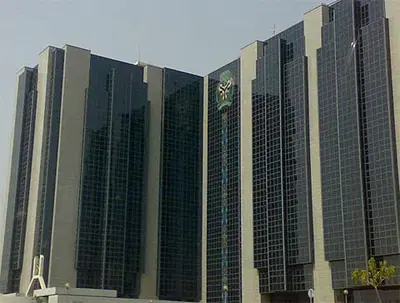
Nigerian banks have moved N3.76 trillion out of the Central Bank of Nigeria’s (CBN) Standing Deposit Facility in 13 days, as the central bank’s aggressive rate cut prompts lenders to reassess where to deploy excess liquidity.
The SDF balance fell from a post-MPC peak of N7.52 trillion on September 24 to N3.76 trillion on October 7, with banks withdrawing N941.85 billion on October 7 alone.
The movement comes after the Monetary Policy Committee cut the Monetary Policy Rate by 350 basis points to 23 percent on September 22, reducing the return available on the risk-free overnight facility and potentially strengthening the incentive to seek higher-yielding assets.
The decline means banks have moved roughly half of the funds they had parked at the CBN at the September peak, as lower returns on the risk-free facility reduce the incentive to keep excess liquidity idle.
On Wednesday alone, banks withdrew N941.85 billion from the facility, taking the balance down from N4.70 trillion recorded the previous day.
The latest decline also pushed SDF balances below N4 trillion for the first time since September 21, when deposits stood at N3.65 trillion.
The movement comes less than three weeks after the Monetary Policy Committee (MPC) cut the Monetary Policy Rate (MPR) by 350 basis points to 23 percent on September 22, its largest rate reduction since 2006.
The committee also adjusted the interest-rate corridor around the policy rate to +50 and -300 basis points.
The SDF allows banks to place excess liquidity with the CBN overnight without collateral. While the facility remains a low-risk avenue for parking funds, the rate cut has reduced the return available to banks, potentially widening the incentive to seek alternative assets and lending opportunities.
However, the movement of funds out of the SDF did not begin immediately after the MPC decision.
Instead, CBN data showed that deposits rose sharply in the days immediately following the rate cut, climbing from N4.51 trillion on September 22 to N7.34 trillion on September 23 and peaking at N7.52 trillion on September 24.
The subsequent 13-day decline is therefore being measured from a peak that emerged after the policy decision rather than from the level recorded on the day of the MPC meeting.
Market analysts attributed the initial build-up partly to liquidity released through maturing Open Market Operations (OMO) bills and a wait-and-see approach by banks as they assessed the implications of the new monetary-policy regime.
The CBN repaid N2.27 trillion on maturing OMO bills on September 22, the same day the MPC announced the rate cut.
With the liquidity returning to banks at a time when the SDF offered lower returns, institutions appear to have temporarily parked some of the funds at the central bank while assessing alternative deployment opportunities.
The SDF balance increased by N2.83 trillion the following day, reinforcing the scale of the liquidity build-up.
The subsequent movements have been uneven, indicating that banks have been actively adjusting their liquidity positions rather than executing a single, sustained withdrawal from the facility.
Balances fell from N7.52 trillion on September 24 to N5.90 trillion on September 25, before rising to N6.01 trillion on September 28 and N6.28 trillion on September 29.
They subsequently declined to N4.55 trillion on September 30, rose to N4.86 trillion on October 5, and fell to N4.70 trillion on October 6 ahead of Wednesday’s N941.85 billion reduction.
The trend points to a banking system recalibrating its liquidity management following the MPC’s aggressive easing cycle, with banks weighing the relative returns available across the money and credit markets.
The policy adjustment, however, has not changed the structural requirement for banks to maintain substantial reserves with the central bank.
The CBN retained the Cash Reserve Ratio (CRR) at 45 percent for commercial banks and 16 percent for merchant banks.
The 75 percent CRR applicable to non-Treasury Single Account (TSA) public-sector deposits also remains unchanged.
As a result, a significant proportion of banking-sector liquidity remains effectively locked with the CBN through reserve requirements, regardless of movements in the SDF.