Business A.M
No Result
View All Result
Tuesday, July 14, 2026
  • Login
  • Home
  • Technology
  • Finance
  • Comments
  • Companies
  • Commodities
  • About Us
  • Contact Us
Subscribe
Business A.M
  • Home
  • Technology
  • Finance
  • Comments
  • Companies
  • Commodities
  • About Us
  • Contact Us
No Result
View All Result
Business A.M
No Result
View All Result
Home Comments

Could Africa adopt single digital currency?

by Admin
March 28, 2018
in Comments

Following a meeting of the African Union in Rwanda where 44 countries gathered to sign the African Continental Free Trade Area treaty, South African President Cyril Ramaphosa made a bold suggestion: a single currency for Africa.

Ramaphosa’s suggestion comes as part of a larger push for open borders and a more united continent.
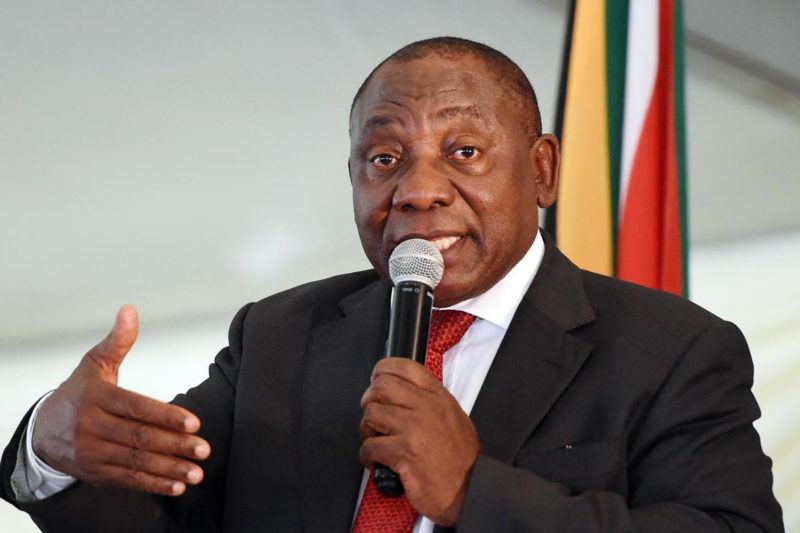
South African President Cyril Ramaphosa

The idea was first floated in 1991, with the formation of the African Economic Committee (AEC), a full 8 years before the euro was introduced to the European Union. The goals of the AEC were clear; free trade in a single market under a central bank. While the idea of a continent under one currency failed to materialize at the time, the need for such a platform is clear.

Currently, there are over 40 different currencies in Africa, and many are struggling to maintain value. The continent has faced countless economic woes, with Zimbabwe being the most notable. In 2008, , Zimbabwe saw its national currency soar to a staggering inflation rate of 89 sextillion percent, leading to a confusing system utilizing South African rand, U.S. dollars, UK pound sterling, Indian rupees, Japanese yen, Chinese yuan, and even Zimbabwe’s own attempt at digital currencies, the zollar.

The idea of digital currencies is beginning to take off in Africa, with South Africa leading the charge.

With the downturn of the Rand last year, the country saw a surge of interest in bitcoin. Werner van Rooyen, an executive at Luno, South Africa’s most popular Bitcoin exchange, noted: “When there is a nosedive in’ say the exchange rate for the Rand’ you’ll often notice a downtrend in other industries like the stock market or the housing market. Bitcoin has been found as one of the assets with the lowest correlation to other asset classes.”

While South Africa may be the continent’s crypto-hub, BitMari and Avesta are two payment solutions companies looking to simplify Africa’s currency conundrum. BitMari’s most innovative product is a Pan-African bitcoin wallet, available in multiple languages, including a number of the continent’s indigenous languages, allowing users to connect, transfer money, and send remittances throughout the world. Avesta, on the other hand, is racing to launch the continent’s first crypto-debit card.

President Ramaphosa’s suggestion, however, could take these startups’ ideas to the next level. Though, instead of bitcoin, these transfers could be made with a single African currency.

Ramaphosa has not yet unveiled a plan for the currency, though there is a high probability that it will be digital.

He explained: “We will begin to interface with the idea and notion of a single currency, possibly even a digital currency, and it’s possible that a digital currency will precede a real single currency because it is easier than having a proper full currency.”

The implications of a single African digital currency are vast. The idea could drastically simply trade both within Africa and on the international level. Cryptocurrencies and blockchain technology are said to allow nations the opportunity to leapfrog into an even economic playing field, Africa is eager to give it a try.

Ramaphosa is optimistic about the possibilities.

“It may take time, it may take years, but it’s interesting that something that we never spoke about in the past, we are now talking about. Because people always had a sense of sovereignty around their own currency, feeling that their currency is about their sovereignty, their nationhood, but people are now thinking beyond the borders of their own nation.”


By Michael Kern via SafeHaven.com

Admin
Admin
Previous Post

Olam targets vast market share in Nigeria’s fishing sector

Next Post

Bitcoin rate drops further as Twitter bans crytocurrency ads on fraud fears

Next Post

Bitcoin rate drops further as Twitter bans crytocurrency ads on fraud fears

  • Trending
  • Comments
  • Latest

CBN to issue N1.5bn loan for youth led agric expansion in Plateau

July 29, 2025

How UNESCO got it wrong in Africa

May 30, 2017
NGX taps tech advancements to drive N4.63tr capital growth in H1

Insurance-fuelled rally pushes NGX to record high

August 8, 2025

Glo, Dangote, Airtel, 7 others prequalified to bid for 9Mobile acquisition

November 20, 2017

6 MLB teams that could use upgrades at the trade deadline

Top NFL Draft picks react to their Madden NFL 16 ratings

Paul Pierce said there was ‘no way’ he could play for Lakers

Arian Foster agrees to buy books for a fan after he asked on Twitter

State

State Police by design

July 14, 2026
NAAPE moves to shield pilots, engineers with loss-of-licence insurance scheme

NAAPE moves to shield pilots, engineers with loss-of-licence insurance scheme

July 14, 2026
Global airlines are investing heavily in economy class cabins as competition for passengers shifts beyond ticket prices to the quality of the travel experience, prompting carriers to modernise fleets, redesign cabins and enhance onboard services in a bid to strengthen customer loyalty and improve long-term profitability. The renewed focus reflects a transformation in the aviation industry, where economy class, despite offering lower fares than premium cabins, remains the largest contributor to passenger volumes and an increasingly important driver of commercial performance. With millions of travellers continuing to prioritise affordability, airlines are finding that modest improvements in comfort and convenience can translate into stronger repeat business, improved customer satisfaction and higher ancillary revenues. As a result, carriers are directing substantial investment towards upgrading economy cabins through newer aircraft, ergonomically designed seats, advanced inflight entertainment systems, onboard connectivity, enhanced catering and improved cabin service. Industry analysts say the strategy is becoming a key differentiator as airlines compete more aggressively for passengers on both regional and long-haul routes. Unlike business and first-class travellers, whose numbers are relatively limited, economy passengers account for the overwhelming majority of airline traffic, making their overall travel experience increasingly central to airlines' growth strategies. Rather than relying solely on fare reductions to attract customers, airlines are seeking to build stronger brand loyalty by improving the value passengers receive throughout their journeys. "Passenger expectations have changed significantly. Travellers increasingly compare airlines based not only on ticket prices but also on comfort, reliability, connectivity and the overall onboard experience," aviation analysts note. Several of the world's leading airlines have already embraced the strategy. Carriers including Singapore Airlines, Qatar Airways, Emirates, Turkish Airlines, All Nippon Airways (ANA), EVA Air and Cathay Pacific have invested significantly in upgrading their economy cabins through improved seating, larger entertainment libraries, enhanced meal services and customer-focused cabin experiences. Although each airline has adopted different approaches, the underlying objective remains the same: making economy travel more comfortable for the largest segment of their customer base while strengthening long-term commercial competitiveness. Fleet modernisation is playing a critical role in that transformation. Next-generation aircraft such as the Boeing 787 Dreamliner, Airbus A350 and Airbus A321neo are enabling airlines to improve the passenger experience while simultaneously lowering operating costs. Compared with older aircraft, these models offer quieter cabins, larger windows, improved air quality, better humidity control and greater fuel efficiency, creating benefits for both passengers and airline operators. The newer aircraft also reduce fuel consumption and maintenance expenses, allowing airlines to improve customer experience without significantly increasing operating costs over the aircraft's lifespan. Technology has emerged as another major area of investment. Features once reserved almost exclusively for premium cabins, including USB charging ports, wireless internet connectivity, mobile application integration and personalised digital entertainment platforms, are increasingly becoming standard in economy class. Passengers are also benefiting from greater control over their travel experience, with digital services allowing them to access entertainment, communicate onboard and manage various aspects of their journeys more conveniently. The growing investment reflects changing consumer expectations in an increasingly digital travel environment. Recent international passenger satisfaction surveys consistently indicate that airlines investing in cabin comfort, inflight technology and customer service continue to perform strongly in global service rankings. While competitive pricing remains an important consideration for travellers, customer experience has become an increasingly influential factor in airline selection, particularly on medium and long-haul routes where comfort plays a greater role in purchasing decisions. The trend is expected to reshape competition within Africa's aviation industry as airlines expand their fleets to meet growing passenger demand.

Global airlines raise economy class spending to win passenger loyalty

July 14, 2026
US

How Vulnerable Are US Financial Markets?

July 14, 2026

Popular News

  • CBN to issue N1.5bn loan for youth led agric expansion in Plateau

    0 shares
    Share 0 Tweet 0
  • How UNESCO got it wrong in Africa

    0 shares
    Share 0 Tweet 0
  • Insurance-fuelled rally pushes NGX to record high

    0 shares
    Share 0 Tweet 0
  • Glo, Dangote, Airtel, 7 others prequalified to bid for 9Mobile acquisition

    0 shares
    Share 0 Tweet 0
  • Nigeria agrees with Russia on first nuclear energy plant by mid 2020s

    0 shares
    Share 0 Tweet 0
Currently Playing

CNN on Nigeria Aviation

CNN on Nigeria Aviation

Business AM TV

Edeme Kelikume Interview With Business AM TV

Business AM TV

Business A M 2021 Mutual Funds Outlook And Award Promo Video

Business AM TV

Recent News

State

State Police by design

July 14, 2026
NAAPE moves to shield pilots, engineers with loss-of-licence insurance scheme

NAAPE moves to shield pilots, engineers with loss-of-licence insurance scheme

July 14, 2026

Categories

  • Frontpage
  • Analyst Insight
  • Business AM TV
  • Comments
  • Commodities
  • Finance
  • Markets
  • Technology
  • The Business Traveller & Hospitality
  • World Business & Economy

Site Navigation

  • Home
  • About Us
  • Contact Us
  • Privacy & Policy
Business A.M

BusinessAMLive (businessamlive.com) is a leading online business news and information platform focused on providing timely, insightful and comprehensive coverage of economic, financial, and business developments in Nigeria, Africa and around the world.

© 2026 Business A.M

Welcome Back!

Login to your account below

Forgotten Password?

Retrieve your password

Please enter your username or email address to reset your password.

Log In
No Result
View All Result
  • Home
  • Technology
  • Finance
  • Comments
  • Companies
  • Commodities
  • About Us
  • Contact Us

© 2026 Business A.M