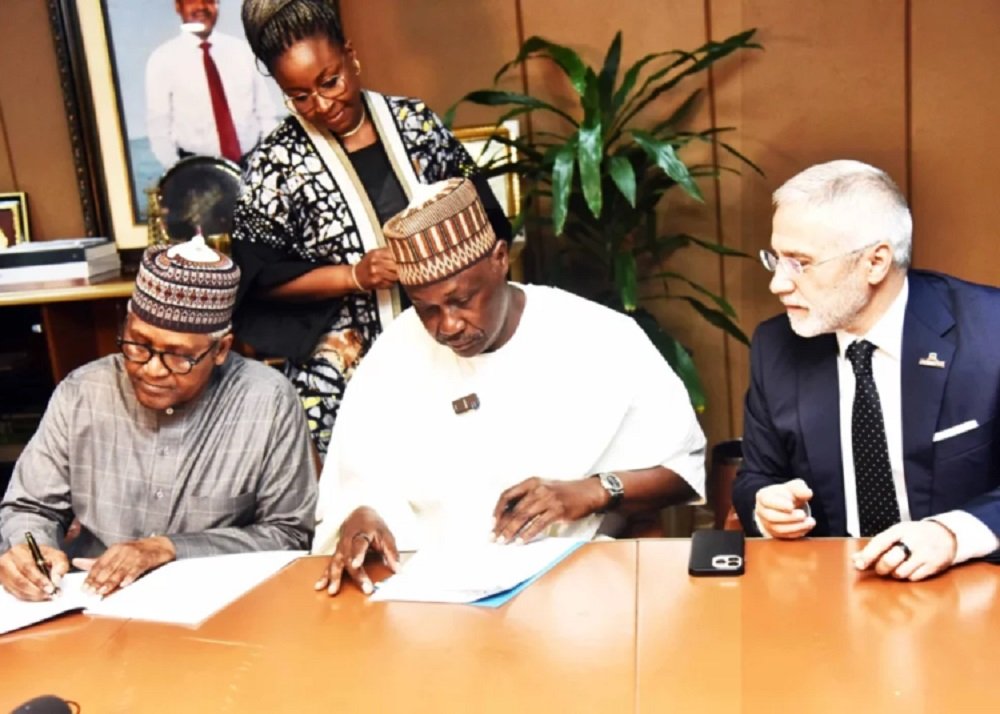
A longstanding structural weakness in Africa’s agricultural input supply chain has returned to prominence after a $600 million financing deal between the Africa Finance Corporation and the Dangote Group aimed at expanding fertiliser production capacity across key markets.
While the transaction is being positioned as a major industrial expansion, it also underscores a deeper structural challenge: Africa’s continued reliance on imported fertiliser in a global environment marked by supply shocks, geopolitical tensions and rising food inflation.
The facility, structured through GreenView Fertiliser Corporation, will partly finance the expansion of the Dangote Fertiliser Plant in Lagos and support the development of a new 3 million metric tonnes per annum (MTPA) urea facility in Ethiopia.
The investment forms part of a $7 billion expansion programme that will increase production capacity in Nigeria from three million to nine million metric tonnes annually, significantly strengthening the continent’s largest fertiliser production hub.
Across Africa, fertiliser shortages and high input costs have continued to weigh on agricultural productivity, contributing to persistent food inflation and limiting the ability of farmers to scale output despite rising demand for food across the continent.
The expansion, once completed, is expected to reduce import dependence, improve supply stability, and expand access to more affordable fertiliser for farmers across key agricultural economies.
For decades, Africa has relied heavily on fertiliser imports from global suppliers, exposing agricultural systems to external price shocks and foreign exchange pressures. The Dangote expansion represents one of the most ambitious attempts yet to localise production at scale.
Aliko Dangote, president of the Dangote Group, said the investment would also generate significant export revenues, projecting over $4 billion in annual fertiliser exports within three years.
“This funding is for a company that, within the next three years, will export over $4 billion worth of urea fertiliser,” he said, adding that the group remains on track toward its broader $100 billion group valuation target by 2030.
Beyond domestic supply, the expansion is expected to deepen Nigeria’s role as a regional fertiliser exporter, strengthening foreign exchange earnings at a time when many African economies are under pressure from external financing constraints and volatile commodity markets.
For AFC, the transaction reflects a capital recycling strategy aimed at reinvesting returns from earlier industrial investments into large-scale infrastructure and manufacturing projects across Africa.
Samaila Zubairu, chief executive officer of AFC,said the deal signifies the institution’s focus on projects that strengthen food systems and reduce structural import dependence across the continent.
Once operational, the combined expansion is expected to position the Dangote Fertiliser platform among the largest urea production networks globally, with implications for regional pricing dynamics, trade flows and food security resilience.