The planned initial public offering of the Dangote Petroleum Refinery & Petrochemicals has moved a major step closer to the market following the completion of a $1 billion underwriting programme designed to anchor the landmark listing.
The programme, structured by Marob Strategies and Consulting DIFC Limited and Lilium Capital Group, comprises a completed and funded $600 million private placement and an additional $400 million underwriting commitment in support of the planned IPO.
The $600 million private placement was underwritten and funded by Pan-African Refinery Investment SPV, a subsidiary of Lilium Capital Group.
Marob Strategies and Lilium Capital are now coordinating the distribution of the underwriting participation across Global Africa, targeting sovereign wealth funds, governments, institutional investors and other eligible investors.
The advisers said investor response had been strong, pointing to growing institutional demand for large-scale African assets with the potential to generate long-term economic value.
Beyond the immediate financing, the underwriting programme is being positioned as a test of whether African capital can be mobilised at scale for African industrial assets.
The advisers said the transaction could catalyse intra-African capital flows and support the development of a more integrated continental capital market under the African Continental Free Trade Area (AfCFTA).
That ambition gives the proposed listing significance beyond the Dangote Group.
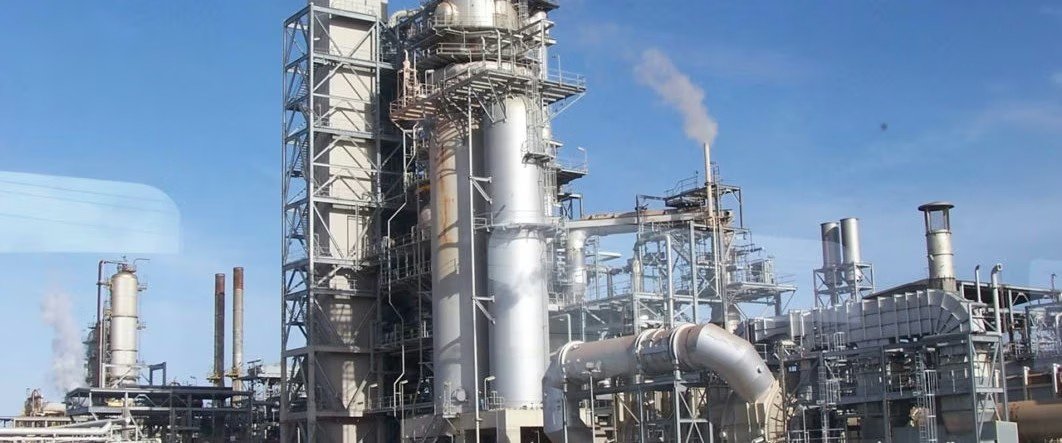
The refinery is one of Africa’s largest industrial projects and has been positioned as a major contributor to Nigeria’s energy security, fuel supply and import-substitution strategy.
A successful IPO would therefore offer investors an opportunity to participate directly in an asset with implications for regional energy markets, while giving the promoters access to a broader shareholder base.
The $1 billion programme is also expected to showcase how African institutions can pool long-term capital for industrialisation, energy security, import substitution and trade integration.
Aliko Dangote, president and chief executive of Dangote Industries Limited, described completion of the private placement and the additional underwriting commitment as a key milestone.
He said the transaction reflected investor confidence in the refinery’s strategic role and created a platform for broader participation by African and Caribbean sovereign wealth funds, governments and institutional investors across Global Africa.
Benedict Oramah, chairman of Marob Strategies, said the level of interest confirmed investor appetite for transactions that provide access to major African assets.
The firm’s role in structuring the programme also places it at the centre of efforts to create capital-market channels connecting African assets with African and international investors.
Lilium Capital is similarly positioning the mandate as part of a wider strategy of connecting major African investment opportunities with global institutional capital.
Simon Tiemtoré, chairman of Lilium Capital Group, said the programme was aligned with the firm’s objective of mobilising long-term capital for strategic African assets while strengthening capital markets and supporting sustainable economic growth.
What the IPO could mean for Nigeria
For Nigeria, the proposed listing could have implications beyond the Dangote Group’s ownership structure.
An expanded institutional shareholder base could deepen the domestic and regional investment ecosystem around one of the country’s most strategically important energy assets.
It could also provide a market-based valuation for the refinery, increase transparency around its financial performance and create a new avenue for African investors to gain exposure to Nigeria’s downstream petroleum sector.
The proposed listing comes after years of investment and construction that transformed the refinery from an ambitious industrial project into a major participant in Nigeria’s petroleum market.
Its eventual public offering will therefore be watched closely by investors assessing the commercial prospects of large-scale African infrastructure and industrial assets.
The immediate task, however, is to convert the $1 billion underwriting platform into broad investor participation.
If successful, the transaction could establish a template for financing other large African projects through African capital rather than relying predominantly on international lenders and foreign strategic investors.
For the Dangote refinery, the next phase is no longer simply about building refining capacity. It is about building an investment market around one of Africa’s most ambitious industrial assets.