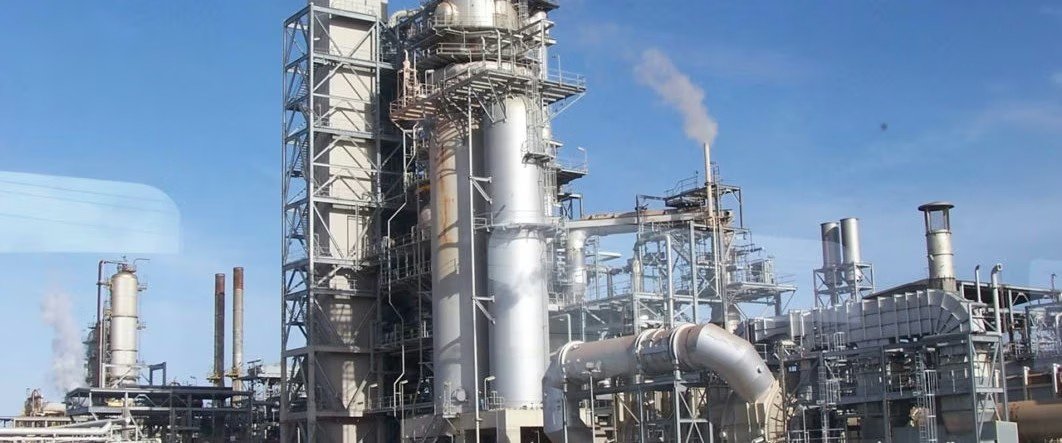
Global petroleum trade routes could be entering a period of significant realignment as new refining hubs emerge outside traditional centres in Europe, North America and Asia. At the forefront of that transition is Nigeria, where Dangote Refinery is rapidly expanding its footprint in international fuel markets.
Dangote Petroleum Refinery’s decision to commence construction of a second crude processing unit capable of refining 700,000 barrels of oil per day signals an ambition that extends well beyond Nigeria’s domestic fuel market. If completed on schedule, the expansion would transform the Lekki-based complex into one of the world’s largest refining centres, elevate Nigeria’s position in global petroleum trade and establish billionaire industrialist Aliko Dangote as a major force in international fuel markets.
The new refinery, already under construction adjacent to the existing facility outside Lagos, is expected to begin operations by the end of 2028, according to David Bird, chief executive officer, Dangote Petroleum Refinery. Upon completion, the expansion would increase the group’s total refining capacity to 1.4 million barrels per day, more than double current levels.
The announcement marks a significant escalation of plans previously outlined by the company and underscores growing confidence in the commercial viability of what has become one of the world’s most closely watched energy infrastructure projects.
What began as a bold attempt to solve Nigeria’s decades-long dependence on imported fuel is rapidly evolving into a strategic asset with global implications.
The refinery’s influence has become increasingly evident over the past year as disruptions across international energy markets created opportunities for new suppliers to emerge.
Following years of delays and scepticism, the existing 650,000-barrel-per-day refinery has reached near-full utilisation and is already reshaping fuel trade flows across Africa and beyond.
One of the most symbolic milestones came earlier this year when Nigeria became a net exporter of petrol, reversing a decades-old dependence on imported petroleum products despite being Africa’s largest crude oil producer.
At the same time, Dangote Refinery emerged as an important supplier of aviation fuel to international markets.
As refinery outages, geopolitical tensions and supply disruptions tightened global fuel supplies, the company exported substantial volumes of jet fuel into Europe, a market traditionally supplied by refiners in the Middle East, Asia and Europe itself.
Industry estimates indicate that the refinery exported about 100,000 barrels per day of jet fuel during peak periods this spring, with half of those volumes destined for European markets..
Historically, African economies have exported crude oil while importing refined products. Dangote’s growing export footprint indicates that Africa’s fourth largest economy could increasingly become a supplier of finished petroleum products to international markets rather than merely a source of raw materials.
The refinery’s strategic importance became even more apparent during recent supply concerns linked to tensions in the Middle East.
As global markets faced uncertainty surrounding energy shipments and potential disruptions to critical trade routes, Nigeria’s expanding domestic refining capacity provided a measure of insulation from external shocks that would previously have exposed the country to fuel shortages and price volatility.
Analysts say the planned expansion could further strengthen that position while creating new export opportunities across Africa, Europe and potentially Latin America.
Beyond refining, the company is also laying the groundwork for a broader international trading operation.
Bird disclosed that Dangote plans to expand its trading activities in parallel with refinery growth, a move that would allow the group to participate more actively in global fuel distribution and commodity markets.
Such a strategy mirrors the evolution of some of the world’s largest energy companies, which increasingly combine refining, logistics, trading and distribution operations to maximise market reach and profitability.
The implications extend beyond Nigeria.
Kenyan authorities have already confirmed discussions regarding a potential Dangote-backed refinery project in East Africa.
Should those plans materialise alongside the Lekki expansion, the group’s combined refining capacity could approach two million barrels per day, placing it among the largest refining operators globally.
Such a development would represent a profound shift in Africa’s role within the global energy value chain.
For decades, the continent has struggled to convert its vast hydrocarbon resources into domestic industrial capacity. Limited refining infrastructure forced many African countries to export crude oil while importing expensive refined products, creating significant economic leakages and exposing economies to external supply shocks.
Dangote’s strategy appears aimed at reversing that model. By building large-scale refining capacity close to crude-producing regions and major consumer markets, the company is positioning itself to capture a greater share of value within the petroleum supply chain.
The economic implications for Nigeria could be substantial. In addition to reducing foreign exchange pressures associated with fuel imports, expanded refining capacity could support industrialisation, create thousands of jobs, stimulate logistics and shipping activity, and strengthen Nigeria’s trade balance through higher-value exports.
The project also aligns with efforts by African economies to move further up global value chains rather than relying predominantly on commodity exports.
For investors and energy analysts, however, the most significant takeaway may be the emergence of a new refining powerhouse at a time when global refining capacity growth remains constrained in many developed economies.
Environmental pressures, ageing infrastructure and tightening regulations have discouraged large-scale refinery investments across Europe and North America, creating opportunities for newer, more efficient facilities in emerging markets to gain market share.
Dangote’s expansion comes amid growing recognition that future refining growth may increasingly be concentrated in regions with rising energy demand, favourable demographics and access to crude supply.
The planned expansion points to a future in which Nigeria plays a far greater role in determining the flow of refined fuels across regional and international markets. By the end of the decade, the country could evolve into a critical export hub for gasoline, diesel and aviation fuel, serving not only African demand but also international markets facing periodic supply shortages.
The move further underscores Aliko Dangote’s growing ambition to build a globally competitive refining enterprise capable of influencing fuel markets far beyond Nigeria’s borders. What began as an effort to reduce dependence on imported petroleum products is rapidly developing into a strategic business positioned at the intersection of global energy security and international trade.