An increase in government revenue in 2025 proved insufficient to ease the federal government’s dependence on the domestic debt market, as outstanding debt securities climbed to N175.46 trillion, underscoring the persistent gap between fiscal earnings and financing needs.
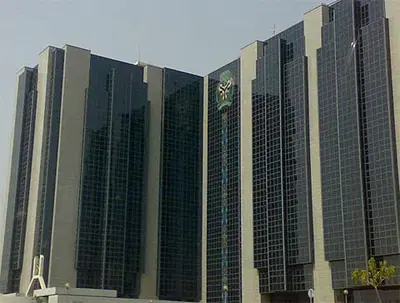
The Central Bank of Nigeria (CBN) disclosed in its 2025 Annual Report that the stock of debt securities increased by N22.13 trillion, or 14.47 per cent, from N153.28 trillion in 2024 to N175.46 trillion at the end of the review period, reflecting sustained government borrowing to finance the budget deficit despite a significant improvement in federally collected revenue.
The development highlights the limits of stronger revenue mobilisation in addressing Nigeria’s widening fiscal financing requirements, as expenditure pressures continued to outstrip government earnings.
According to the apex bank, “the stock of debt securities grew by N22.127 trillion or 14.47 per cent to N175.463 trillion in 2025, compared with N153.283 trillion in 2024, attributable to increased borrowing activities by the government to finance the budget deficit, and the shift towards debt securities instead of loans, due to attractive yield.”
The report showed that federally collected revenue rose by 33.67 per cent to N36.08 trillion, supported by stronger oil receipts and improved tax collections. Non-oil revenue accounted for 64.71 per cent of total collections, while oil earnings contributed 35.29 per cent, reflecting continued efforts to diversify government income.
Despite the robust revenue performance, total collections still fell short of budget expectations, leaving the government reliant on the domestic capital market to finance spending on infrastructure, security and social investment programmes.
Tax reforms emerged as the major driver of revenue growth. Tax receipts climbed to N32.06 trillion, accounting for 88.87 per cent of total federally collected revenue, up from 74.74 per cent a year earlier and exceeding the budget benchmark of 83.16 per cent. Income tax collections almost doubled to N19.26 trillion, while oil revenue surged by 93.69 per cent to N12.73 trillion, buoyed by stronger remittances from the Nigerian National Petroleum Company Limited (NNPCL), Petroleum Profit Tax collections and oil royalties.
Non-oil revenue also expanded by 14.35 per cent to N23.35 trillion, supported by improved Value Added Tax (VAT) and Corporate Income Tax (CIT) collections, digitalisation of tax administration and enhanced compliance.
Even with the higher revenue inflows, investors continued to channel funds into government securities, attracted by elevated yields. Other Depository Corporations (ODCs) increased their holdings of Federal Government debt securities by 12.5 per cent to N20.15 trillion, from N17.91 trillion in 2024.
At the same time, holdings of debt securities issued by ODCs declined sharply by 42.2 per cent to N10.56 billion, reflecting investors’ preference for treasury bills and Federal Government bonds over bank-issued instruments in the prevailing high-interest-rate environment.
The CBN also reduced its direct exposure to federal government debt. Its claims on the central government through debt securities fell by 1.3 per cent to N26.40 trillion, compared with N26.74 trillion in 2024, following a reduction in Ways and Means advances.
Similarly, the apex bank’s holdings of debt securities issued by foreign entities declined by 1.85 per cent to N16.08 trillion, which the report attributed to lower foreign investment inflows and portfolio rebalancing.
Despite the continued expansion in borrowing, the CBN maintained that public debt remained within sustainable limits. Total public debt stood at N153.29 trillion as of September 2025, equivalent to 35.55 per cent of GDP, remaining comfortably below the country’s 60 per cent self-imposed ceiling and the 70 per cent threshold recommended for market-access economies.
Following statutory deductions of N15.78 trillion, distributable federation revenue amounted to N21.94 trillion, boosted by excess non-oil revenue, exchange gains and excess oil receipts. The federal government received N7.57 trillion, states shared N7.38 trillion, while local governments received N5.40 trillion. Oil-producing states also received N1.59 trillion as 13 per cent derivation revenue.
The report further showed that allocations to subnational governments increased substantially during the year, with state governments receiving 28.98 per cent more than in 2024 and local government allocations rising by 29.40 per cent.
Lagos received the highest gross federation allocation at N720.50 billion, followed by Delta (N674.10 billion), Akwa Ibom (N589.14 billion), Rivers (N508.40 billion) and Bayelsa (N503.53 billion), while Nasarawa recorded the lowest allocation at N157.90 billion.