The late Fela Kuti, Nigerian music maestro, understood Africa’s political tragedy long before the rest of us found the courage to name it. In Teacher Don’t Teach Me Nonsense, he dismissed the continent’s imported democratic rituals as a “demoCrazy, demonstration of craze, crazy demonstration.” He was not attacking democracy. He was calling out the emptiness of a system that performs the rituals of governance without delivering the substance of development. Three decades later, the evidence across Africa suggests he was not merely singing. He was diagnosing a structural failure that continues to shape the lives of more than a billion people.
Across the continent, multi-party democracy has not delivered socio-economic development, access to affordable good-quality health care and education, or a meaningful rise in living standards for the majority. Instead, it has produced a political marketplace where elections are transactional, institutions are weak, and leaders are trapped in four- or five-year cycles that do not reward long-term thinking or planning.
The numbers speak for themselves. The World Bank estimates that about 40 percent of sub-Saharan Africans still live below the 2.15 dollar per day extreme poverty line. More than 60 percent live below 5.50 dollars per day, the more realistic benchmark for countries aspiring to middle-income status. UNICEF reports that one in five African children is out of school. The World Health Organisation notes that Africa carries 24 percent of the global disease burden with only three percent of the world’s health workforce. These are not abstract statistics. They are the daily realities of millions of families.
And the challenge is only growing. Africa’s population is projected to double by 2050, with the continent accounting for more than half of all global population growth. Every year, about 12 million young Africans enter the labour market, yet only around three million formal jobs are created. Poor governance is not just a political inconvenience in this context. It is an economic cost. It shows up in lost productivity, stalled infrastructure, capital flight, and the quiet resignation of a generation that sees no pathway to opportunity. The African Union estimates that the continent loses tens of billions of dollars annually to corruption alone. Add weak institutions, policy inconsistency, and political instability, and the bill becomes even heavier. These are not just governance failures. They are structural barriers that keep the continent locked in a cycle of underdevelopment.
In recent months, I have found myself in unconnected conversations with friends, each of us arriving at the same uneasy question. What if Africa had 10 Paul Kagames? Where would we be as a continent, development wise? It is a provocative thought, but it reflects a deeper frustration. People are no longer debating ideology. They are debating outcomes. They are asking why a continent with so much potential is underperforming on the basics of governance and human development.
Against this backdrop, Rwanda stands out. Not because it is flawless, but because it is functional. It is one of the few African states where the government works with discipline, where corruption is low, where planning is long-term, and where development is visible. The Kagame Model forces a question many African elites avoid. Should legitimacy come only from elections, or can it also come from performance?
Rwanda’s outcomes are difficult to ignore. The country has averaged between seven and eight percent annual GDP growth for much of the past two decades. It ranks first in Africa for government transparency and second on the World Bank’s Human Capital Index. Life expectancy has risen from 48 years in 1994 to over 69 years today. Health insurance coverage exceeds 90 percent. Rwanda’s community-based health system is now studied globally as a model for low-income countries.
Yet Rwanda is not the only example that challenges Africa’s democratic orthodoxy. Botswana’s stability and prosperity emerged from disciplined institutions and long-term planning, not electoral theatrics. Mauritius built a diversified economy through meritocratic governance and strategic investment in education. Ethiopia between 2005 and 2015 delivered one of the fastest growth rates in the world, averaging around ten percent per year through infrastructure investment and industrial policy. Vietnam lifted more than 40 million people out of poverty through state-led development. Singapore moved from slums to first-world status in one generation by prioritising competence, order, and long-term vision.
These examples, democratic and non-democratic alike, share one trait. They took development seriously. They invested in institutions, human capital, and long-term planning. They treated governance as a nation-building project, not a political competition.
This is the real contrast with many African democracies. Take health and education. It takes at least 15 years to produce a doctor. It takes decades to build a strong public-health system or a competent teaching workforce. Yet African leaders are judged on cycles that reward ribbon-cutting over institution-building. So, they build classrooms instead of training teachers. They announce hospitals instead of staffing them. They chase headlines instead of history. Rwanda rejects this short-termism. It treats development as an inter-generational project, not an electoral performance.
Should Africa copy Rwanda? Not blindly. Rwanda’s model emerged from a unique history and trauma. But the principles behind it, including discipline, meritocracy, long-term planning, and accountability, are universally relevant.
Any country that seeks a Kagame-style model must build guardrails such as institutionalised succession, independent oversight, citizen feedback mechanisms, and transparent performance metrics. Strong leadership without guardrails becomes authoritarianism. Guardrails without leadership become paralysis.
The real scandal is not that Rwanda is different. The scandal is that so many African democracies look the same: unstable, short-termist, and structurally incapable of delivering affordable good-quality health care, education, and broad-based socio-economic progress. This is not an endorsement of any leader. It is a challenge to a continent. Africa must stop defending systems that do not work simply because they are fashionable. Development is not a Western aspiration. It is a human one. And Africans deserve governance models, whatever their form, that deliver dignity, prosperity, and stability.
Fela warned us. He told us that a system that performs the rituals of democracy without delivering the results of governance is nothing but “nonsense.” If democracy cannot lift people out of poverty, cannot educate their children, cannot keep them healthy, cannot give them safety or dignity, then Africa must find the courage to ask the question Fela asked long before it was safe to do so. If the music has not changed, why are we still dancing to the same tune?
business a.m. commits to publishing a diversity of views, opinions and comments. It, therefore, welcomes your reaction to this and any of our articles via email: comment@businessamlive.com

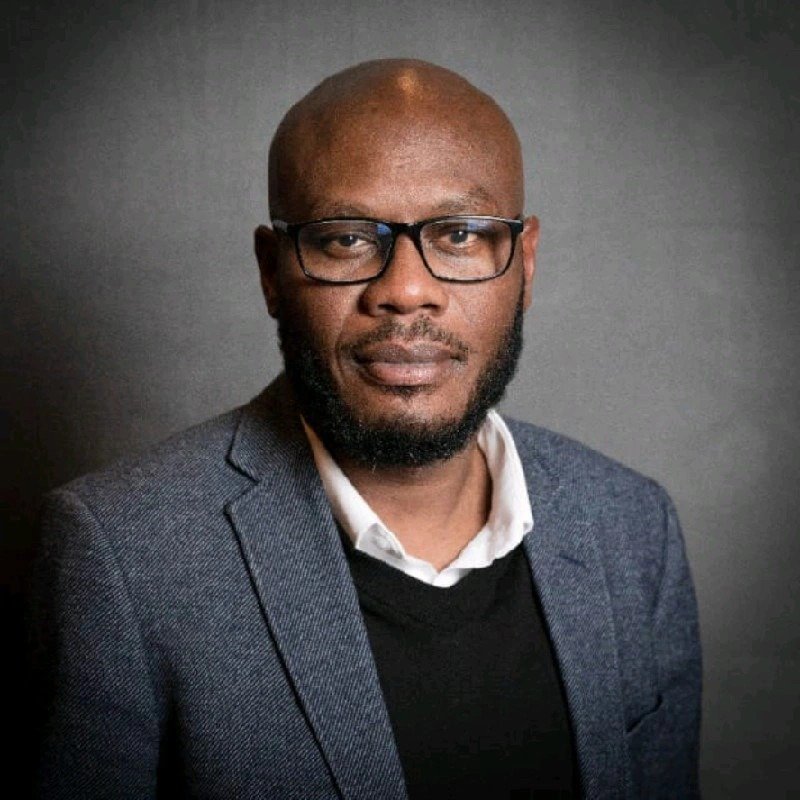
Dr. Wale Osofisan, PhD, is a seasoned governance strategist and policy analyst with over 23 years of experience advancing African-led, evidence-based solutions to political transitions, humanitarian crises and development challenges.