Business A.M
No Result
View All Result
Thursday, August 20, 2026
  • Login
  • Technology
  • Finance
  • Comments
  • Companies
  • Commodities
  • ONLINE & DIGITAL CONTENT PACKAGE
Subscribe
Business A.M
  • Technology
  • Finance
  • Comments
  • Companies
  • Commodities
  • ONLINE & DIGITAL CONTENT PACKAGE
No Result
View All Result
Business A.M
No Result
View All Result
Home Company & Business

Energy inflation falls to 4.37%, but Nigerian firms still feel the squeeze

by Onome Amuge
August 20, 2026
in Company & Business
Energy inflation falls to 4.37%, but Nigerian firms still feel the squeeze

Nigerian companies are beginning to see a slower pace of energy price increases, but the cost of keeping businesses running remains a major source of inflation anxiety. 

Energy inflation fell to 4.37 percent in July 2026, down from 9.83 percent in June, according to the latest Consumer Price Index data from the National Bureau of Statistics (NBS).

The 5.46 percentage-point monthly decline marks the lowest energy inflation rate in four months and highlights the increasingly volatile path of energy costs this year.

Energy inflation has now remained below 10 percent in four of the first seven months of 2026, after starting the year at 11.20 percent in January and climbing to a seven-month high of 12.57 percent in February.

The rate subsequently fell to 9.89 percent in March and 4.50 percent in April before reversing course to 5.73 percent in May and 9.83 percent in June.

The July moderation therefore represents a significant reversal of the acceleration recorded in the previous month.

But the headline improvement masks a more complicated picture for the real economy.

Businesses still feel energy squeeze

The latest figures indicate that lower energy inflation has not yet removed energy costs from the centre of corporate and household inflation concerns.

Results from the latest Central Bank of Nigeria (CBN) survey show that 60.9 percent of firms reported higher expenditure as a result of inflation in July, while 55.9 percent of households reported similar increases.

Energy costs, covering petrol, diesel and electricity, remained the biggest contributor to inflation perceptions.

Among firms, energy costs recorded an inflation perception score of 74.1 points, while households recorded 61.9 points.

The disconnect between the official rate of energy inflation and the perception of energy costs reflects the importance of energy to the operating structure of the Nigerian economy.

For businesses, fuel and electricity costs affect transportation, logistics, manufacturing, refrigeration, telecommunications and virtually every stage of the supply chain.

A slowdown in the rate at which energy prices rise therefore does not necessarily mean that businesses have returned to lower absolute energy costs.

Downstream market faces new competition rules

The moderation in energy inflation comes against a changing landscape in Nigeria’s downstream petroleum market.

The Nigerian Midstream and Downstream Petroleum Regulatory Authority (NMDPRA) has proposed regulations aimed at preventing petroleum companies from coordinating prices, restricting supply or engaging in market-sharing arrangements capable of undermining competition.

The proposed rules come amid renewed scrutiny of pricing practices in the downstream market and allegations of coordinated fuel pricing.

If implemented effectively, the regulations could strengthen competitive pressure among fuel suppliers and potentially improve price discovery in the market.

The development is particularly important for businesses because petrol and diesel prices have a direct bearing on operating expenses and transportation costs.

Refinery competition adds another variable

The domestic petrol market is also undergoing structural changes as local refining capacity expands.

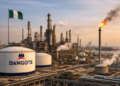
Dangote Refinery cut its ex-depot petrol price to N1,075 per litre in July following a decline in international crude prices, providing another potential source of downward pressure on domestic fuel prices.

However, the sustainability of such price moderation remains exposed to movements in the global oil market.

Nigeria faces a two-sided exposure to the latest geopolitical risks in the oil market.

A sustained rise in crude prices could strengthen government and external-sector revenues through higher oil receipts. But the same price increase could raise the domestic cost of petroleum products, transportation and energy-intensive operations.

The impact will ultimately depend on how long the geopolitical tensions persist and how strongly crude prices respond.

 

Onome Amuge

Onome Amuge serves as online editor of Business A.M, bringing over a decade of journalism experience as a content writer and business news reporter specialising in analytical and engaging reporting. You can reach him via Facebook ,X and  LinkedIn

Previous Post

Nigeria’s oil revenue squeezed as 236,500bpd goes to debt deals

  • Trending
  • Comments
  • Latest

CBN to issue N1.5bn loan for youth led agric expansion in Plateau

July 29, 2025

How UNESCO got it wrong in Africa

May 30, 2017

Glo, Dangote, Airtel, 7 others prequalified to bid for 9Mobile acquisition

November 20, 2017
NGX taps tech advancements to drive N4.63tr capital growth in H1

Insurance-fuelled rally pushes NGX to record high

August 8, 2025

6 MLB teams that could use upgrades at the trade deadline

Top NFL Draft picks react to their Madden NFL 16 ratings

Paul Pierce said there was ‘no way’ he could play for Lakers

Arian Foster agrees to buy books for a fan after he asked on Twitter

Energy inflation falls to 4.37%, but Nigerian firms still feel the squeeze

Energy inflation falls to 4.37%, but Nigerian firms still feel the squeeze

August 20, 2026
Nigeria’s oil revenue squeezed as 236,500bpd goes to debt deals

Nigeria’s oil revenue squeezed as 236,500bpd goes to debt deals

August 20, 2026
Universal Insurance

NAICOM revokes Universal Insurance licence over capital shortfall

August 20, 2026
Ibom Air steps up capacity drive with third A220-300

Ibom Air steps up capacity drive with third A220-300

August 19, 2026

Popular News

  • CBN to issue N1.5bn loan for youth led agric expansion in Plateau

    0 shares
    Share 0 Tweet 0
  • How UNESCO got it wrong in Africa

    0 shares
    Share 0 Tweet 0
  • Glo, Dangote, Airtel, 7 others prequalified to bid for 9Mobile acquisition

    0 shares
    Share 0 Tweet 0
  • Insurance-fuelled rally pushes NGX to record high

    0 shares
    Share 0 Tweet 0
  • Major tech companies conquering Africa with sports

    0 shares
    Share 0 Tweet 0
Currently Playing

CNN on Nigeria Aviation

CNN on Nigeria Aviation

Business AM TV

Edeme Kelikume Interview With Business AM TV

Business AM TV

Business A M 2021 Mutual Funds Outlook And Award Promo Video

Business AM TV

Recent News

Energy inflation falls to 4.37%, but Nigerian firms still feel the squeeze

Energy inflation falls to 4.37%, but Nigerian firms still feel the squeeze

August 20, 2026
Nigeria’s oil revenue squeezed as 236,500bpd goes to debt deals

Nigeria’s oil revenue squeezed as 236,500bpd goes to debt deals

August 20, 2026

Categories

  • Frontpage
  • Analyst Insight
  • Business AM TV
  • Comments
  • Commodities
  • Finance
  • Markets
  • Technology
  • The Business Traveller & Hospitality
  • World Business & Economy

Site Navigation

  • Home
  • About Us
  • Contact Us
  • Privacy & Policy
Business A.M

BusinessAMLive (businessamlive.com) is a leading online business news and information platform focused on providing timely, insightful and comprehensive coverage of economic, financial, and business developments in Nigeria, Africa and around the world.

© 2026 Business A.M

Welcome Back!

Login to your account below

Forgotten Password?

Retrieve your password

Please enter your username or email address to reset your password.

Log In
No Result
View All Result
  • Technology
  • Finance
  • Comments
  • Companies
  • Commodities
  • ONLINE & DIGITAL CONTENT PACKAGE

© 2026 Business A.M