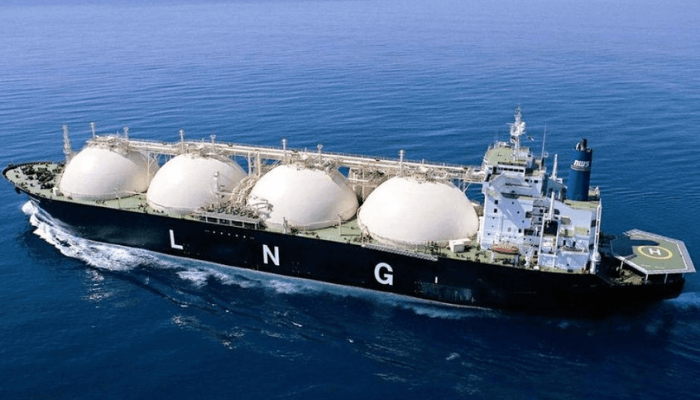
• Global oil supply to fall 4.3mbpd full year – IEA says
• Energy crunch to deepen as conflict drags on
Global oil traders appear to be bracing up for extended oil and LNG squeezes as hope is fast fading away of resolution of the Iran war anytime soon.
According to a report by OilPrice.com, the oil market is finally pricing in a prolonged Hormuz crisis, with flows through the strait down to roughly 11 percent of pre-war levels. Diesel and other refined fuels also face an increasingly severe squeeze, pushing crack spreads and consumer prices sharply higher.
The International Energy Agency (IEA), viewing the ongoing historic energy supply disruption, said it expects global oil supply to fall 4.3 million barrels per day (bpd) this year, inherently extending the energy crunch as the conflict drags on.
Since February till date, traders active on the commodity futures markets were mostly optimistic, taking every statement by President Donald Trump about peace talks or victory over Iran at face value; even betting on a speedy end of the war. However, all that hope appears faded now, as it has started to dawn on many that the trumped end-of-war is not happening.
As a result, the physical squeeze is already catching up with the global oil market.
Only recently, the Wall Street Journal (WSJ) reported that diesel shortage in the U.S that had been brewing since spring has now grown severer, and about to become severest, with autumn and winter demands expected to rise.
Other fuels are also about to witness the supply squeeze, because both the Middle East and Russia, which were significant refined fuel exporters are now in war emergencies.
Jeff Currie, an energy analyst, warned recently that Brent crude prices does not give one a clear look into the real crisis, which is in fuels. “Nobody on the planet earth consumes crude oil,” Currie told CNBC, strengthening a remark earlier made by Energy Aspects’ Amrita Sen earlier this year to indicate the fact that crude oil benchmarks futures prices may not be the most accurate representation of the supply and demand situation on the physical market that the world truly uses.
Oil flows through the Strait of Hormuz have averaged some 2 million barrels daily, according to data from Kpler. This is down from a July average of 4.8 million barrels daily. That was down from average pre-war levels of 18 million barrels daily. This indicates that tanker traffic through the critical chokepoint is currently barely 11 percent of what it used to be before the U.S. and Israel launched their strikes on Iran.
Before the conflict, global oil demand and baseline supply hovered around 103 million barrels per day (bpd), with Brent crude priced near $72.48 a barrel. As the war drags on and the Strait of Hormuz remains severely restricted, the world has faced a cumulative loss of roughly 2.6 billion barrels. Analysts estimate a persistent daily supply deficit of about 4 to 5 million bpd, which is currently being offset by emergency strategic stock releases, reduced demand in countries like China, and increased production outside the Persian Gulf.
Meanwhile, attacks on tankers continue, with both U.S. and Iranian rhetoric hardening: Iran threatens to break the U.S. naval blockade with “a timely and precise” strike, according to an unnamed Iranian official quoted by Reuters. President Trump insists the Strait of Hormuz is open while Iran says it is still shut down—and tanker-tracking data supports it.
To wit, one thing appears common to both sides: no peace talks are taking place currently. This clearly heightens the perception that both U.S. and Iran are nudging on for the long haul, an indication of a prolonged period of elevated energy prices—especially in fuels.
At the time being, Brent crude trades at $91 per barrel, with Iran’s oil exports shrinking from 294,000 barrels daily since the start of August, from 1.7 million barrels daily in 2025. Other producers have equally faced shrunken oil exports.
By far, this August, total oil exports from the Middle East have averaged 9.5 million barrels daily, down from 21 million barrels daily in 2025.
The IEA said in its latest Oil Market Report it expected global oil supply to drop by 4.3 million barrels daily for the full year 2026, a revision of earlier forecasts about a decline of 3.7 million barrels daily. This would translate into a supply shortfall of 1.27 million barrels daily.
Meanwhile, Middle East oil producers are now getting ways around the Hormuz bottleneck. For example, Saudi Arabia has redirected its exports, while the UAE has ramped up its own exports, that saw these higher in August than their average for last year.
However, missiles atracks have also continued in the Middle East. The UAE recently accused Iran of launching two ballistic missiles against its territory, meaning Emirati tankers may not be safe in the Strait of Hormuz. ADNOC tankers have been frequently become targets for Iranian strikes.
As it stands, any planned new pipelines to divert oil flows away from Hormuz would take years to build.
With no prompt end in sight, what was widely considered to be a short, sharp but not too painful squeeze on global oil and gas, has now turned into a full-blown crisis. Both the United States and Iran, and indeed the entire world, are feeling the economic pain from the war. Until either of them blinks, the world’s energy squeeze can only continue to deepen. Who will blink first – the U.S or Iran. The world is waiting.