Google Cloud has unveiled a new wave of investments across Africa spanning artificial intelligence, cloud infrastructure, digital connectivity and startup development, reinforcing the continent’s growing importance in the global technology industry’s race to capture emerging AI markets.
The technology giant announced five new initiatives at its inaugural Google Cloud Summit Africa in Johannesburg, signalling a development from expanding cloud infrastructure to building an artificial intelligence ecosystem capable of supporting innovation, digital skills and enterprise adoption across the continent.
The announcements build on Google’s existing $1 billion investment commitment in Africa, its recent $37 million allocation for AI research and skills development, and the launch of its Johannesburg Cloud Region, which serves as the company’s regional cloud infrastructure hub.
Collectively, the initiatives are designed to strengthen Africa’s digital infrastructure while positioning local businesses and developers to participate more actively in the rapidly expanding global AI economy.
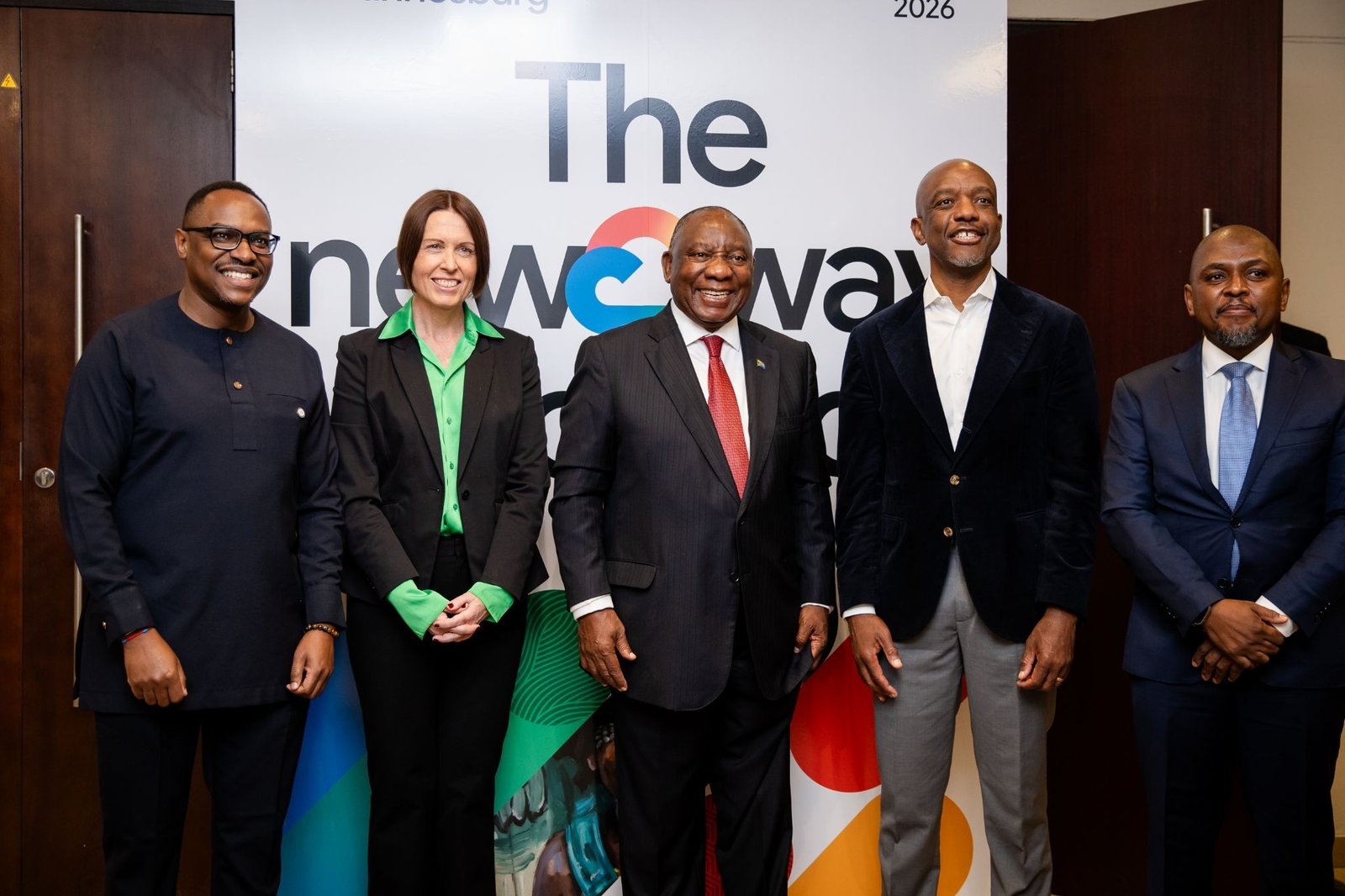
Opening the summit, South African President Cyril Ramaphosa said the investments reinforce Africa’s growing role in the global digital economy.
“Today’s Google Cloud Summit affirms Africa’s position as a core growth region for the global cloud ecosystem.
“As we step boldly into the age of artificial intelligence, our aspiration is to anchor South Africa as a catalyst for the continent’s digital ascendancy,” Ramaphosa said.
Among the flagship announcements was the establishment of Africa’s first Applied AI Lab in Ghana, where Google Research, the Google AI Futures Fund and venture capital partners will work directly with African entrepreneurs to develop AI solutions tailored to local challenges.
Based at the Accra AI Community Centre, the facility will provide founders with access to Google’s latest AI models, technical expertise and research capabilities, with applications for the inaugural cohort remaining open until August 31, 2026.
Google said the initiative is intended to accelerate the emergence of Africa’s first generation of AI-native technology unicorns by enabling startups to develop commercial applications in sectors including software development, education, entertainment, knowledge management and productivity.
The company also announced a new Digital Exchange Port in South Africa’s Eastern Cape, the first of four planned connectivity hubs that will improve Africa’s international internet infrastructure.
The facility will connect the continent directly to Australia through Google’s Umoja subsea cable while also linking Africa to a new subsea route serving India, strengthening digital resilience and reducing dependence on traditional international traffic routes.
Industry analysts say improved connectivity infrastructure remains essential to expanding cloud computing, artificial intelligence services and digital commerce across African markets.
Beyond infrastructure, Google is investing in workforce development as businesses increasingly seek AI-related skills.
The company will establish a R3 million digital innovation centre in Soweto in partnership with WeThinkCode, targeting young technology talent that has traditionally lacked access to advanced digital training.
In addition, Google.org is expected tol provide more than $1 million to support AI education programmes for African creators through a partnership with The Akuna Group, combining creative skills development with access to advanced AI tools.
Google also announced that applications will open this month for the 2026 South African cohort of its Google for Startups Accelerator, which will provide mentorship, AI-focused training and equity-free funding to 15 startups as part of its commitment to support 50 African ventures between 2024 and 2028.
James Manyika, Google’s senior vice-president for Research, Labs, Technology and Society, said Africa represents one of the world’s most significant long-term opportunities for AI-driven economic development.
“The AI opportunity for Africa is significant, and Google is committed to doing our part working with Africans to help Africa realise it.
“From a new Digital Exchange Port in the Eastern Cape to Africa’s first Applied AI Lab, we’re building partnerships to amplify and scale Africa’s incredible innovation for the world,” he said.
Google Cloud also highlighted the commercial impact of its expanding cloud infrastructure.
According to Maureen Costello, vice-president for the United Kingdom, Ireland and Sub-Saharan Africa at Google Cloud, the Johannesburg Cloud Region is projected to contribute $90.6 billion in additional economic output and support nearly 315,000 jobs across South Africa by 2030.
She said African businesses have moved beyond experimenting with artificial intelligence and are increasingly deploying AI-powered systems to address practical business challenges.
“African enterprises have moved decisively past the initial phases of AI experimentation,” Costello said.