
Google’s latest Android innovations, announced at its I/O developer conference, could reshape Africa’s digital economy as the technology giant deepens its investment in AI-powered mobile services aimed at improving commerce, communication and online security for millions of smartphone users.
For millions of Nigerians, Android is no longer simply the software running their phones. It has quietly become the operating backbone of daily economic life; from mobile banking and logistics to online learning and content creation.
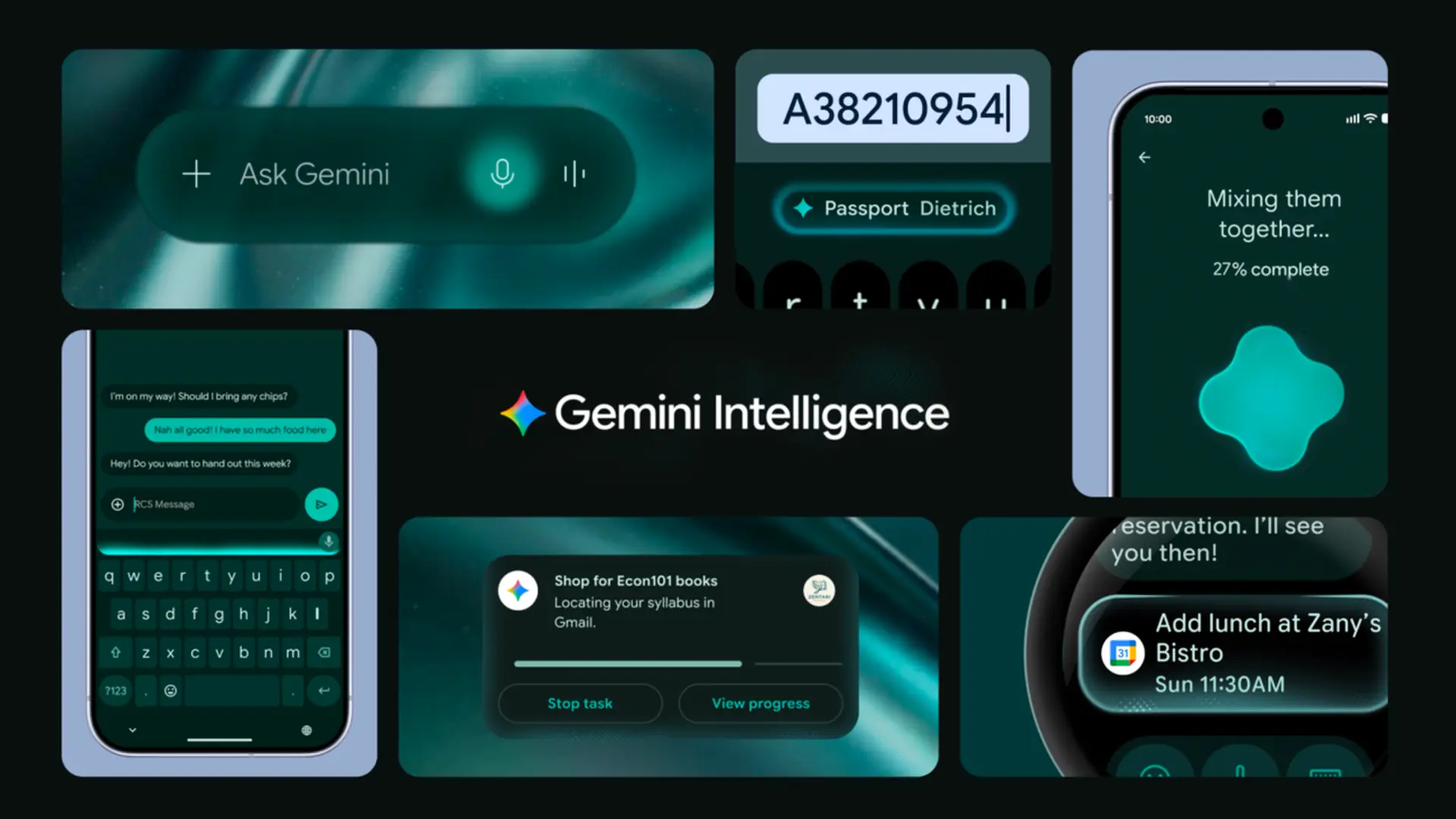
With more than three billion active Android devices globally, Google’s newest Android innovations lean toward embedding artificial intelligence directly into everyday mobile behaviour. The centrepiece of that strategy is Gemini Intelligence, Google’s expanding AI layer that now powers productivity, security, personalisation and automation across Android devices.
Rather than focusing solely on hardware competition, Google is increasingly positioning Android as an AI-enabled operating system capable of automating daily tasks, reducing friction in digital transactions and strengthening user security in economies where mobile-first behaviour dominates.
One of the most consequential updates announced is Gemini-powered task automation, which allows Android devices to complete multi-step actions across applications with minimal user intervention.
The feature enables users to issue natural language instructions while Gemini handles the backend execution. A user could, for example, photograph a grocery list and instruct Gemini to create a delivery cart automatically, or identify travel offers from a brochure and search for related bookings online.
Mobile commerce adoption has accelerated across urban centres including Lagos, Abuja and Ibadan, driven by younger consumers, fintech expansion and increasing smartphone penetration. Yet friction remains a persistent challenge. Users often navigate between multiple apps for payments, delivery logistics, customer support and verification.
Automation tools capable of reducing those steps could significantly improve transaction completion rates and consumer engagement.
For small businesses operating primarily through social commerce platforms such as Instagram and WhatsApp, AI-driven automation may also lower operational barriers by helping entrepreneurs manage inventory, orders and communications more efficiently.
Google’s introduction of “Rambler,” a new AI-powered voice typing system within Gboard, also highlights a deeper localisation strategy aimed at multilingual and conversational communication patterns common in emerging markets.
Unlike traditional dictation software that transcribes speech literally, Rambler interprets intent, filters filler words and restructures speech into polished text. Crucially, it can seamlessly switch between languages in a single sentence.
That capability has major relevance for African users, many of whom fluidly combine English with indigenous languages or regional dialects in digital communication.
Nigeria alone has over 500 languages, while urban users frequently blend English, Pidgin and local languages in text and voice interactions. Voice-first computing tools that adapt to these linguistic realities could dramatically improve accessibility for millions of users with varying literacy and typing proficiency levels.
The commercial significance is equally important. Better voice recognition and multilingual support can expand participation in digital banking, e-commerce and online education by lowering language and usability barriers.
Google is also embedding Gemini directly into Chrome on Android, effectively transforming the browser into an AI-assisted research and productivity platform.
The browsing assistant will allow users to ask contextual questions about webpages without leaving the browser, summarise lengthy articles and explain complex topics in real time.
The timing is considered to be strategic. Nigeria’s youth-driven digital economy has produced rapid growth in remote work, digital learning and creator-led entrepreneurship. AI-powered browsing tools could strengthen participation in these sectors while increasing reliance on Google’s ecosystem.
Another update with potentially strong consumer appeal is Nano Banana, an AI image customisation tool built directly into Chrome.
The feature allows users to transform web content visually, converting text-heavy material into infographics or digitally redesigning interior spaces in real time.
Nigeria’s booming creator economy, digital advertising industry and online retail sector increasingly depend on visual storytelling. AI-generated design tools could reduce creative production costs for small businesses and independent creators who lack access to expensive software or professional design services. The partnership between Google and Meta to enhance Instagram capabilities on Android flagship devices reinforces this direction. By enabling professional-grade video stabilization, Ultra HDR imaging and Night Sight integrations directly within Instagram, Google is targeting the fast-growing short-form video economy.
Africa’s creator economy has expanded rapidly in recent years, fuelled by TikTok, Instagram Reels and YouTube Shorts. Nigerian influencers, comedians, musicians and lifestyle creators have built substantial commercial audiences across the continent and diaspora markets. Improved mobile production tools could further accelerate content monetisation and digital entrepreneurship, particularly among younger users.
Equally notable is Google’s effort to eliminate interoperability, considered one of the most persistent pain points in mobile ecosystems.
The expansion of Quick Share compatibility with Apple’s AirDrop system addresses long-standing frustrations around cross-platform file sharing. This may appear minor in developed markets with widespread cloud storage access, but in bandwidth-sensitive economies such as Nigeria, seamless peer-to-peer file transfers carry practical importance. Students, businesses and creators frequently exchange large files, videos and presentations under limited connectivity conditions. Easier cross-device sharing can improve collaboration while reducing data consumption costs.
Google is also targeting reducing friction for iPhone users switching to Android. Its new “OSmosis” transfer system allows wireless migration of passwords, contacts, photos, apps and even home screen layouts from iPhones to Android devices.
The move reflects intensifying competition for premium smartphone users globally, including in Africa’s growing upper-middle-income segment.
Samsung, Google Pixel and Chinese Android manufacturers are increasingly competing for affluent consumers who historically gravitated toward Apple devices. Simplified switching processes could strengthen Android’s retention and acquisition efforts.
Security, however, remains perhaps the most commercially critical aspect of Google’s latest announcements.
Nigeria continues to face high levels of smartphone theft, cyber fraud and digital identity vulnerabilities. Mobile devices increasingly store sensitive financial data, banking credentials and authentication systems. Google’s new biometric theft protection aims to address this directly. The system prevents stolen phones from being disabled or reset without fingerprint or facial authentication, even if thieves know the device PIN.
For users operating mobile banking applications, digital wallets and fintech platforms, stronger anti-theft protections could improve confidence in mobile transactions.
That confidence matters because Nigeria’s fintech economy depends heavily on trust.
Digital banks, payment platforms and mobile money operators have invested aggressively in onboarding users into app-based financial ecosystems. Enhanced device-level security could support broader adoption of digital financial services, especially among first-time users concerned about fraud risks.
Google’s new AI-enhanced Autofill system also has implications for digital commerce and financial inclusion. By automatically completing complex forms using securely stored information, Android devices could reduce friction in onboarding processes for banking, travel, government services and e-commerce.
In markets where many users rely exclusively on smartphones rather than desktop computers, cumbersome form entry remains a barrier to digital participation. Reducing that friction can increase conversion rates across sectors ranging from fintech to healthcare.
Not all of Google’s announcements are purely commercial. Its “Pause Point” feature reflects growing concern within the technology industry over digital wellbeing and compulsive app usage.
The tool introduces mandatory pauses before users open self-identified distracting applications, encouraging more conscious engagement.
While critics may view such features as symbolic, they also reveal mounting regulatory and social pressure on technology firms to address the mental health consequences of algorithm-driven engagement systems.
As smartphone penetration deepens across Africa, debates around screen addiction, youth digital habits and online wellbeing are likely to intensify. At the same time, personalisation remains central to Google’s long-term strategy.
The company’s “Create My Widget” feature allows users to generate custom widgets using natural language prompts, marking another step toward generative user interfaces.
Rather than relying on static app designs, future Android experiences may become increasingly adaptive and AI-generated. This could eventually transform how users interact with financial dashboards, weather tools, fitness tracking and productivity systems.
Even Google’s redesign of emoji into 3D “Noto” characters reflects a push toward richer digital expression and emotional engagement in communication.
Collectively, these updates show that the smartphone industry is entering a new competitive phase; one defined less by hardware specifications and more by embedded artificial intelligence ecosystems.







The need to automate Africa’s construction bidding process