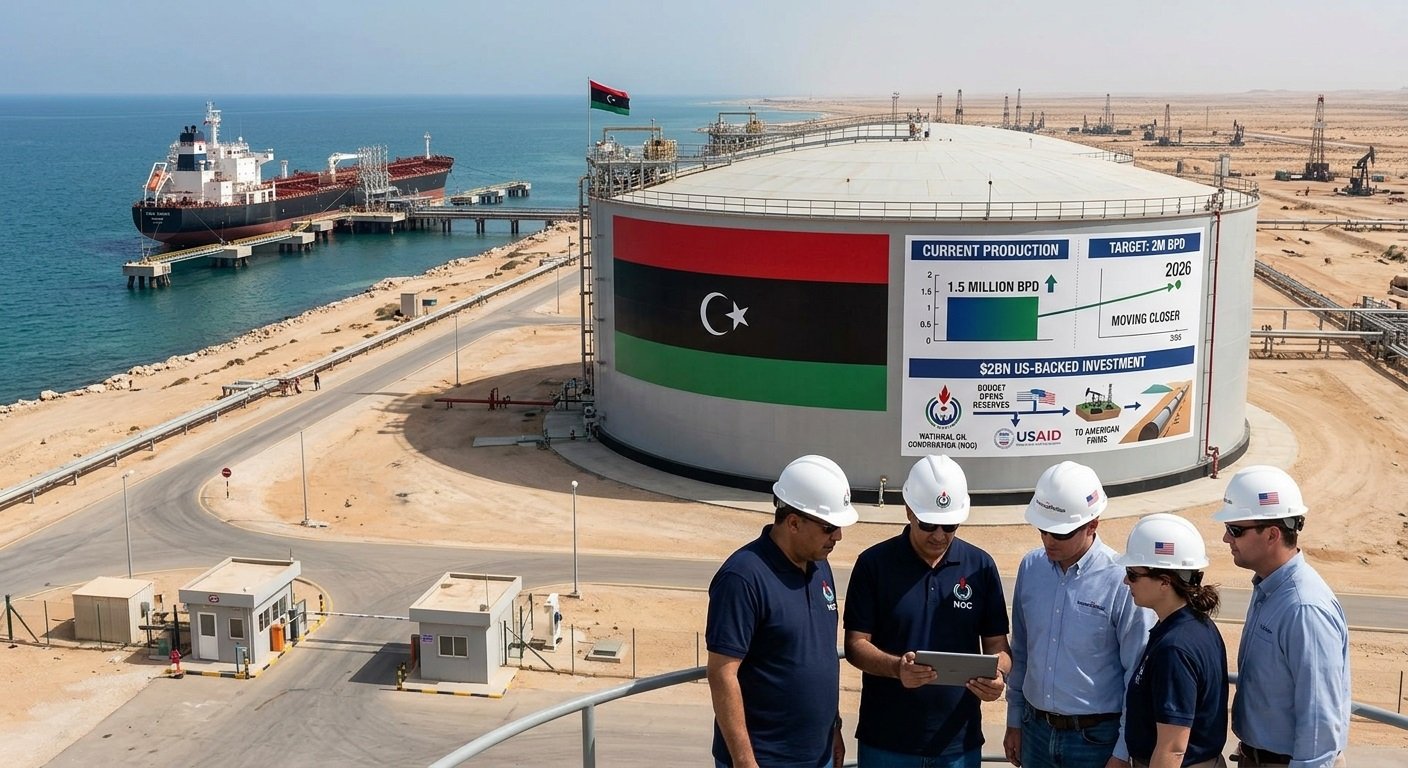
With approximately 48.4 billion barrels of proven crude oil reserves, representing the largest oil reserves in Africa and ranking 10th globally, Libya is moving closer to its goal of producing 2 million barrels of oil per day by 2031, according to reports monitored by Business A.M.
This followed a US-backed agreement on a unified national budget, which unlocks fresh funding for the country’s energy sector.
The US-backed budget of $2 billion opens Libya’s crude reserves to American firms, as the unified national budget provides funding for the state-owned National Oil Corporation (NOC) to boost oil production.
The budget marks Libya’s first unified fiscal plan since 2013, indicating progress towards political reconciliation between eastern and western factions.
To achieve 2 million barrels per day target by early 2031, Libya is seeking $16 billion in investments from international partners, alongside a planned $20 billion commitment from the NOC to modernise the country’s oil infrastructure.
Current production has already touched around 1.4 million barrels per day, the highest the country has achieved in over a decade. There are also plans to restart idle oil fields.
According to Bloomberg report, the U.S. backed budget provides 13 billion Libyan dinars (about $2 billion) to the state-owned National Oil Corporation, providing it a critical operating budget after the company received no funding in 2025.
Recall that Libya exported its first oil shipment about three months ago, when Nigeria imported about 2 million barrels of crude from Libya in May, marking the first recorded shipment from the North African country to Africa’s biggest oil producer and exposing the supply gap facing local refineries.
The U.S. intervention marks Libya’s first unified budget since the country split into rival eastern and western governments in 2013, a development seen as a significant step toward political reconciliation.
The move also aligns with U.S President Donald Trump’s push to reunify the OPEC member, while expanding opportunities for American energy companies to access Africa’s largest proven crude oil reserves.
U.S renewed focus on Libya takes place as conflict in the Middle East continues to disrupt nearly one-fifth of global oil and gas production, thereby prompting international energy companies to seek new investment opportunities elsewhere.
With fair stability now in a country that was for many years a theatre of self annihilation, Libya now targets higher oil output, smarting from its production of 1.4 million bpd, its highest level in more than a decade. In addition, the NOC is set to restart oil fields that have remained idle due to years of conflict with the attendant political uncertainties from the 2011 overthrow of Libya’s longtime ruler Moammar Qaddafi.
Meanwhile the NOC has secured a $1 billion loan from the Libyan Foreign Bank, which will finance certain projects that will raise oil production beyond 1.5 million barrels per day by mid-2027.
The chief executive and chairman of Libya’s National Oil Corporation (NOC) Masoud Suleman Musa said a second $1 billion loan will be released once that milestone is achieved.
Suleman succeeded Farhat Bengdara in 2025 as Libya’s NOC boss.
Meanwhile, the US involvement in Libya has also intensified. In April, fighters from the country’s rival factions trained together under US supervision, while Trump adviser Massad Boulous helped broker the budget agreement.
According to oil industry watchers, these developments underscore Washington’s growing commercial and strategic interest in Libya, as the world’s largest economy seeks to stabilise the country and strengthen American influence over one of Africa’s most valuable energy markets.