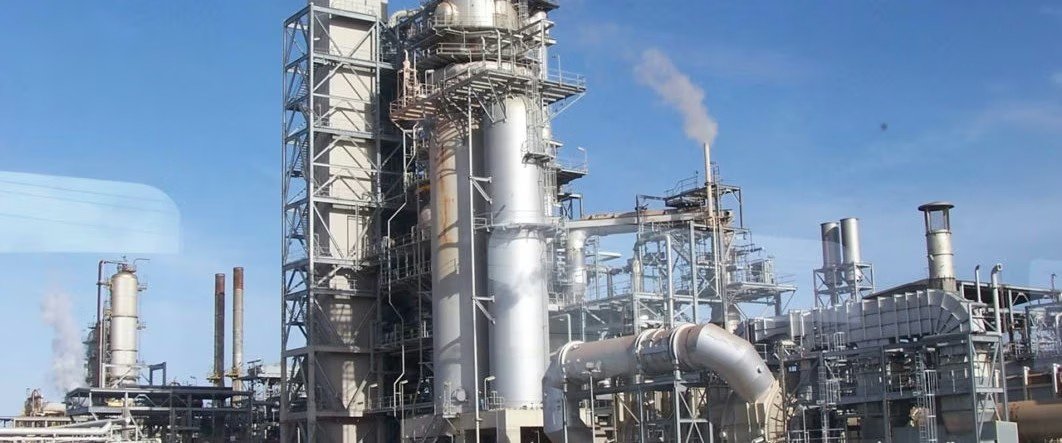
The Independent Petroleum Marketers Association of Nigeria (IPMAN) has urged petroleum marketers across the country to invest in the planned initial public offering (IPO) of Dangote Petroleum Refinery and Petrochemicals, as economist Bismarck Rewane projected that Nigeria’s economy could more than double to $600 billion by 2030 on the back of stronger private-sector investment.
In a statement signed by its national president, Abubakar Shettima, IPMAN said the proposed share sale represented a strategic opportunity for independent marketers to participate directly in Nigeria’s refining value chain.
The association said greater domestic refining capacity could reduce dependence on imported petroleum products, conserve foreign exchange and strengthen energy security, while enabling marketers to benefit from the growth of the downstream industry.
“The National President of IPMAN therefore calls on her members nationwide to aggressively capitalise on this share sale, as it is a rare, strategic opportunity to evolve from off-takers of petroleum products into equity owners of the primary production infrastructure,” Shettima said.
He added that wider ownership could strengthen marketers’ capacity to support steady fuel distribution across the country and contribute to greater price stability.
However, IPMAN simultaneously called on the Dangote refinery to broaden its direct allocation of Premium Motor Spirit (PMS) to cover all registered independent marketers, warning that restricted access could create distribution bottlenecks and raise costs for consumers.
The association urged the refinery to expand its direct supply framework beyond selected marketers, arguing that wider access would reduce logistical middlemen charges and improve the distribution of locally refined petrol nationwide.
The intervention comes as Nigeria’s downstream petroleum market adjusts to the growing contribution of the Dangote refinery, which has a nameplate capacity of 700,000 barrels per day and has progressively increased output of petrol, diesel and other refined products.
Beyond the immediate downstream implications, the planned IPO is also being positioned as a potential catalyst for broader economic expansion.
Rewane, chief executive officer of Financial Derivatives Company, said at an investor roadshow in Abuja that Nigeria’s nominal GDP could rise from a 2025 baseline of $278 billion to about $600 billion by 2030 if investment, productivity and energy supply improve as projected.
Under his outlook, annual real GDP growth could accelerate from about four percent to between seven and eight percent, while inflation could moderate from 15 percent to between eight and 10 percent.
Non-oil GDP growth is projected to rise from four to five percent to seven to eight percent, while oil production could increase from 1.5 million barrels per day to 2.2 million bpd.
Rewane also sees investment rising sharply, from 26 percent of GDP to 36 percent, with manufacturing growth accelerating from three percent to between eight and 10 percent, supported by improved energy supply.
The projected $600 billion economy would comprise household consumption of about $240 billion, or 40 percent; investment of $216 billion, or 36 percent; government consumption of $36 billion, or six percent; and net exports of $108 billion, representing 18 percent.
Rewane attributed the potential acceleration partly to the multiplier effects of large private-sector investments such as the Dangote refinery.
ALSO : BOI upsizes bond to N274.18bn on strong investor demand
“What the Dangote refinery is doing is getting into investment and adding that, and that gives you a multiplier effect,” he said.
He argued that greater private investment and higher net exports could strengthen the naira and increase the value of Nigeria’s external reserves as the economy becomes less dependent on imported refined products.
Rewane also stressed the economic value of processing crude domestically rather than exporting it in raw form, saying refining and other forms of value addition could substantially increase the economic value extracted from each barrel.
He said increased domestic refining could simultaneously support import substitution, deepen Nigeria’s capital market and reduce Africa’s reliance on refined petroleum products sourced from Europe and the Middle East.
Meanwhile, Aliko Dangote, president of Dangote Group, said the refinery’s IPO is expected to raise N2.15 trillion, or about US$1.6 billion, to finance the next phase of its expansion.
The shares are being offered at N525 each, with a minimum subscription of 10 shares, a structure Dangote said was intended to encourage broad participation.
He described the offering as “The IPO for the People”, saying the objective was to enable Nigerians to own a stake in the industrial asset.
Oluwagbenga Oyebode, chairman of the IPO event, said the offer comprises 4.1 billion ordinary shares at N525 each, with expected net proceeds of about N2.1 trillion, equivalent to 3.3 percent of the refinery’s issued capital.
Importantly, he said the proceeds would be deployed entirely as growth capital for the refinery’s expansion rather than to repair its balance sheet.
Oyebode projected that the listing could lift total Nigerian stock market capitalisation from about N160 trillion to N225 trillion, while the promoters are targeting approximately 10 million retail investors.
The proposed offering has also received Sharia-compliance clearance, according to Mohammed Bintube, chairman of Jaiz Bank, potentially widening its appeal among Islamic finance investors.
Uche Uwaleke, a professor of Capital Market, Nasarawa State University, urged prospective investors to adopt a long-term investment approach, noting that the prospectus provides an additional share as a bonus for investors who retain their holdings for at least one year.
Dangote also disclosed that the group is considering listings in about six other African countries as part of its continental expansion strategy.
The IPO gives petroleum marketers an opportunity to gain direct equity exposure to Nigeria’s expanding refining industry, potentially allowing them to participate in the earnings and long-term value creation expected from Dangote Refinery’s capacity expansion.