* Invest in marine, aquatic resources
* Play in global ocean, marine economy
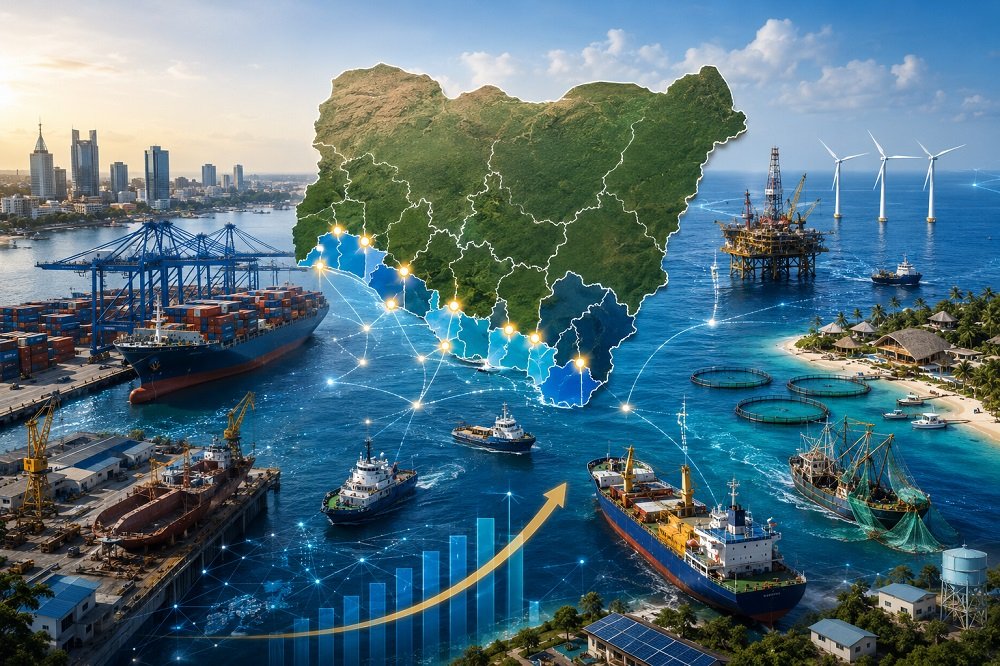
Nigeria’s littoral states: Akwa Ibom, Bayelsa, Cross River, Delta, Edo, and Lagos should strategically invest in and sustainably manage their marine and aquatic resources, so as to tap from the multi-trillion-dollar global ocean and marine economy, the Africa Blue Economy Roundtable (ABER) group has said.
The global ocean and marine resources economy are valued at $2.5 trillion per year in goods and services, with underlying asset base estimates reaching at least $24 trillion.
In addition, ABER wants the littoral states to align with the African Union “Policy Framework and Reform Strategy for Fisheries and Aquaculture in Africa (PFRS) and Comprehensive Africa Agriculture Development Programme (CAADP), which will give the states the opportunity to integrate fisheries into agriculture budgets, with a 10 percent allocation target and attract investments in aquaculture, processing, cold chain, and marine tourism.
According to Priye Kiyaramo who organised an ABER event in Yenagoa, Bayelsa State, the states in the South-South region should lead the investment, because the region alone holds over 60 percent of Nigeria’s 853 km coastline, major estuaries, mangroves, and inland waters.
The African Union established the PFRS as a blueprint endorsed in 2014 by African heads of state and government to transform the continent’s fisheries and aquaculture sector for food security, livelihoods, and wealth creation. The PFRS is aligned to the CAADP to stimulate agricultural and economic prosperity on the continent.
Business A.M. checks further indicate that Africa’s fisheries and aquaculture sector is worth over $24 billion annually, contributing roughly 1.3 to 1.4 percent of the continent’s gross domestic product (GDP), with aquaculture specifically producing an estimated value of nearly $3 billion per year.
The sector also supports over 12 million full-time and part-time workers, including fishers, processors, and aquaculture labourers, with women making up over 27 percent of the workforce.
Kiyaramo said the strategic ocean and marine resources investment by the littoral states is essential to secure the well-being of present and future generations, and demonstrate a firm commitment to building a sustainable blue economy in their respective states.
“The PFRS provides a clear roadmap for (our littoral states) to transform fisheries and aquaculture into engines of food security, jobs, and climate resilience. In particularly, the South-South governors have a unique opportunity to leverage our oceans, rivers, and coastal ecosystems to secure prosperity for current and future generations, while advancing Nigeria’s commitments under CAADP and the National Blue Economy agenda,” Kiyarama said in Yenagoa, Bayelsa State during a just-concluded Africa blue economy roundtable (ABER) event.
“The call is simple: treat the ocean like farmland, manage it, invest in it, and protect the people who depend on it, just as PFRS and CAADP recommend,” the ABER said.
In essence, the states should “formalize fishing communities, reduce post-harvest losses, and tackle illegal, unreported, and unregulated (IUU) fishing, invest in climate-resilient infrastructure, especially for women in coastal areas, reduce rural poverty and migration by creating decent jobs at the coast, while contributing directly to Nigeria’s National Blue Economy Roadmap and NDC climate goals”.
Kiyaramo, a former senior special assistant to Bayelsa government lauded Governor Douye Diri for taking the lead in advancing the blue economy at subnationals level in Nigeria, and called on other littoral governors to emulate his example.
He urged state governments to prioritize support for artisanal fishers, women, and coastal communities, and to integrate blue economy investments into their state development plans.
The PFRS & CAADP policy context: positions fisheries and aquaculture as a core pillar of agriculture under the Comprehensive Africa Agriculture Development Programme – CAADP and the Malabo Declaration.
Its core goals include: End overfishing and IUU fishing through science-based stock management, position fish as central to ending hunger in Africa, protect and formalize artisanal fishers, with deliberate focus on women and youth, increase intra-African trade in fish under AfCFTA, and support coastal communities to adapt to climate change and ocean degradation.
By treating fisheries as part of agriculture, PFRS enables states to meet CAADP targets including 6 percent annual growth in agriculture GDP, job creation, reduced post-harvest losses, and stronger food systems.