The immutable words of the Greek philosopher Heraclitus that “the only constant thing in life is change”, have never been more relevant to the capital market. I reported the market for The Guardian in the 90s, when trading was still conducted manually through the call-over system.
Today, technology has swept away the trading floor, replacing it with seamless electronic platforms that define modern global markets. The old shouting system is gone. In our time, journalists had to chase stories, attend press conferences and physically visit sources to verify information.
Social media had not yet taken centre stage in Nigeria’s communication landscape, so the major challenges of disinformation and misinformation that we confront today were largely absent.
Today, much of that legwork has disappeared, with stories often landing in newsrooms on a proverbial platter of gold. The contrast is striking: while the old newsroom demanded plenty of legwork, the convenience of the digital age appears to be contributing to more journalists developing potbellies and rosy cheeks.
But while technology has transformed how the market operates, it has not eliminated why the market needs trusted professionals. The tools may have changed, the speed may have accelerated, and the trading floor may have disappeared, but the need for professional judgement, market integrity, investor protection and trusted intermediation remains. Technology is an enabler; it is not a substitute for the institution, expertise and responsibility that underpin a credible capital market.
To some market operators who grew from the traditional model to become fat cats in the market, the word “stockbroker “has become almost an anachronism, a relic of an analogue capital market that should give way to technology, artificial intelligence and digital investing. Their fascination with Silicon Valley is so intense that they appear determined to pitch their tents entirely with technology, as if algorithms have rendered professional market intermediation obsolete.
But they fail to confront the stark reality that technology is merely an enabler. It is not the market itself, and certainly not a substitute for professional responsibility, judgement and accountability. That distinction must remain at the kernel of the debate about the future of our market.
I admit that technology is unquestionably transforming the capital market and indeed all professions. Artificial intelligence can analyse financial statements, price movements, trading patterns and market data in seconds. Digital platforms can bring investment opportunities closer to millions of investors, while automated systems can improve execution, reduce friction and make the market more accessible.
Markets are driven by far more than numbers. Expectations, sentiment, confidence, regulation, corporate strategy, economic developments and, ultimately, human behaviour all play critical roles. An algorithm can detect that a share price has moved, but it may not fully explain why investors are responding the way they are, or whether the underlying development has fundamentally altered the long-term investment proposition. This is where the stockbroker continues to have a critical role to play.
The stockbroker comfortably sits at a critical intersection between issuers, investors and the market. It involves market intelligence, investor relationships, price discovery, liquidity, research, capital raising and helping investors understand the opportunities and risks embedded in securities.
The Dangote Refinery IPO provides a timely illustration. An investor may access the offer electronically, read the prospectus online and submit an application through a digital channel. But convenience does not eliminate the need to interrogate earnings prospects, cash-flow generation, expansion plans, debt obligations, crude supply, operating risks, dividend prospects and valuation.
Technology can make information available. Professional judgment helps put that information into context. This is not an argument against technology. Far from it. The modern market professional must understand artificial intelligence, data analytics, digital distribution and automated execution. Technology should make the stockbroker more productive, better informed and more responsive and not extinct.
The real opportunity lies in the Augmented stockbroker: a professional who combines market knowledge and investor understanding with technology’s analytical power, while retaining human judgement where numbers alone cannot settle the question.
Consider what happens when the market encounters an unexpected regulatory announcement, geopolitical shock, corporate governance controversy, commodity-price change or liquidity crisis. Technology can detect the market reaction almost instantaneously. Investors, however, still need someone capable of explaining the implications, separating signal from noise and placing the development within the broader investment context.
Stockbrokers must therefore become better researchers, better communicators, better users of technology and more sophisticated interpreters of markets. They must understand the changing expectations of institutional and retail investors and deploy digital tools aggressively while retaining the professional standards that underpin investor confidence.
Digital platforms can democratise access. Artificial intelligence can strengthen research. Algorithms can improve execution. Banks can provide distribution and payment infrastructure. Regulators can provide oversight. Issuing houses can structure transactions. But stockbrokers remain part of the professional architecture connecting issuers with investors and helping securities find an active secondary market. And that secondary market matters.
An IPO may generate headlines for a few weeks, but the real test begins after listing. Investors continue to buy and sell. Prices discover new levels. Companies communicate with shareholders. Institutional investors reassess their positions. Liquidity matters. Corporate actions occur. New capital may eventually be required.
This is why the claim that technology has made the stockbroker obsolete is too simplistic. Technology may change how the market works; it does not eliminate the need for professionals who understand the market.
There is also a danger in becoming so enamoured of technology that accessibility is mistaken for sophistication. Giving an investor faster access to thousands of pieces of information does not necessarily make that investor better informed. Sometimes it merely creates more noise.
The future, therefore, should not be framed as Silicon versus stockbroker. It should be about Silicon with the stockbroker.
Technology should enhance professional judgement, not erase it; expand market access, not weaken investor protection; and make investing easier without pretending that investment decisions have become easy. Readers should not misunderstand my point. A stockbroker who sees technology as a threat and refuses to adapt may eventually become obsolete. But one who embraces technology, combines it with professional expertise and remains closely connected to investors can continue to play a highly relevant role in the market.
The real contest is not between the machine and the human. It is between technology used intelligently and technology worshipped blindly. The Nigerian capital market needs both Silicon and the stockbroker.
- business a.m. commits to publishing a diversity of views, opinions and comments. It, therefore, welcomes your reaction to this and any of our articles via email: comment@businessamlive.com

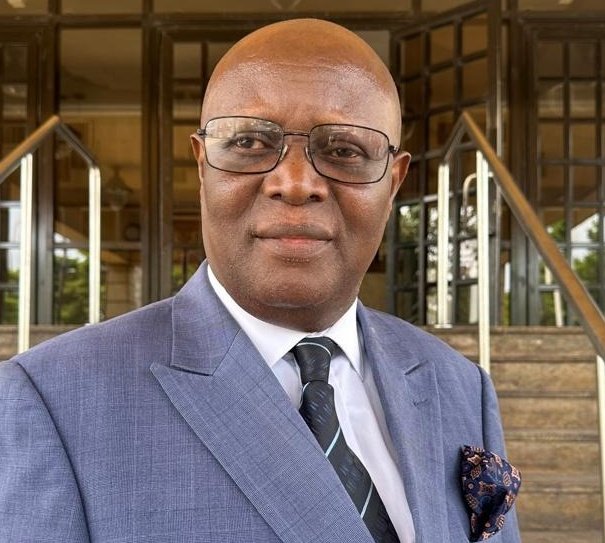
Sola Oni, an integrated communications strategist, Chartered Stockbroker and Commodities Broker and Capital market registrar, is the Chief Executive Officer, Sofunix Investment and Communications. You can reach him at onisola2000@yahoo.com