The continuous wavy movement of the price of premium motor spirit (PMS) has come to be one of the most disrupting and distorting trends in the three-year economic reform efforts of the President Bola Ahmed Tinubu administration. Starting from 29 May 2023, when Tinubu announced the removal of fuel subsidy, the movement of the price of the commodity (PMS or petrol) has been like a yo-yo; literally shooting through the roof, at times.
From below N200 per litre (at the pump) as of May 2023, the price of PMS jumped to about N800 per litre in a matter of hours, following President Tinubu’s pronouncement at his inauguration. It kept jumping up or down until end-February 2026, when the US-Iran face-off commenced as a full-blown war, and the price of petrol spiked above N1000 per litre. The price has been undulating, largely reflecting the movement of crude oil prices (and refined products) in the international market.
Today (mid-September 2026), the price of PMS has almost hit N1500 per litre. This is attributable to the fact that petrol landing cost had climbed to N1420 per litre, putting a lot of pressure on fuel marketers replenishing their stocks at international prices. This figure is N70 above Dangote Refinery’s (current) gantry price of N1350 per litre.
Noteworthy is the fact that each time the price of petrol rises (no matter how small), it automatically pushes up the cost of transportation, prices of food items, and other daily needs of the citizenry. All these drive up the headline inflation, measured by consumer price index (CPI); which hit 34.85 percent at end-December 2024. Although the National Bureau of Statistics (NBS) whose duty it is to produce the CPI has been dishing out figures to show that the rate of inflation has been declining consistently, the reality in the marketplace tends to put doubts on their data. Prices of practically everything are sky high!
Noteworthy, too, is the fact that price increases engendered by any rise in the price of petrol reflects further weakening of consumer purchasing power via higher inflation rate. And this has been the lot of Nigerians and the Nigerian economy since May 2023. By an eccentric arrangement, Nigeria as a major oil producing/exporting nation is about the only OPEC-member country that depends on imported PMS and other refined products.
Unfortunately, even with the Dangote Refinery that commenced operations in 2024, and has the capacity to satisfy Nigeria’s domestic PMS need, petrol importation is still ongoing. This makes it very easy to transmit every rise or drop in the prices of refined products into Nigeria. At present, the lingering US-Iran war is perpetually exposing Nigeria to the vagaries and headwinds of spiking (imported) PMS prices.
The point is that owing to the unending changes or increases in the prices of PMS, it has become increasingly difficult for the CPI as released by the NBS to be perceived as truly reflecting the endless bashing of Nigerians’ consumer purchasing power. As a “generator economy”, every economic agent in Nigeria, to a very large extent, depends on the use of PMS as fuel for their engagements. Thus, every little adjustment in the price of the commodity translates to sharp increases in the operating cost of every entity — households and businesses.
While this has been the lot of Nigerians in the past three years of President Bola Ahmed Tinubu administration, the government of the day appears to have done very little or nothing to ensure a viable and competitive local refining industry. The Dangote Refinery behemoth only achieved a pyrrhic victory, and keeps thriving against all odds. In the past three years of the current administration, the minister of petroleum resources, who is the president himself, has encouraged PMS importation, by issuing more licenses.
This, among other vested-interest-induced actions and policies stalled and/or stifled practically all the private sector efforts to have many local refining companies. Even as the Dangote Refinery was increasing its operating capacity to improve local PMS supply, the government has kept licensing more importers. At the same time, for whatever queer excuses, the government of the day subjected the Dangote Refinery to an avoidable task of importing crude oil—its key raw material—from many far-flung foreign countries.
Apparently, to build up his manifesto for the January 2027 presidential election, President Tinubu only recently made a statement, for the first time, giving assurances that the four giant state-owned refineries would soon be repaired. He gave no definite timeline for this. Those refineries have gulped billions of dollars and trillions of naira in turn-around maintenance (TAM) costs, and yet have remained moribund for more than two decades. Were these refineries repaired (as a priority initiative) after fuel subsidy withdrawal, maybe the local refining industry would have taken a more competitive and vibrant shape by now.
It goes without saying that a viable and competitive local refining industry would, to a very large extent, stabilize the wavy PMS price movement. The subsisting arrangement in which PMS importation looms large—is a veritable channel for (avoidable) imported inflation. And Nigerians bear the brunt of all this, especially via the lingering high cost-of-living crisis that has sunk millions of people into absolute poverty in the past three years.
Subsumed in all this is also the latent failure of government policies and initiatives aimed at alleviating the pervading hardship in the land. Wage awards and salary increases are rendered ineffectual even as they are being implemented. Thus, although the government may have meant well by raising the minimum wage from N30000 to N70000, the new minimum wage certainly left the wage earners worse off—due to the crushing inflation and crashing of the naira value.
Today, the Federal Government of Nigeria (FGN) and many subnational governments (states and local) have come up with several initiatives to alleviate the high cost of movement (transportation) for their workers. The intermittent increases in the prices of PMS, which usually raise the cost of transportation, normally take up a huge chunk of the meagre salaries and wages of the workers. And the government keeps dishing out all manner of palliatives—with little or no impact!
The upshot of this is that Organised Labour (the NLC and TUC) is in perpetual negotiation with the FGN, for wage increases; or, in endless threat (for its members) to down tools and embark on strike. Now that the price of PMS is soaring (almost hitting N1500 per liter), the leadership of both the Nigeria Labour Congress (NLC) and the Trade Union Congress (TUC) are literally on a tightrope, pressing for another round of wage increases. And the cycle continues ad infinitum!
- business a.m. commits to publishing a diversity of views, opinions and comments. It, therefore, welcomes your reaction to this and any of our articles via email: comment@businessamlive.com

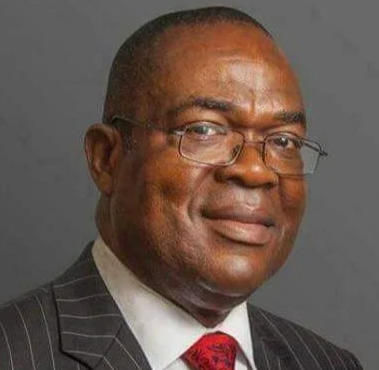
Marcel Okeke, a practising economist and consultant in Business Strategy & Sustainability based in Lagos, is a former Chief Economist at Zenith Bank Plc. He can be reached at: obioraokeke2000@yahoo.com; +2348033075697
(text only)