• Demands youth inclusion
• With 33 distinct oil/gas fields, has capacity for 500,000 bpd
Only a careful resolution of the long-standing shut-in of OML 11 can guarantee Ogoni oil resumption, Legborsi Yamaabana, president-general of the Ogoni Youth Federation and spokesman for the Niger Delta Ethnic Nationalities Youth Leaders Forum (NDENYLF) said.
In addition, he demanded that the Nigerian federal government must engage in strategic involvement of the youth of Niger Delta in all consultations with stakeholders.
“While we fully support the Federal Government’s efforts to reactivate OML 11, the youth must be actively involved in all consultations and operational frameworks,” Yamaabana emphasized.
“The current trend of total exclusion is unsustainable. Sustainable production can only be achieved when the young people of Ogoniland are carried along as active partners in economic future of Ogoniland.”
He lauded the government for regional peace efforts, commending President Bola Tinubu on OML 11 progress, and announced an upcoming Ogoni youth congress.
He commended young people across the oil producing region on International Youth Day 2026, praising their resilience and vital role in national economic recovery.
The Ogoni youth leader highlighted the pivotal contributions of young people in Nigeria’s oil-producing heartland toward fostering stability and boosting national revenue.
“The recent gains in Nigeria’s oil production output are a direct result of the commitment to peace demonstrated by our youth. Young people across the Niger Delta are determined to end economic sabotage by collaborating actively with government authorities and security agencies.”
Addressing the specific situation in Ogoniland, Yamaabana appealed for calm among Ogoni youths, announcing that an Ogoni youth congress will be convened soon to deliberate on key issues affecting young people in the area.
He further commended President Tinubu for his administration’s commitment to restarting oil and gas operations in Ogoniland after a 33-year hiatus, noting that successful resolution of the long-standing shut-in of OML 11 would mark a milestone for the current government.
He pledged the full support of Ogoni youths for the resumption of exploration activities in the OML 11 field, but issued a firm call for direct stakeholder engagement.
The primary issues surrounding Oil Mining Lease (OML) 11 in Ogoniland involve fierce resistance from local communities over forced re-entry by Shell, decades of severe environmental degradation, unresolved legacy compensation claims, and a lack of community consent regarding ownership and operatorship transfers.
Active oil extraction by Shell for more than half-a-century prior to 1993 left extensive hydrocarbon contamination across Ogoniland’s soil and water sources.
While remediation efforts (such as the UNEP-led clean-up) have been underway, local groups frequently criticize the process as slow, politicized, or superficial while new exploration is prioritized.
Attempts by federal authorities and state entities (such as NNPCL/NPDC) to reassign operatorship or auction stakes in OML 11 have repeatedly bypassed the “free, prior, and informed consent” of the Ogoni people.
The legacy of Ken Saro-Wiwa and the violent crackdown on the Movement for the Survival of the Ogoni People (MOSOP) in the 1990s makes any unilateral government or corporate attempt to restart oil pumps a trigger for renewed civil unrest.
Meanwhile, indigenous communities and local stakeholders hold massive legacy claims and unpaid compensation judgments against operating partners like Shell.
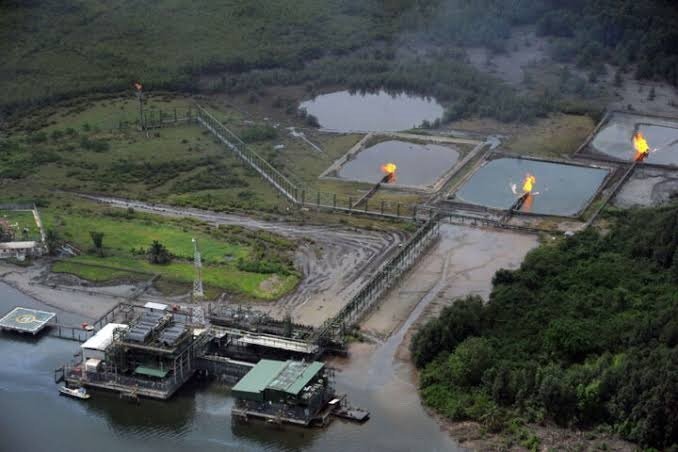
The OML 11 is a massive and highly lucrative oil mining lease located in the southeastern Niger Delta, extending across several Rivers State local government areas (and parts of Abia State) down to Bonny Island. It historically contains 33 distinct oil and gas fields, with a large portion situated directly in Ogoniland. Out of these, only a fraction (around 8 primary fields) actively produced oil before production was halted.
The block has a historical capacity to yield upwards of 500,000 barrels of crude oil per day, making it one of Nigeria’s most strategically vital petroleum assets.
OML 11 houses critical national infrastructure, including the massive Bonny Oil Terminal and the Nigeria Liquefied Natural Gas (NLNG) plant on Bonny Island. The license is held via a joint partnership where the state-owned Nigerian National Petroleum Company Limited (NNPCL/NEPL) holds a 55 percent controlling stake, alongside multinational partners Shell (SPDC) with 30 percent, TotalEnergies with 15 percent, and Eni (Agip) with 5 percent. Operatorship has shifted away from Shell to state entities following extended legal disputes.