• Ruling CPDM forced into rare meeting
• $67.52bn GDP stifled as FDI shrinks
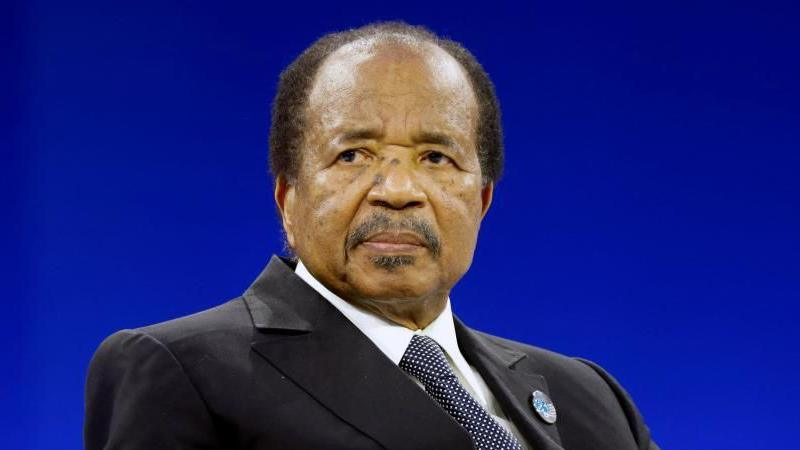
Political and economic uncertainty mount in Cameroon, a major country in Central Africa region over the absence of it’s president Paul Biya for at least 45 days.
Biya, 93, the world’s oldest serving head of state has been out of the country for 45 days now forcing his ruling party, the Cameroon People’s Democratic Movement (CPDM) to convene a meeting of it’s senior leaders.
The rare meeting of senior CPDM leaders raises critical questions about succession and future leadership of one of Central Africa region’s important economy, with a GDP size of $67.52 billion.
Opposition groups have been pressing the government to clarify Biya’s health status, and ensure there is continuity of state governance.
Biya, Africa’s second-longest-serving president, after Equatorial Guinea’s Teodoro Obiang Nguema Mbasogo, has not named a successor, though legislation for a vice presidency was recently approved.
Biya won a controversial eighth term in Cameroon in October 2025, but had hardly stayed-put in the country since then. He left the country on June 7 for what the presidency described as “a brief private stay in Europe” and has yet to return, according to Reuters report.
So far, the authorities at Etoudi Palace in Yaoundé have not disclosed when the president is expected back, making the current his longest known stay abroad since taking office in April 1982.
Jean Nkuete, secretary-general of CPDM’s central committee, in a statement described the meeting fleetingly as “an important working session” without stating its agenda.
Criticisms from opposition politicians have continued to mount. Though there was no official indication that the recent CPDM top leadership meeting was linked to Biya’s prolonged absence.
Opposition lawmaker Jean Michel Nintcheu has urged the Cameroon’s Constitutional Court to declare the presidency vacant. While Cameroon’s main opposition figures have urged the government to clarify the president’s status, with the Cameroon Democratic Union (CDU) calling on authorities to explain the “effective continuity of the state”.
Several government officials have consistently rejected speculation surrounding Biya’s health and capacity to govern, maintaining that the president remains capable of governing from abroad and dismissing reports suggesting he is receiving medical treatment.
Biya has frequently spent extended periods in Switzerland and other parts of Europe during his presidency. However, his current trip is the longest on record. He has governed Cameroon for 44 years after taking office in April 1982 from then ailing former president Ahmadou Ahidjo. Today, Biya holds the record as the world’s oldest serving head of state and Africa’s second-longest-serving president after Equatorial Guinea’s Teodoro Obiang Nguema Mbasogo.
To wit, Biya’s latest long absence has placed succession questions to the spotlight. In particular, concerns have been raised over a veteran leader, given his age and the lack of a publicly identified successor.
Earlier this year, Cameroon government approved for the first time, a legislation reintroducing the position of vice president, a role that would stand first in line to succeed the president. However, the position has yet to be filled.
Political economists of African orientation have adduced that Cameroon’s Paul Biya could become the world’s first president to mark his 100th birthday in office by the time he completes his current 7-year mandate, when he would turn 99, close to 100 years.
Investors, however, have been on a wait-and-see, holding back foreign direct investments in a country that is one of Central Africa’s largest economies, and a major producer of cocoa, crude oil, natural gas and timber.
Development analysts say any prolonged uncertainty surrounding Cameroon’s political leadership could have broader implications for governance, policy continuity and investor confidence.
According to the World Bank, Cameroon’s economy faces subdued growth, persistent poverty, and high debt service burdens, alongside easing inflation and improving energy investments.
Real GDP grew by roughly 3.2% to 3.7%, held back by declining oil production and infrastructure gaps.GDP growth registered around 3.2% to 3.7%, falling short of national development targets.
Boosted by strong cocoa prices, agrifood, and energy upgrades like the Nachtigal dam, but dragged down by contracting crude oil output, inflation and bebt eased down to roughly 3.4% as food and fuel price pressures cooled. But public debt has hovered around 43% to 44% of GDP, though heavy debt-servicing obligations consume a major share of government revenue.