Oluwadarasimi Omiyale
The modern VIP aircraft fleet has become an increasingly important instrument of state power. As geopolitical risks intensify and diplomatic schedules grow more demanding, governments are expanding investment in specialised aircraft designed to guarantee secure transportation, operational continuity and real-time communication for heads of state and senior officials.
Across major economies and emerging nations alike, governments increasingly view dedicated VIP aircraft not merely as transportation tools, but as airborne command centres equipped with sophisticated communications systems, advanced navigation technology and, in some cases, defensive security infrastructure capable of supporting national leadership under virtually any operational condition.
Yet the size, sophistication and management structure of these fleets vary significantly from one country to another, reflecting differing political priorities, economic realities, industrial strategies and public accountability standards.
The United States remains home to the world’s most recognised government aviation platform through the Air Force One programme, which transports the American president aboard specially modified Boeing 747 aircraft.
While the aircraft have become enduring global symbols of American presidential power, the programme itself has faced sustained scrutiny over spiralling procurement costs, repeated delivery delays and mounting technical complexities tied to modernisation efforts.
The replacement programme for the ageing presidential fleet has encountered major cost escalations as engineers work to integrate highly secure communications systems, military-grade defensive capabilities and full presidential operational infrastructure into a commercial aircraft platform.
Despite these challenges, the U.S. government continues to regard the programme as indispensable to national security architecture, ensuring that the president retains uninterrupted operational command authority regardless of global location or geopolitical conditions.
In Europe, Germany’s approach to government aviation has been shaped largely by operational reliability concerns following a series of high-profile aircraft failures involving senior officials.
One particularly embarrassing incident involving former Chancellor Angela Merkel forced the German leader to abandon an official aircraft and board a commercial flight while travelling to an international summit after technical faults disrupted the mission.
The incident triggered widespread political criticism and accelerated Berlin’s decision to modernise its government fleet through the acquisition of Airbus A350 aircraft configured specifically for state operations.
Germany’s response reflects a growing recognition among governments that reliability, mission continuity and reputational protection have become just as important as comfort and prestige within VIP aviation planning.
France, meanwhile, continues to align its government aviation strategy closely with domestic industrial policy.
Paris operates Airbus-manufactured aircraft for presidential and official travel, reinforcing support for Europe’s aerospace champion while maintaining fleet standardisation within its state aviation structure.
The French fleet includes both long-haul and short-haul aircraft tailored to varying diplomatic and operational assignments, demonstrating how government aviation decisions frequently intersect with economic and industrial interests.
Italy has adopted a more flexible operational model centred around high-performance business jets such as the Gulfstream G650ER.
Italian authorities prioritise speed, long-range capability and operational efficiency, particularly for rapid diplomatic deployments and international government engagements requiring flexibility across multiple destinations.
On the other hand, China has taken an entirely different path. Rather than maintaining a permanently dedicated presidential aircraft, the Asian powerhouse relies on specially configured commercial aircraft temporarily adapted for state missions.
Under this arrangement, selected aircraft undergo extensive security inspections and operational modifications before transporting senior Chinese officials. Once assignments are completed, the aircraft are returned to commercial airline service.
The approach allows China to maintain operational flexibility while retaining strict security oversight and reducing the long-term burden associated with maintaining permanently dedicated presidential aircraft.
Industry analysts say the Chinese model highlights how governments can balance security requirements with cost efficiency, particularly in systems where state influence over commercial aviation infrastructure remains extensive.
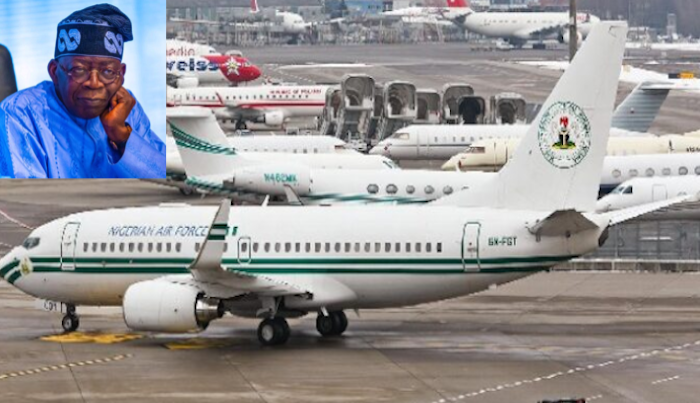
Nigeria also maintains a fleet of VIP aircraft under the Nigerian Air Force to support presidential and senior government travel both domestically and internationally.
The fleet plays a strategic role in ensuring mobility for top government officials across a country where commercial aviation schedules, security considerations and diplomatic obligations often require flexible and secure transportation alternatives.
However, government aircraft operations in Nigeria continue to generate periodic public debate, particularly around maintenance expenditure, fleet utilisation efficiency and transparency in operational management.
Critics frequently question whether the scale of government aviation spending appropriately reflects broader fiscal realities facing the country, especially during periods of economic pressure and rising public debt obligations.
Aviation analysts note, however, that Nigeria’s situation mirrors a challenge confronting many developing economies attempting to balance constrained public finances with the operational necessity of maintaining reliable government mobility infrastructure.
According to industry observers, the debate surrounding government aircraft fleets increasingly centres on three interconnected issues: operational security, financial sustainability and public perception.
For advanced economies such as the United States, Germany and France, investment in highly specialised government aircraft is often justified by national security requirements, diplomatic obligations and continuity-of-government planning.
In emerging economies, however, public scrutiny tends to intensify because of competing development priorities, infrastructure deficits and pressure on public spending.
Nevertheless, experts argue that the strategic importance of government aviation continues to grow in an increasingly volatile geopolitical environment where rapid diplomatic engagement, crisis response and secure international mobility have become critical components of state operations.
The COVID-19 pandemic, global supply chain disruptions, rising geopolitical tensions and expanding cybersecurity risks have further reinforced the value governments place on maintaining independent, secure and reliable aviation capabilities for senior leadership.
Increasingly, governments are also reassessing the technological capabilities of VIP aircraft themselves.
Modern state aircraft are now expected to support encrypted communications, real-time intelligence coordination, emergency military liaison functions and uninterrupted access to national command systems during transit.
This evolution has transformed many VIP aircraft into highly sophisticated mobile operational hubs rather than conventional executive transport platforms.
At the same time, sustainability pressures are beginning to influence government aviation procurement decisions.
Several countries are exploring newer-generation aircraft with improved fuel efficiency, lower emissions profiles and reduced operational costs as environmental concerns increasingly shape aviation policy globally.
To major aerospace manufacturers such as Boeing, Airbus and Gulfstream, government aviation projects represent some of the most strategically significant contracts in the global aerospace market, capable of driving industrial growth, technological advancement and high-skilled employment.
But beyond economics, VIP aircraft fleets increasingly reveal how governments think about power, security and national priorities. America focuses on maximum protection, Germany on reliability, France on industrial alignment, China on flexibility and Nigeria on balancing state mobility with fiscal accountability.
As global instability grows, the debate over presidential fleets is unlikely to disappear. Governments may now face mounting pressure to prove that these aircraft are not symbols of excess, but strategic tools essential for modern governance and national security.