The recent request by President Bola Tinubu to the National Assembly for approval to raise $20.52 billion and €1.045 billion in fresh external loans has once again brought Nigeria’s growing public debt burden into sharp focus. While the President has justified the proposed borrowing by citing the country’s enormous infrastructure deficit and the need to finance critical projects across various sectors, the announcement has understandably generated considerable public concern.
These concerns cannot be dismissed as mere opposition to government borrowing. They must be viewed against the background of Nigeria’s debt accumulation over the past decade, the relatively limited visible impact of such borrowing on infrastructure development and the growing proportion of government revenue devoted to debt servicing. The fundamental question Nigerians are asking is whether borrowed funds are efficiently deployed, transparently managed and translated into tangible developmental outcomes.
Nigeria’s public debt statistics provide sufficient grounds for concern. As at June 30, 2026, the country’s total public debt stood at ₦166.79 trillion, comprising domestic debt of ₦91.59 trillion (54.91 per cent) and external debt of ₦75.20 trillion, equivalent to $54.52 billion (45.09 per cent). This represents a phenomenal increase from the ₦11.24 trillion recorded in December 2014.
While part of this increase reflects naira devaluation and the securitisation of previously accumulated obligations, the scale of expansion over a relatively short period raises legitimate questions about debt sustainability and the developmental returns on borrowed resources. More importantly, Nigeria’s debt challenge should not be assessed exclusively through the conventional debt-to-GDP ratio. Although this ratio may appear moderate by international standards, the more immediate fiscal constraint is the country’s capacity to generate sufficient revenue to meet its obligations. Debt servicing has, in recent years, consumed an exceptionally high proportion of government revenue, averaging more than 70 per cent over the period under consideration. This leaves progressively less fiscal space for infrastructure, education, healthcare and other essential public services.
The composition of Nigeria’s debt portfolio also raises questions about the extent to which borrowing is linked to productive investment. The Federal Government’s domestic debt stock outstanding by instruments as at June 30, 2026, stood at ₦86.99 trillion. Of this amount, FGN Bonds accounted for ₦64.84 trillion, representing 74.53 per cent of the total, including ₦22.11 trillion in securitised Ways and Means advances. By comparison, outstanding FGN Sukuk amounted to only ₦1.19 trillion (1.37 per cent), while FGN Green Bonds accounted for a mere ₦47.36 billion (0.05 per cent).
The overwhelming dominance of conventional government securities contrasts sharply with the relatively small contribution of instruments specifically designed to finance identifiable development projects. This is not to suggest that conventional government bonds are necessarily unproductive or cannot finance capital expenditure. Rather, it highlights the need to rebalance the debt portfolio towards instruments that establish a clearer connection between borrowed funds and identifiable development projects.
The external debt portfolio presents a related challenge. Of Nigeria’s external debt stock of $54.52 billion, Eurobonds account for a significant proportion, amounting to approximately $18.55 billion. Although Eurobonds provide access to international capital markets and diversify government financing sources, they are generally not structured around specific infrastructure assets or projects. Their proceeds may be applied to broader budgetary purposes, depending on the terms of issuance and the government’s stated financing objectives.
Nigeria also faces substantial future Eurobond repayment obligations. The outstanding repayment schedule includes a $1.5 billion bullet repayment due in November 2027, followed by significant annual maturities from 2028 through 2034, before repayments resume in 2036 and continue into 2051. These obligations underscore the importance of managing refinancing and foreign exchange risks carefully. They also reinforce the need to reconsider the structure of future external borrowing rather than continually relying on conventional debt instruments without sufficient attention to the developmental use of their proceeds.
It is against this background that greater consideration should be given to Sukuk as an alternative and complementary instrument for financing Nigeria’s infrastructure requirements. Properly structured Sukuk can link fundraising to clearly identified assets and development projects, making the purpose of borrowing more transparent and the application of proceeds easier to monitor. This makes Sukuk particularly relevant to a country seeking to address its infrastructure deficit while rebuilding public confidence in government borrowing.
Nigeria is not starting from scratch. The Federal Government introduced its Sovereign Sukuk programme in 2017, with successive issuances deployed principally towards constructing and rehabilitating federal roads across the six geopolitical zones and the Federal Capital Territory. The programme has demonstrated that Sukuk can mobilise substantial domestic financial resources for identifiable infrastructure projects.
At the subnational level, Osun State issued an ₦11.4 billion Sukuk in 2013 to finance the construction of 26 schools, while Lagos State subsequently accessed the Sukuk market to finance road infrastructure. These experiences demonstrate that Sukuk can be deployed by both federal and state governments, irrespective of the religious composition of their populations.
The results of the Federal Government’s existing programme provide a basis for scaling up its use. The roads financed through successive issuances illustrate the practical connection between public borrowing and physical infrastructure delivery. However, with outstanding Federal Government Sukuk accounting for only about 1.37 per cent of the domestic debt portfolio, its current scale remains too small to make a transformational contribution to the country’s infrastructure deficit.
Importantly, Sukuk financing is not limited to the domestic capital market. Both domestic and foreign funds can be mobilised through Sukuk structures. The Federal Government could therefore explore international sovereign Sukuk denominated in US dollars, euros or other suitable currencies to attract long-term financing from international banks, conventional institutional investors, sovereign wealth funds, pension funds and other global investment institutions.
The proposed external borrowing of $20.52 billion and €1.045 billion presents an opportunity to examine whether a significant proportion of the financing requirements could be raised through international sovereign Sukuk rather than relying exclusively on conventional external loans.
Different Sukuk structures could be deployed depending on the nature of the projects. Al-Ijarah Sukuk could finance existing or identifiable infrastructure assets through leasing arrangements, while Al-Istisna Sukuk could support the construction of new infrastructure, including roads, bridges and power facilities. Al-Musharakah could facilitate commercially viable infrastructure investments involving partnerships between government and private investors.
The flexibility of these structures makes it possible to develop a diversified infrastructure financing programme rather than rely on a single model. A carefully designed international sovereign Sukuk programme could also attract investors who might not otherwise participate in Nigeria’s conventional Eurobond issuances, broadening the country’s financing options and investor base.
More importantly, Sukuk offers an opportunity to strengthen transparency and accountability in the utilisation of public borrowing. One of the principal reasons for public scepticism is the perceived disconnect between the amounts borrowed and the infrastructure outcomes delivered. Nigerians are increasingly concerned that governments accumulate enormous debt obligations without providing sufficient information about the projects financed, amounts disbursed, physical progress achieved and economic returns generated.
This perception has weakened public confidence in borrowing as an instrument of development. Sukuk can help change this narrative, provided its project-linked features are supported by effective institutional and contractual safeguards.
Each issuance should identify the projects to be financed, their locations, approved costs, implementing agencies and expected completion periods. Proceeds should be paid into dedicated, ring-fenced accounts and released only against verified project expenditure. Independent technical auditors should certify work completed, while periodic public disclosures should report funds raised, amounts disbursed, outstanding balances and actual physical progress. Where appropriate, special purpose vehicles should be established to administer transactions and provide clear reporting and governance arrangements.
This approach is also consistent with the spirit and objectives of the Fiscal Responsibility Act 2007. The Act establishes important principles for responsible fiscal management, including the requirement that borrowing be undertaken for capital expenditure and human development, subject to applicable statutory conditions. Section 44 specifically provides that government borrowing should be applied only to capital expenditure and human development, while the Act also emphasises transparency, accountability and prudent management of public resources.
Sukuk can provide a practical financing mechanism for advancing these objectives by establishing a more visible connection between resources mobilised and the capital projects they are intended to finance. However, Sukuk should complement, not substitute for, full compliance with the Act. Raising a loan through Sukuk does not automatically establish that the borrowing satisfies statutory requirements. Proper project appraisal, legislative scrutiny, debt sustainability analysis, procurement compliance and expenditure monitoring remain indispensable.
There is also a compelling case for state governments to embrace Sukuk more actively. Given the enormous infrastructure requirements at the subnational level, states should explore domestic Sukuk issuances to finance roads, schools, water projects, markets and other essential public infrastructure. States with viable revenue-generating assets or identifiable infrastructure projects could develop their own Sukuk programmes, subject to the necessary legal approvals, credit assessments and investor requirements.
This would deepen the domestic capital market, expand investment opportunities for institutional investors and reduce exclusive dependence on conventional bank loans and government bonds. It would also encourage greater discipline in project selection, preparation and implementation, since successful Sukuk issuance requires clearly defined underlying transactions and credible financing arrangements.
The issue, therefore, is not whether government borrowing should stop altogether. A country with enormous infrastructure deficits and development aspirations cannot reasonably expect to finance all its requirements from current revenue. Borrowing, when properly structured and prudently managed, can be an important instrument of economic transformation. The more fundamental issue is the quality, purpose, structure and accountability of such borrowing.
Nigeria must move away from a debt management approach that places disproportionate emphasis on how much money can be raised towards one that gives equal, if not greater, attention to what the money will finance, how it will be spent and the measurable economic and social benefits it will deliver.
The proposed $20.52 billion and €1.045 billion external borrowing should therefore provide an opportunity to fundamentally rethink the country’s financing strategy. Rather than relying entirely on conventional loans, the Federal Government should undertake a serious assessment of the proportion of its infrastructure financing requirements that could be mobilised through international Sukuk.
The National Assembly, in considering the proposed borrowing plan, should also request a comparative assessment of conventional external loans and Sukuk, covering their respective costs, repayment obligations, foreign exchange implications, underlying asset requirements and accountability mechanisms. This would enable legislators to consider not only how much Nigeria intends to borrow but also which financing structures are best suited to delivering the projects for which the funds are intended.
Nigeria does not necessarily have a shortage of financing instruments. What it urgently needs is a financing framework that restores confidence in the relationship between public borrowing and public benefit. Scaling up Sukuk in both domestic and international capital markets offers an opportunity to achieve this objective.
The relatively modest Sukuk issuances undertaken so far have helped finance identifiable road infrastructure and demonstrated the instrument’s practical relevance to Nigeria’s development needs. A substantial expansion of the programme could make a greater contribution to infrastructure development, broaden the investor base and strengthen project-level transparency.
Ultimately, government borrowing should not merely create additional liabilities for future generations; it should create enduring assets that improve productivity, expand economic opportunities and raise living standards. Properly structured and transparently administered, Sukuk can help Nigeria move closer to that objective.
- business a.m. commits to publishing a diversity of views, opinions and comments. It, therefore, welcomes your reaction to this and any of our articles via email: comment@businessamlive.com

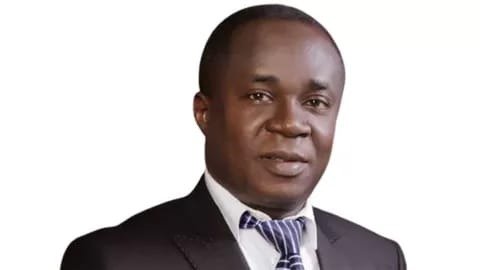
Uche Uwaleke, a professor of capital market at Nasarawa State University, Nigeria, is the president, Capital Market Academics of Nigeria.