At the 32nd Nigerian Economic Summit in Abuja, the chairman of the Nigerian Electricity Regulatory Commission (NERC), Musiliu Oseni, renewed the call for private investment in Nigeria’s electricity sector. His optimism reflects the opportunities created by the Electricity Act 2023, cost-reflective Band A tariffs, mini-grid frameworks and stronger performance oversight. These reforms are important. Yet attracting long-term capital requires more than regulatory invitations: investors need enforceable contracts, predictable rules and projects with risks that lenders can price.
The sector’s history explains their caution. Since privatisation in 2013, more than ₦7 trillion has reportedly flowed through government interventions, recovery programmes and tariff subsidies. Yet operational grid dispatch has remained broadly around 3,800–4,500 MW. This is not evidence of government indifference. Rather, substantial support has covered tariff shortfalls and utility liquidity gaps without sufficiently addressing transmission bottlenecks, gas supply, metering and collections. Fiscal rescue packages can keep a distressed market functioning; they cannot substitute for a viable commercial structure.
For investors, the distinction is fundamental. They are not necessarily seeking government handouts. They want confidence that energy delivered will be paid for, that legitimate tariffs will be applied and that agreed contractual rights will survive political transitions. A government demonstrates commitment less by announcing another intervention fund than by enforcing market rules, protecting revenue arrangements and holding under-performing operators accountable.
The Electricity Act 2023 offers a major opening for state electricity markets and decentralized investment. It also raises practical questions. Where does NERC’s authority end and that of a State Electricity Regulatory Commission begin? How will interstate networks, asset transfers, existing contracts and tariff methodologies be handled? Investors need transparent transition protocols, credible dispute resolution and clear protection against unilateral changes to sub-franchise and power purchase agreements. Decentralization should bring investment decisions closer to local demand, not multiply regulatory uncertainty.
Physical infrastructure is another binding constraint. Nigeria has roughly 14 GW of installed generation capacity, but available capacity is substantially lower and operational dispatch has hovered around 4.5 GW. Gas shortages, transmission limitations and weak distribution networks prevent existing assets from supplying their potential output. Adding generation without matching evacuation capacity risks creating stranded power. Targeted investment in transmission reinforcement, reactive-power compensation, SCADA automation, distribution transformers and feeder-level metering must therefore accompany new power plants.
Four risks particularly influence investment decisions. First, foreign-exchange risk arises when projects collect Naira revenues but must service foreign-currency debt. Transparent convertibility arrangements, appropriately structured tariff provisions and credible credit enhancement can reduce this mismatch.
Second, DisCo illiquidity and collection losses expose generators and suppliers to non-payment. Ring-fenced collection accounts, escrow arrangements and automated payment waterfalls would improve confidence that electricity revenues reach those entitled to them.
Third, unreliable gas supply can leave thermal plants technically available but unable to generate. Firm, enforceable gas supply agreements, backed by realistic payment security, are essential.
Fourth, abrupt tariff freezes or regulatory reversals can undermine an otherwise sound project’s cash-flow projections. Transparent application of the Multi-Year Tariff Order, timely adjustments and effective remedies for breaches are not merely technical preferences; they are central to bankability. Where social protection requires subsidies, those obligations should be explicit, funded and paid on time rather than silently transferred to investors.
The Azura-Edo power project offers a useful precedent. A government-backed Put – Call Option Agreement and a World Bank Partial Risk Guarantee helped mobilize substantial international financing, enabling the project to reach commercial operation in 2018. By contrast, uncertainty over similar sovereign support for subsequent projects, including the proposed Qua Iboe power project, illustrates how unresolved political and payment risks can delay capital commitments. The lesson is not that the government should guarantee every business decision. It is that private investors cannot reasonably absorb unlimited sovereign and regulatory risk.
Consumers must also see the benefits of reform. Cost-reflective tariffs without reliable supply and accurate billing will weaken public confidence. Regulators should enforce promised service hours across tariff bands, sanction persistent under-performance and accelerate metering to eliminate estimated billing. Better service, transparent bills and fair complaint resolution help build the social legitimacy on which sustainable tariff policy depends. Investors ultimately benefit from a market in which customers trust the value they receive.
Government and regulators can move from broad appeals to a practical investment pipeline. They should publish credible feeder-level Aggregate Technical, Commercial and Collection loss data; standardize distribution sub-franchise agreements, asset-valuation rules and revenue ring-fencing arrangements; and clarify access to development-finance guarantees. They should also establish joint protocols between NERC and state regulators for interstate assets, tariff coordination and market transitions. Reliable information and standard documentation lower due-diligence costs and make smaller network opportunities easier to finance.
Above all, reform must be coordinated across gas, generation, transmission and distribution. A power plant is only as bankable as its fuel supply, evacuation route and paying customer. A distribution franchise cannot thrive where collection rights are insecure or service improvements are blocked by upstream constraints. Mini-grid investors likewise need clear interconnection and compensation rules when the main grid expands. Piecemeal reform simply shifts risk from one part of the value chain to another.
Nigeria’s electricity market offers enormous investment potential. Unlocking it requires a shift from repeated calls for capital to investible projects supported by enforceable agreements, transparent data, disciplined regulation and coordinated infrastructure. Investors can finance well-structured commercial risk. The government must make the rules dependable enough for that capital to flow.
- business a.m. commits to publishing a diversity of views, opinions and comments. It, therefore, welcomes your reaction to this and any of our articles via email: comment@businessamlive.com
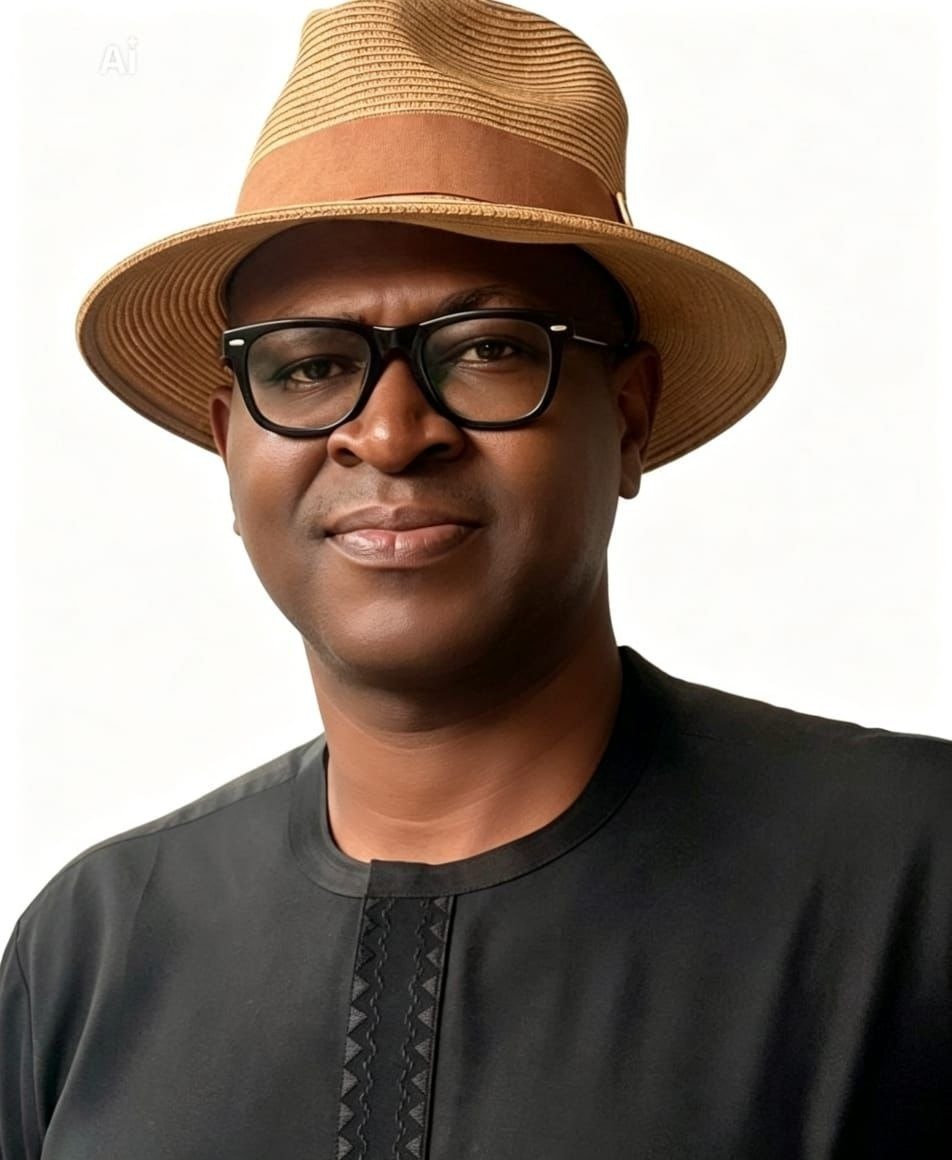
Masah Emmanuel Ikus is a Power and Energy Infrastructure Strategist and the Principal Consulting Partner at EMI Resources Limited. A University of Lagos-trained Electrical Engineer with an EMBA from Lagos Business School, he possesses over 27 years of experience managing complex infrastructure projects across the ICT, Oil & Gas, and Power sectors, specialising in the design of decentralised power systems and solar integration. He currently advises investors, project sponsors, and public institutions on leveraging Nigeria’s energy deficit into bankable commercial opportunities. He can be contacted via masahikus@gmail.com