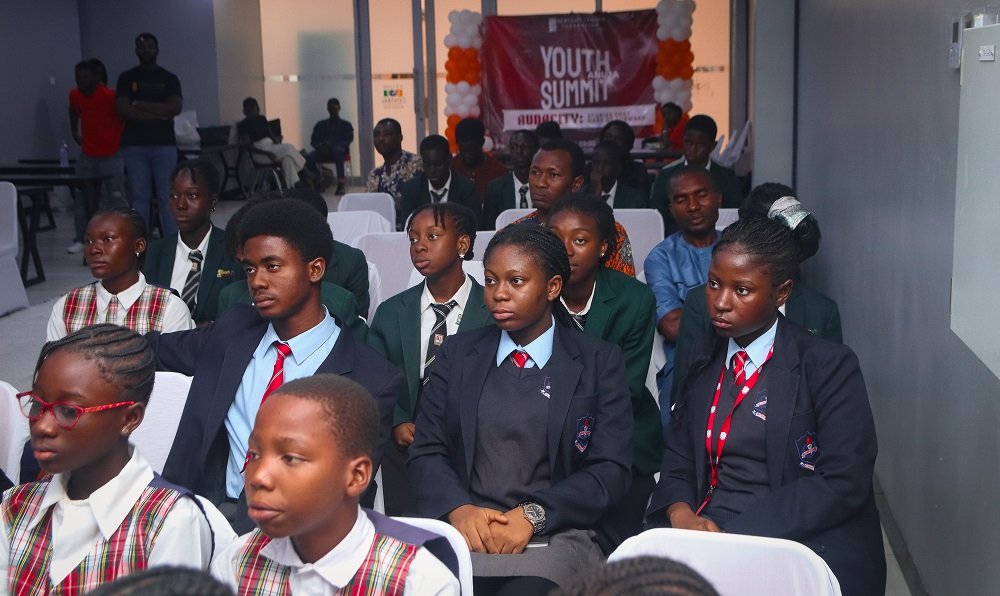
Nigeria’s leadership challenges may have their roots in the present, but the Servant Leader Foundation (SLF) believes the solution lies with the next generation. The non-profit organisation is focused on preparing secondary school students for future leadership roles through programmes built around service, integrity, and civic engagement.
Founded by Ife Olagunju, the organisation operates from Abuja with an additional operational office in New York, targeting young Africans between the ages of 11 and 18 through leadership bootcamps, youth summits, debate competitions, essay contests, and mentorship engagements.
Speaking in an interview with Business A.M., Olagunju said the idea behind the foundation emerged from his growing concern about Africa’s demographic realities and the continent’s leadership future.
“I had the privilege of doing some research a few years ago on youth unemployment and demographic realities in Africa. One of the striking things I discovered was that the median age in Nigeria and across Africa is extremely young. That means the majority of our population will soon become decision-makers, professionals, entrepreneurs, and public servants,” he said.
According to him, the challenge is not merely the existence of a youthful population, but whether those young people are being adequately prepared to lead responsibly.
The organisation, established alongside a founding team of professionals and associates Olagunju had previously worked with, has since begun building a network of students and educators across multiple Nigerian states.
Under its flagship programmes, SLF has already reached hundreds of students through statewide debate and essay-writing competitions held across Lagos, Ekiti, Ondo states, and Abuja.
According to Olagunju, over 200 students participated in the competitions, with many reporting improvements in confidence, communication skills, and analytical reasoning.
“We had very encouraging feedback from students. The competitions sharpened their ability to communicate effectively, think critically, and engage societal issues intelligently,” he noted.
Beyond competitions, the foundation also organises leadership bootcamps within secondary schools, where participants are introduced to structured curricula on problem-solving, teamwork, ethical leadership, and civic engagement.
Olagunju explained that the programmes intentionally focus on practical challenges affecting communities, helping students learn leadership through active participation rather than abstract theory.
However, he described SLF’s annual Youth Summit as the organization’s most impactful initiative so far.
The summit, themed “Audacity: Stories that Dare Us Forward,” brought together entrepreneurs, educators, civil servants, professors, school administrators, and technology professionals to speak with students about leadership, courage, and personal development.
The summit held sessions in Ekiti, and Abuja, drawing participants from several secondary schools.
“We wanted students to hear directly from people who have made audacious decisions in their careers and personal lives. The idea is to help them understand that leadership is something they too can embody,” Olagunju explained.
He noted that more than 100 students attended some of the summit sessions, while organisers projected attendance from over 15 schools for subsequent engagements.
“At the core of our philosophy is servant leadership. We want these young people to understand that leadership is fundamentally about serving others and solving problems in their communities,” he said.
The organization’s expansion strategy currently depends heavily on partnerships, sponsorships, and collaborative support from institutions and individuals aligned with its vision.
Olagunju disclosed that SLF has secured support from several partners, including Beloxxi, the World Creators Initiative, and stakeholders connected to the African Leadership Academy, where he is an alumnus.
“Partnerships are absolutely critical for us. We pitch our mission to organizations and individuals whose values align with ours. Sometimes friends and family are the first supporters, but we are also engaging institutions that believe in leadership development and youth empowerment,” he added.
While still relatively young as an institution, SLF’s leadership believes the long-term goal extends beyond conferences and competitions.
The Foundation’s ambition, according to Olagunju, is to contribute to a generational shift in how leadership is understood and practiced across Africa.
“We are trying to build a generation that sees leadership not as status, but as responsibility. If young people can develop the courage to think critically, solve problems, and serve others, then they can transform their communities and ultimately the continent,” he stated.