Nigeria’s housing crisis remains one of the country’s most pressing development challenges. According to the National Housing Data Technical Committee established by the Federal Ministry of Housing and Urban Development in 2025, the country faces a housing deficit of about 14.95 million units. This enormous gap reflects a severe imbalance between housing supply and demand, compounded by soaring building material costs, inconsistent government policies, prohibitively high mortgage interest rates of between 20 and 30 percent, and an overemphasis on luxury housing at the expense of affordable homes for low- and middle-income Nigerians.
The crisis is both quantitative and qualitative. While millions of Nigerians lack access to decent housing, many existing homes are substandard and located in poorly serviced communities. Addressing this challenge requires deliberate policy reforms and innovative approaches.
The first challenge is the widening housing deficit. Nigeria requires between 500,000 and 600,000 new housing units annually over the next decade to keep pace with population growth. However, only about 100,000 units are delivered each year. Even these are often built on the outskirts of cities, far from employment centres, making them unattractive to many workers. Developers continue to concentrate on high-end housing, while the overwhelming demand comes from low- and middle-income earners who are priced out of the formal housing market.
Secondly, Nigeria must abandon the traditional approach to housing delivery. Conventional construction methods, which often take several years to complete, cannot meet the country’s enormous housing needs. The future lies in industrialised housing through factory-produced building components that can be assembled within days or weeks. In addition, well-planned high-rise residential developments in urban centres can provide affordable accommodation close to workplaces and public services.
Another major obstacle is the rising cost of construction. Prices of cement, reinforcement steel, roofing materials, tiles, windows and other essential building materials have risen sharply, making home ownership increasingly unattainable for average Nigerians. The government should encourage local manufacturing of building materials and provide incentives that reduce dependence on imported components.
Land administration also requires urgent reform. The cumbersome process of obtaining land titles, securing building approvals and complying with outdated provisions of the Land Use Act significantly increases development costs. These challenges, combined with inadequate infrastructure such as roads, electricity, water supply and drainage, discourage large-scale affordable housing investments.
Housing finance remains another weak link. Nigeria’s mortgage-to-GDP ratio is among the lowest globally, while mortgage interest rates ranging from 20 to 30 percent make home ownership impossible for most workers. Affordable mortgage schemes, cooperative housing finance and low-interest government-backed loans should be expanded to support home ownership among low- and middle-income earners.
The country’s rental system also requires reform. Demanding two or three years’ rent in advance places enormous financial pressure on tenants, many of whom spend more than half of their income on accommodation. Consequently, workers are forced to relocate to distant suburbs where transportation costs further reduce their disposable income. Rent payment structures should be reviewed to better reflect workers’ earnings.
Policy implementation has also been inconsistent. Housing schemes intended for civil servants and low-income households are too often captured by wealthier individuals who either leave the houses vacant for future capital appreciation or rent them out at unaffordable rates. Greater transparency and accountability are needed to ensure that affordable housing reaches its intended beneficiaries.
Urban infrastructure presents another challenge. Many Nigerian cities continue to expand without adequate roads, drainage systems, electricity, water supply, waste management and recreational facilities. Lagos alone has about 160 slum communities accommodating approximately 60 percent of its population. No affordable housing programme can succeed without simultaneous investment in essential urban infrastructure.
Urban renewal should also become a continuous government programme. Rather than demolishing informal settlements, governments should prioritise slum upgrading through improved roads, sanitation, water supply, drainage and environmental improvements. Such an approach is more socially inclusive, economically viable and environmentally sustainable than widespread slum clearance.
Perhaps the greatest policy gap is the limited commitment to social housing. Given Nigeria’s high level of informal employment and the limited purchasing power of many households, the provision of social housing should become a national priority. Affordable rental housing supported by the government would provide decent accommodation for workers who cannot yet afford home ownership.
Housing experts have proposed several practical solutions. One is the establishment of a Nigerian Housing Board to coordinate housing programmes across the federal and state governments. Such an institution would harmonise policies, improve project delivery and provide long-term financing mechanisms that reduce the widespread problem of abandoned and uncompleted buildings resulting from interrupted cash flow.
Local governments should also play a greater role in housing delivery. Being closest to the grassroots, they are better positioned to identify local housing needs, allocate land for social housing and manage community-based housing programmes in partnership with private developers and cooperative societies.
Nigeria must also embrace the use of locally available building materials. Laterite bricks, shale blocks, treated timber, laminated particle boards, natural stone and locally manufactured doors and windows can substantially reduce construction costs while creating employment opportunities. Likewise, establishing domestic industries for sanitary wares, ceramic products and other building components would reduce import dependence and conserve scarce foreign exchange.
Nigeria’s housing challenge is enormous, but it is far from insurmountable. What is required is a coordinated national strategy that combines industrialised housing, affordable finance, land reforms, infrastructure development, local manufacturing, urban renewal and strong political commitment. Housing is more than shelter; it is a driver of economic growth, employment, public health and social stability. With the right policies and sustained implementation, Nigeria can transform its housing deficit into an opportunity for national development.
- business a.m. commits to publishing a diversity of views, opinions and comments. It, therefore, welcomes your reaction to this and any of our articles via email: comment@businessamlive.com

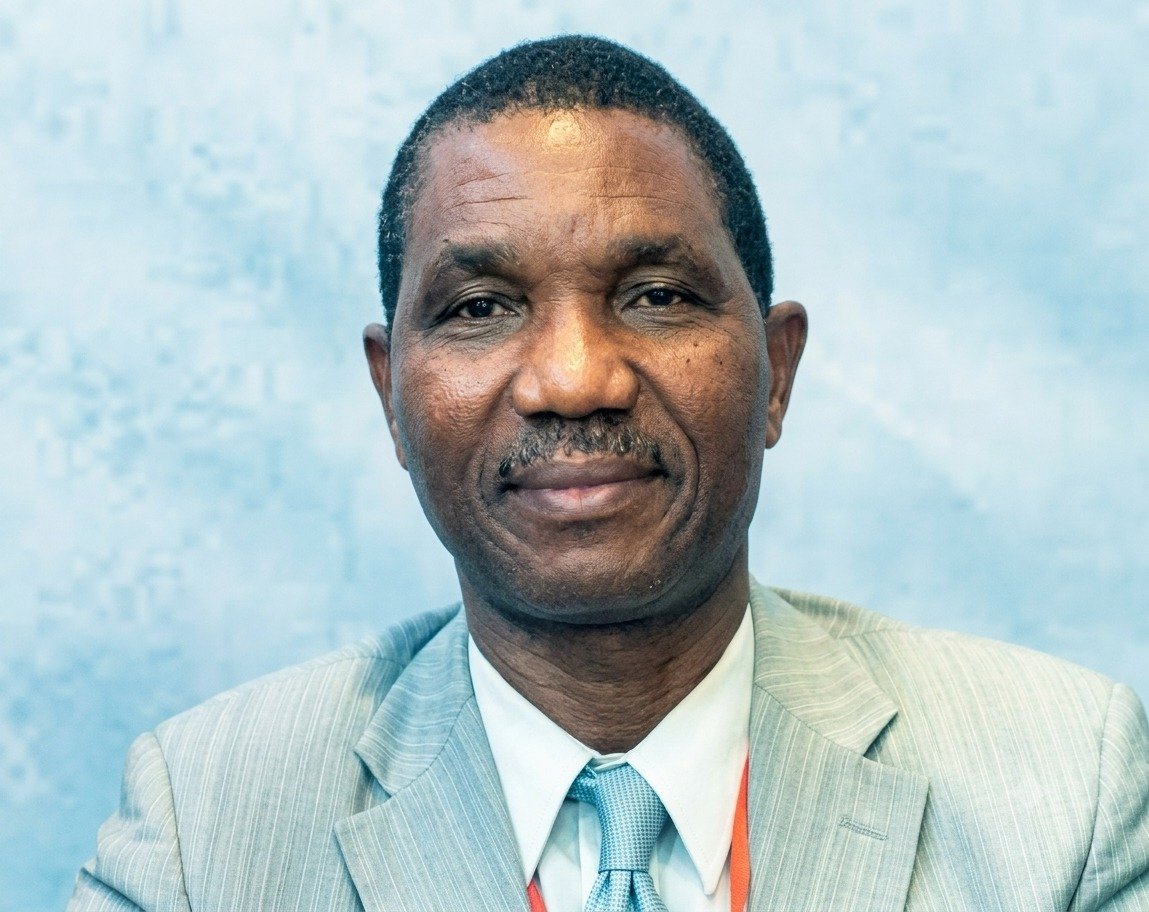
Olufemi Adedamola Oyedele, MPhil. in Construction Management, managing director/CEO, Fame Oyster & Co. Nigeria, is an expert in real estate investment, a registered estate surveyor and valuer, and an experienced construction project manager. He can be reached on +2348137564200 (text only) or femoyede@gmail.com