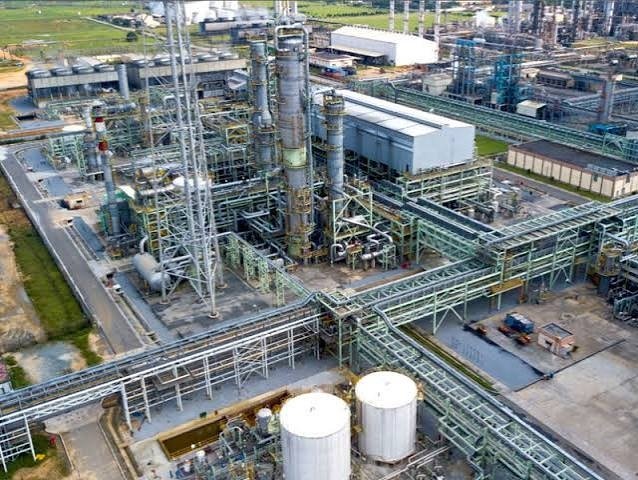
Tanzania, whose economy demonstrated robust growth in 2025, recording a GDP expansion of about 5.8 percent, has approached Indorama Fertiliser Limited (IFL), to open a fertiliser plant in the country, according to a report by the company.
In particular, the East African country is negotiating with Indorama Nigeria for a stronger Indorama-Tanzania business ties, which will lead to a fertiliser plant in the country.
Port Harcourt, Rivers State-based fertiliser producer’s valuation is around $3.3 billion, making it one of Sub-Saharan Africa’s most valuable companies outside of South Africa.
Tanzania’s high commissioner to Nigeria, Selestine Gervas Kakele, has made two quick visits to Indorama’s Port Harcourt plant site for high-level discussions on potential investment opportunities in his country.
In the second visit recently, he came with a team of technocrats, including representatives from the Tanzania Investment and Special Economic Zones Authority (TISEZA), Zanzibar Investment Promotion Authority (ZIPA), Petroleum Upstream Regulatory Authority (PURA), Tanzania Fertilizer Regulatory Authority (TFRA), Tanzania Sisal Board (TSB), Tea Board of Tanzania (TBT), Tanzania Building Agency (TBA), and Tanzania Cotton Board (TCB).
Tienabeso Bibiye, the company’s head of corporate communications, said the follow-up visit would accelerate the realization of mutually beneficial investment opportunities.
Bibiye noted that Indorama’s remarkable success in Nigeria could easily be replicated in Tanzania. Abanu Sordum of the process safety management team predicted that, if the talks are finalised, Tanzania could begin seeing tangible benefits within five to 10 years.
A.K. Sharma, head of QAQC at Indorama, in a detailed presentation outlining the complex’s plants, infrastructure, material flow systems, company history, and global expansion explained the company’s olefins, polyethylene (PE), polypropylene (PP), power plants, ammonia and urea production lines (1, 2, and 3), gas processing units, and the fertilizer export jetty at Onne.
According to Akhil Rathore, given Indorama’s growth strategy, there are bright specific investment prospects in Tanzania with valuable economic advantages of local urea production for agriculture and broader development.
Meanwhile, Tanzanian high commissioner Kakele said there will be more Tanzanian visits to broaden their partnership’s potential benefits. There is a clear call to action for Indorama to establish operations in Tanzania in the near future, signalling strong momentum toward deeper bilateral economic collaboration in the fertilizer sector.
With the completion of its third urea production line in mid-2020, Indorama Eleme Fertiliser & Chemicals Limited (IEFCL) Nigeria now has an annual production capacity of 4.2 million metric tonnes (mmtpa) of granular. Each production line produces about 4,000 metric tonnes of nitrogenous fertiliser per day, utilising previously flared natural gas. The company allocates 40–50 percent of its products to Nigerian farmers for domestic food security, while the rest is exported to West Africa, South America, Brazil, Central America and other international markets.
Urea is a key ingredient in agricultural fertilisers. In Nigeria, fertilizer consumption was reported at 94.74% in 2020, according to the World Bank collection of development indicators, compiled from officially recognized sources. With about 20kg fertilizer usage per hectare, Nigeria on the average, lags behind Morocco, South Africa and Egypt that use over 100kg/hectare. This is also far below the developed countries’ usage rate of over 200kg/hectare. It holds true that there is a correlation between fertiliser usage and crop yield.