Business A.M
No Result
View All Result
Tuesday, July 14, 2026
  • Login
  • Home
  • Technology
  • Finance
  • Comments
  • Companies
  • Commodities
  • About Us
  • Contact Us
Subscribe
Business A.M
  • Home
  • Technology
  • Finance
  • Comments
  • Companies
  • Commodities
  • About Us
  • Contact Us
No Result
View All Result
Business A.M
No Result
View All Result
Home The business traveller & hospitality

Technology in the hospitality industry: Have we gone too far?

by Admin
May 1, 2019
in The business traveller & hospitality

By Court Williams & Paul Savage


THE HOSPITALITY INDUSTRY is changing, and is rapidly becoming super high-tech. While we can argue that this benefits guests—and it certainly benefits vendors—how much is it taking away from the guest’s personal experience? Theoretically, it should improve the customer experience, particularly through the use of data collected by using the various technologies. Let’s look at how guests actually feel, especially the Baby Boomers who look set to remain the most prolific travelers for the next two to three years, and see if the numbers support the theory that technology has improved the hospitality experience.

Since the early days of hospitality, the industry has operated on the principle of customer service before everything else. The warm welcome afforded by the Maitre ‘D on arrival at a restaurant, the personal service provided by a friendly concierge, and a rapid check-in from the Reservation Desk have all helped make guests’ experiences unique and fulfilling.
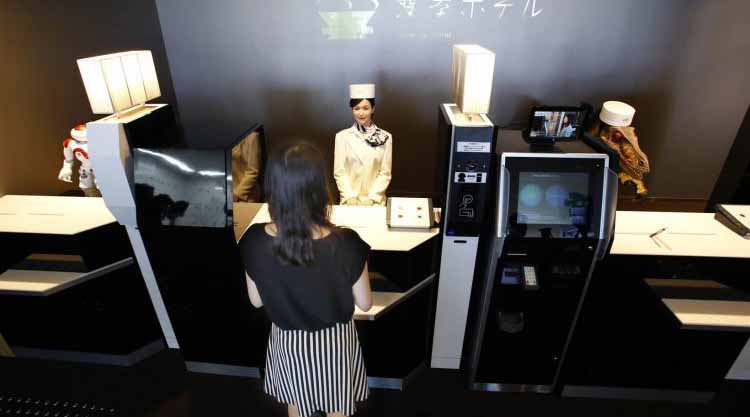
With the advent of technology, however, many activities previously performed by live humans have been replaced by automated methods, mainly in the attempt to streamline functionality and improve service. But is it really an improvement, or has the industry gone too far? Do these changes enhance the guest’s experience, or have we forfeited the true meaning of the word “hospitality” in the process?
How Times They Have a-Changed
The changes wrought by technology are far-reaching, and affect every aspect of our 21st century lifestyles. Hospitality is one industry where this is dramatically true, in so many more ways that the man in the street realizes. From start to finish, the experience is now facilitated by technological factors, many of which go relatively unnoticed. Here are some of the ways times have changed through the incursion of technology.
With the rising popularity of online reviews, hospitality guests now have the ability to research any venue to see what others have posted.

Both review websites and social media platforms have become active gateways to global opinion, and travelers use these extensively to help them decide where to book. Research from Search Engine Land shows the reviews for companies in the hospitality industry are considered 48 percent more important and valuable than in other industries, which indicates the target audience takes online reviews exceptionally seriously.
Once a traveler has made their choice of destination, they can now search for the best hotel deals at the click of the mouse. Technology is shaping how lodgings and restaurants are found and booked, and aggregator sites such as Hotwire, Expedia, Bookings.com and Reservations.com are just a few of the digital platforms available for making online reservations.

These have taken off extensively, with research showing one half of millennials, 26 percent of Gen Xers and 12 percent of Baby Boomers consider themselves “travel hackers,” which means they believe they know all the best ways to use technology for good deals. Chatbots on booking websites enable the user to ask questions without even getting up from the sofa.
On arrival at their destination, guests no longer need to wait in line for the key to their room. They can now check in and out using electronic kiosks, online and mobile check-ins. Automated payments and the use of smartphones for keyless entry, making requests, online purchases, or even placing room service orders makes self-service an attractive option. For anyone who thinks this is overkill, just try manually checking into a Las Vegas hotel on a Saturday at noon! The benefits of automation will soon become crystal clear.
One of the more remarkable technological disruptions hotel guests have had to deal with in recent years includes the introduction of smart appliances. Just as homes have been revolutionized through the implementation of smart technology, high-end accommodations are expected to have all the bells and whistles available. In 500 “connected” Hilton hotel rooms, for example, guests can now control all the functions of the room from a single device. Connectivity operates primarily through the chain’s mobile app, and manages the room’s lighting, temperature and TV. Guests can stream SHOWTIME shows for free through the app, without needing to input credentials or create a subscription. Anyone who prefers not to download the app can operate the same controls using a simplified, in-room remote device.
Apps are big in every way at present. A well-designed app can combine every aspect of the guest experience, from notifications about special deals to managing their loyalty programme account. When a guest uses an app to book a room using a group conference rate, for example, the system can automatically send the conference itinerary and a map of the meeting spaces to his or her device.
In theory, hotel rooms equipped with Alexa, Siri or the like could enable guests to make voice-activated requests for room service, place an order, call housekeeping to ask for more towels, or request their car brought out of Valet Parking. And, of course, there’s the use of robotics and artificial intelligence to do things like handling the vacuuming of the room, preparing meals, and restocking the courtesy bar. Chowbotics is one company that has led the way in pioneering a whole new industry, through the creation of “Sally the Robot.” These robots can be located in a hotel lobby or guest-accessible kitchen area, and prepare meals such as salads, bowls and ethnic cuisine. While doing so, they also count calories, deliver precise portions, and serve up great food—all at a press of a button.
Many new smart-technology companies like Handy are taking Asia by storm in the hotel segment, by offering a complimentary device that provides 24/7 connectivity to hotel guest services and other travel information from any location.
We have also seen the emergence of cost-saving technologies that not only focus on guest loyalty but also reduce fixed costs and overheads. Newspapers, for example, have always been a “thorn in the side” of hotels and hotel companies, in terms of wastage and the challenge of importing these papers, especially for international guests. One unique company that has utilized technology well in this field is UK-based Gold Key Media, which offers a unique way of delivering newspapers and magazines. The company does this by offering a choice of options, including downloading direct from the hotel site itself. It also provides a customized, white-labelled platform for every venue, which offers value-added features such as restaurant booking and concierge requests.


Admin
Admin
Previous Post

Dana Air revs up reward programme with Cash plus Miles for members

Next Post

NAWORG will increase women’s participation in economic productivity – OCCIMA

Next Post

NAWORG will increase women’s participation in economic productivity – OCCIMA

  • Trending
  • Comments
  • Latest

CBN to issue N1.5bn loan for youth led agric expansion in Plateau

July 29, 2025

How UNESCO got it wrong in Africa

May 30, 2017
NGX taps tech advancements to drive N4.63tr capital growth in H1

Insurance-fuelled rally pushes NGX to record high

August 8, 2025

Glo, Dangote, Airtel, 7 others prequalified to bid for 9Mobile acquisition

November 20, 2017

6 MLB teams that could use upgrades at the trade deadline

Top NFL Draft picks react to their Madden NFL 16 ratings

Paul Pierce said there was ‘no way’ he could play for Lakers

Arian Foster agrees to buy books for a fan after he asked on Twitter

State

State Police by design

July 14, 2026
NAAPE moves to shield pilots, engineers with loss-of-licence insurance scheme

NAAPE moves to shield pilots, engineers with loss-of-licence insurance scheme

July 14, 2026
Global airlines are investing heavily in economy class cabins as competition for passengers shifts beyond ticket prices to the quality of the travel experience, prompting carriers to modernise fleets, redesign cabins and enhance onboard services in a bid to strengthen customer loyalty and improve long-term profitability. The renewed focus reflects a transformation in the aviation industry, where economy class, despite offering lower fares than premium cabins, remains the largest contributor to passenger volumes and an increasingly important driver of commercial performance. With millions of travellers continuing to prioritise affordability, airlines are finding that modest improvements in comfort and convenience can translate into stronger repeat business, improved customer satisfaction and higher ancillary revenues. As a result, carriers are directing substantial investment towards upgrading economy cabins through newer aircraft, ergonomically designed seats, advanced inflight entertainment systems, onboard connectivity, enhanced catering and improved cabin service. Industry analysts say the strategy is becoming a key differentiator as airlines compete more aggressively for passengers on both regional and long-haul routes. Unlike business and first-class travellers, whose numbers are relatively limited, economy passengers account for the overwhelming majority of airline traffic, making their overall travel experience increasingly central to airlines' growth strategies. Rather than relying solely on fare reductions to attract customers, airlines are seeking to build stronger brand loyalty by improving the value passengers receive throughout their journeys. "Passenger expectations have changed significantly. Travellers increasingly compare airlines based not only on ticket prices but also on comfort, reliability, connectivity and the overall onboard experience," aviation analysts note. Several of the world's leading airlines have already embraced the strategy. Carriers including Singapore Airlines, Qatar Airways, Emirates, Turkish Airlines, All Nippon Airways (ANA), EVA Air and Cathay Pacific have invested significantly in upgrading their economy cabins through improved seating, larger entertainment libraries, enhanced meal services and customer-focused cabin experiences. Although each airline has adopted different approaches, the underlying objective remains the same: making economy travel more comfortable for the largest segment of their customer base while strengthening long-term commercial competitiveness. Fleet modernisation is playing a critical role in that transformation. Next-generation aircraft such as the Boeing 787 Dreamliner, Airbus A350 and Airbus A321neo are enabling airlines to improve the passenger experience while simultaneously lowering operating costs. Compared with older aircraft, these models offer quieter cabins, larger windows, improved air quality, better humidity control and greater fuel efficiency, creating benefits for both passengers and airline operators. The newer aircraft also reduce fuel consumption and maintenance expenses, allowing airlines to improve customer experience without significantly increasing operating costs over the aircraft's lifespan. Technology has emerged as another major area of investment. Features once reserved almost exclusively for premium cabins, including USB charging ports, wireless internet connectivity, mobile application integration and personalised digital entertainment platforms, are increasingly becoming standard in economy class. Passengers are also benefiting from greater control over their travel experience, with digital services allowing them to access entertainment, communicate onboard and manage various aspects of their journeys more conveniently. The growing investment reflects changing consumer expectations in an increasingly digital travel environment. Recent international passenger satisfaction surveys consistently indicate that airlines investing in cabin comfort, inflight technology and customer service continue to perform strongly in global service rankings. While competitive pricing remains an important consideration for travellers, customer experience has become an increasingly influential factor in airline selection, particularly on medium and long-haul routes where comfort plays a greater role in purchasing decisions. The trend is expected to reshape competition within Africa's aviation industry as airlines expand their fleets to meet growing passenger demand.

Global airlines raise economy class spending to win passenger loyalty

July 14, 2026
US

How Vulnerable Are US Financial Markets?

July 14, 2026

Popular News

  • CBN to issue N1.5bn loan for youth led agric expansion in Plateau

    0 shares
    Share 0 Tweet 0
  • How UNESCO got it wrong in Africa

    0 shares
    Share 0 Tweet 0
  • Insurance-fuelled rally pushes NGX to record high

    0 shares
    Share 0 Tweet 0
  • Glo, Dangote, Airtel, 7 others prequalified to bid for 9Mobile acquisition

    0 shares
    Share 0 Tweet 0
  • Nigeria agrees with Russia on first nuclear energy plant by mid 2020s

    0 shares
    Share 0 Tweet 0
Currently Playing

CNN on Nigeria Aviation

CNN on Nigeria Aviation

Business AM TV

Edeme Kelikume Interview With Business AM TV

Business AM TV

Business A M 2021 Mutual Funds Outlook And Award Promo Video

Business AM TV

Recent News

State

State Police by design

July 14, 2026
NAAPE moves to shield pilots, engineers with loss-of-licence insurance scheme

NAAPE moves to shield pilots, engineers with loss-of-licence insurance scheme

July 14, 2026

Categories

  • Frontpage
  • Analyst Insight
  • Business AM TV
  • Comments
  • Commodities
  • Finance
  • Markets
  • Technology
  • The Business Traveller & Hospitality
  • World Business & Economy

Site Navigation

  • Home
  • About Us
  • Contact Us
  • Privacy & Policy
Business A.M

BusinessAMLive (businessamlive.com) is a leading online business news and information platform focused on providing timely, insightful and comprehensive coverage of economic, financial, and business developments in Nigeria, Africa and around the world.

© 2026 Business A.M

Welcome Back!

Login to your account below

Forgotten Password?

Retrieve your password

Please enter your username or email address to reset your password.

Log In
No Result
View All Result
  • Home
  • Technology
  • Finance
  • Comments
  • Companies
  • Commodities
  • About Us
  • Contact Us

© 2026 Business A.M