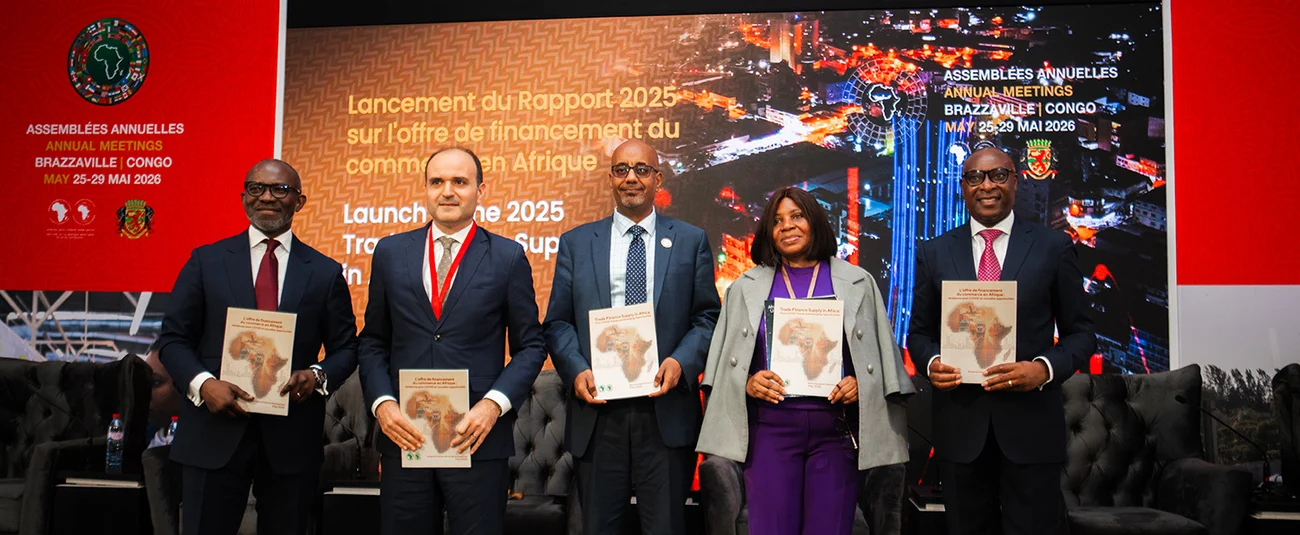
Rising tensions in the Middle East, higher global energy prices and tighter international lending conditions are increasing pressure on Africa’s trade recovery and worsening concerns over access to trade finance.
The African Development Bank (AfDB) said the trade finance gap could expand to $86.6 billion by 2027, posing risks to imports, manufacturing activity and economic growth.
The warning, contained in the bank’s newly released 2025 Trade Finance Report, highlights growing fears that global financial disruptions linked to instability around key shipping routes (particularly the Strait of Hormuz) may significantly weaken Africa’s access to international trade financing over the next two years.
For many African economies already struggling with currency pressures, elevated debt servicing costs and weak foreign exchange reserves, the latest developments present another major external vulnerability capable of undermining post-pandemic recovery efforts.
According to the AfDB, the conflict-driven disruption in the Middle East has triggered sharp increases in oil prices, fertilizer costs, freight charges and marine insurance premiums, significantly raising import costs across the continent.
“The conflict has driven a sharp rise in oil and fertiliser prices and elevated insurance and freight costs, which have in turn inflated shipping costs for Africa’s predominantly net oil-importing economies,” the bank stated.
The impact is already reverberating through African financial markets.
At least 29 African currencies have depreciated since the outbreak of the conflict, according to the report, intensifying pressure on import-dependent economies and making access to foreign exchange increasingly difficult for businesses and governments alike.
The weakening currencies are also increasing repayment risks for international lenders, a development the AfDB warns may prompt global correspondent banks to tighten lending standards across African markets.
Such tightening could reduce access to trade finance facilities relied upon by importers, exporters and manufacturers across the continent.
Trade finance, which includes letters of credit, guarantees and short-term lending instruments that facilitate cross-border trade, remains critical to Africa’s economic activity, particularly for sectors dependent on imported raw materials, machinery and intermediate goods.
Analysts say any major disruption in trade finance availability could quickly cascade into broader economic stress across manufacturing, agriculture, energy and industrial production.
The AfDB projects that under a moderate-risk scenario, Africa’s trade finance gap could rise by 17.66 percent from the $73.59 billion recorded in 2024 to $86.59 billion by 2027.
Under a more severe scenario involving prolonged disruption of the Strait of Hormuz combined with tighter global credit conditions, the gap could widen even further to $95.59 billion.
The implications for inflation are also becoming increasingly concerning.
According to the bank, sustained energy price shocks and higher shipping costs are expected to push inflation across Africa to an average of 10.4 percent in 2026; nearly one percentage point above the AfDB’s January 2026 projection.
The inflationary pressures are expected to be particularly severe for import-dependent economies where higher fuel, transportation and production costs could feed directly into consumer prices.
For businesses, the rising costs of trade financing and importation may further squeeze already thin operating margins.
Manufacturers that rely heavily on imported machinery, industrial inputs and raw materials are likely to face worsening production costs, while agricultural producers may struggle with higher fertilizer and logistics expenses.
The report also highlighted another emerging challenge: the shifting priorities of global financial institutions.
According to the AfDB, many international lenders and investors are increasingly redirecting capital toward conflict-related hedging activities and safer developed-market assets, reducing their appetite for trade finance exposure in emerging and frontier markets such as Africa.
This growing risk aversion is occurring at a time when African economies are already facing tighter global liquidity conditions driven by elevated interest rates in advanced economies.
The consequence, analysts say, is a financing squeeze that may disproportionately affect smaller African businesses and banks with weaker access to international capital markets.
The AfDB noted that Africa’s trade finance gap widened by 53 percent during the post-pandemic years of 2022 and 2023 compared with 2020 levels, underscoring the structural fragility of the continent’s trade financing ecosystem.
Even before the latest geopolitical tensions, Africa’s trade finance gap stood at approximately $93.4 billion in 2019 before narrowing slightly during recovery efforts after the pandemic.
The bank attributed the persistent financing constraints to declining bank approval rates, rising borrowing costs and increasingly restrictive global financial conditions.
For policymakers, the report reinforces concerns that Africa’s economic fortunes remain highly vulnerable to external shocks over which the continent has limited control.
The heavy dependence on imported fuel, industrial inputs and food products continues to expose many African economies to global supply chain disruptions and currency instability.
Economists say the latest warning also underscores the urgency of accelerating regional trade integration and strengthening domestic industrial capacity under the African Continental Free Trade Area (AfCFTA).
Greater regional production and intra-African trade, they argue, could help reduce dependence on volatile external supply chains and lessen pressure on scarce foreign exchange reserves.
However, achieving such transformation will require major investments in infrastructure, logistics, manufacturing and financial systems capable of supporting cross-border commerce within the continent.
The AfDB maintained that under a baseline scenario without major geopolitical escalation, Africa’s trade finance gap could gradually narrow to about $65 billion.
The bank cautioned that such an outcome would depend heavily on stabilising global financial conditions, easing geopolitical tensions and improving access to affordable international credit.