THE AUGUST 28 – 29, 2026 failed attempt to violently change government in the Republic of Niger has once again resuscitated the prevalent belief and assertions that Western countries, particularly those in Europe, have perverse interest in Africa. Such interest, it is said, is one-sided and that it impoverishes and degrades Africa while profiting the countries across the Mediterranean and Atlantic. It has further reinforced the arguments of Walter Rodney in his book on “How Europe underdeveloped Africa.” It called to question what the Western powers project as democracy, especially when considered against the backdrop of development in the continent of Africa where democratic rule has mostly been corruption ridden and many leaders are perceived as pawns in the hands of foreign powers.
The obvious double standard in dealing with what the West considers as democracy and its disregard for non-democratic government without critically assessing the comparative impacts or benefits and demerits of both systems of government is somewhat suspect. The imprimatur of France in quelling the coup attempt in the Republic of Benin on December 7, 2025 was very obvious and worth a critical analysis especially when the military support from Nigeria in cahoots with France helped in thwarting the military coup and the attempted removal of President Patrice Talon. Mutinous soldiers led by Lieutenant Colonel Pascal Tigri were overwhelmed when Talon’s government requested and obtained urgent military support from neighbouring Nigeria.
The swift intervention of Nigeria’s President Bola Tinubu, who deployed Nigerian Air Force fighter jets and ground troops to secure the airspace, immobilised rebel armoured vehicles, and dislodged the plotters. Loyal Beninese forces, backed by the Nigerian military and regional ECOWAS support, fully contained and thwarted the takeover within 24 hours on the same day. Now, juxtapose this with the event of August 28 – 29, 2026 in the Republic of Niger where the same France, in about a week ago, was accused of masterminding a failed coup attempt.
The context matters in these two contrasting incidents. A chronology of events will expose the game. As verifiable on public sites, a French military aircraft was reportedly spotted, flying over the Benin-Niger border near Niamey on August 28 and 29. The aircraft, operated by France Air Forces Command, is used for intelligence mapping and wire tapping. The registration number of the Beech King Air 350 is F-GYEE. During its first flight towards the Niger border, at 12:17 pm just a few hours before the military clashes in Niamey, the plane in question reportedly displayed some unusual features.
The radar reportedly showed that it started from a village to Abidjan in Cote d’Ivoire, at which time its transponder was working well while it travelled to Félix Houphouet Boigny airport, Abidjan and to Cotonou in Benin. Everything seemed normal and could be tracked then. At 12:17 pm, it took off from Cotonou but not displaying the destination on radar screen, with transponder off as it flew due north of Benin, while approaching the Benin-Niger border radar-blank till nightfall. Just a few hours after, at about 1 am, gunshots began in Niamey. The next morning, on August 29, a coup attempt began. At about 8:54 am, the same plane took off from Cotonou and began the same flight path to the north. Could this be a coincidence or a navigational fluke?
The story began to make sense from Captain Roger Gabriel’s account and revelations from the French journalist Thomas Dietrich. Why was France opposed to the December 2025 coup in Benin but seemed oblivious of the August 2026 coup in Niger? Was there any coincidence between the French aircraft’s flights and the Niger coup? The leader of the loyal forces of President Tchani of Niger, Captain Roger Gabriel, appeared on the state TV to explain how the loyal forces of former puppet President Mohamed Bazoum were sponsored by France, Chad, Benin, Ivory Coast and Belgium, including the relatives of former president Bazoum in UAE in the failed coup attempt. The chief of the defense staff of Chadian Air Force (CEMAA), Air Corps General Idriss Amine Ahmed, was accused by Captain Roger Gabriel of planning to send paratroopers as reinforcement during the coup processes to intervene in Niger and help overthrow the leader of Niger. Dubai was to lend financial help.
Although these allegations remain unverified and lack public evidence, Niger’s military authorities have nonetheless accused those aforementioned countries and other international actors of backing a failed military mutiny in Niamey. The military government, however, reported that security forces and allied Russian personnel successfully contained the pre-dawn clashes and arrested multiple participants, while at least three loyal presidential guards were killed and several wounded. Niger’s junta leader, General Abdourahamane Tchiani, levelled his accusations following previous security incidents at Niamey’s international airport. The failed Niger coup was just a symptom of a wider crisis in West Africa, particularly in the francophone countries.
The Sahel countries have become both a political, military and economic testing ground and a battle ground of some sort. The Alliance of Sahel States (AES) has become a region of particular concern and a nightmare for France, especially. After being dragged out of the three West African countries of Mali, Burkina Faso and Niger, France has been desperately looking for ways to hit back and reestablish its foothold. In that bid, diplomacy has floundered, just as military tactics continue to fail. Initially, France underestimated the resolve of these three countries. The suspension of Air France flights to Burkina Faso and Mali immediately after the July 26, 2023 coup in Niger would have been thought of as a safety measure. But other events and actions from France have since proved the motivation to be different. In the ensuing faceoff with France, Mali and Burkina Faso didn’t wait to pick sides with Niger while ECOWAS was putting together its plans to unseat or dislodge Tchiani. “Touch Niger and we go to war,” they seemed to have said in their joint communique while France’s colonial system was imploding, as it lost the entire Sahel in one week.
If anything, France misread the anticipated outcome of its action as its national carrier, Air France, suspended its flights to Mali and Burkina Faso until August 18, presuming that it was sending a message like “if you don’t play by our rules, we will erase you from the map.” This was probably a reaction and an excuse that Niger had immediately closed its airspace after the coup, thus blocking direct routes across its territory. Unaware of what was in the offing from the AES, the flight suspension was intended to be a pressure tactic. But France was humiliated in Mali, expelled from Burkina Faso and now betrayed by Niger. It thought the retaliation through one infrastructure it still controlled — the airline — which is tied to the French government would ground the only connection its institutions still had with Burkina Faso and Mali, not for safety, but for power.
Both France and Africans who are analysts and international relations experts obviously missed the optics and their deeper underpinnings while taking refuge in theory of the so-called facade of democracy. Before the flight cancellation, the foundation of issues of agreements with France had started cracking about a decade earlier. Mali had grown weary of France, the country that was purportedly protecting Mali from insurgency. In Mali, the question seemed like: “if France is protecting us, why is the insurgency still spreading?” France, instead of winning friends, was breeding resentment for its failure to stop the violence. Operation Barkhane was not a success that was promised as it was also accused of shielding corrupt governments and politicians.
Operation Barkhane, initially established In January 2013 by France, was launched in Northern Mali, its biggest military operation overseas since the Algerian war. It was sold or promoted as a French military counterterrorism campaign in Africa’s Sahel region that lasted from August 1, 2014, to November 9, 2022, with the goal of fighting Islamist extremist groups across the Sahel and to support local national armies. It was meant to be a regional operation across five countries known as the G5 Sahel: namely Burkina Faso, Chad, Mali, Mauritania and Niger, with headquarters at N’Djamena, the capital of Chad. It involved roughly 3,000 French military personnel at a given time, supported by air power, logistics networks, and special forces. Operations were focused on intelligence gathering, targeted strikes against jihadist leaders, and joint combat patrols, or so they appeared.
The end of the mission came as relations with Mali collapsed following political coups, leading to the withdrawal of French troops from Malian territory by mid-2022. French President Emmanuel Macron then formally announced the final end of Operation Barkhane in November 2022. The war involved a long and difficult manhunt for jihadist leaders who have a long history of operating in the shadows and who have been deeply embedded within. Harvard International Review posited in “How France Failed Mali: the End of Operation Barkhane” how Operation Barkhane was a French military counter-terrorism campaign in Mali that began in 2013. The operation has been widely interpreted as a failure.
- business a.m. commits to publishing a diversity of views, opinions and comments. It, therefore, welcomes your reaction to this and any of our articles via email: comment@businessamlive.com

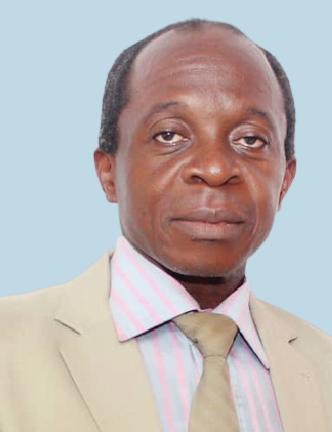
Dr. Olukayode Oyeleye, Business a.m.’s Editorial Advisor, who graduated in veterinary medicine from the University of Ibadan, Nigeria, before establishing himself in science and public policy journalism and communication, also has a postgraduate diploma in public administration, and is a former special adviser to two former Nigerian ministers of agriculture. He specialises in development and policy issues in the areas of food, trade and competition, security, governance, environment and innovation, politics and emerging economies.