Something is shifting in how Nigerian men relate to what they consume. It is not a movement, and it has no spokesperson. But it is visible, quietly, in the choices being made by a generation of professionals who have spent enough time in the world to stop letting the room decide for them.
For a long time, premium consumption in Nigeria was a social language. The watch, the car, the bottle on the table; these were sentences, not choices. They communicated wealth, access, and membership of a class of people who understood the reference. Taste was never really the point. Recognition was.
That logic has not disappeared. But it is no longer the only one at work.
The same men building careers on genuine craft, whether in design, architecture, finance or technology, are beginning to apply that same standard to everything else. What they wear. Where they eat. What they drink. The question has quietly shifted from What does this say about me? to What do I actually think about this? It sounds like a subtle change. It is anything but.
That shift in mindset also changes what people look for in a whisky. Once the bottle is no longer about signalling status, questions about origin, process and character begin to matter in a way they did not before. Single malt, in particular, asks more of the drinker. Unlike blended Scotch, which helped establish the category in Nigeria through its consistency and accessibility, single malt invites curiosity. It asks where the whisky comes from, how it is made, how long it has matured, and why any of that makes a difference.
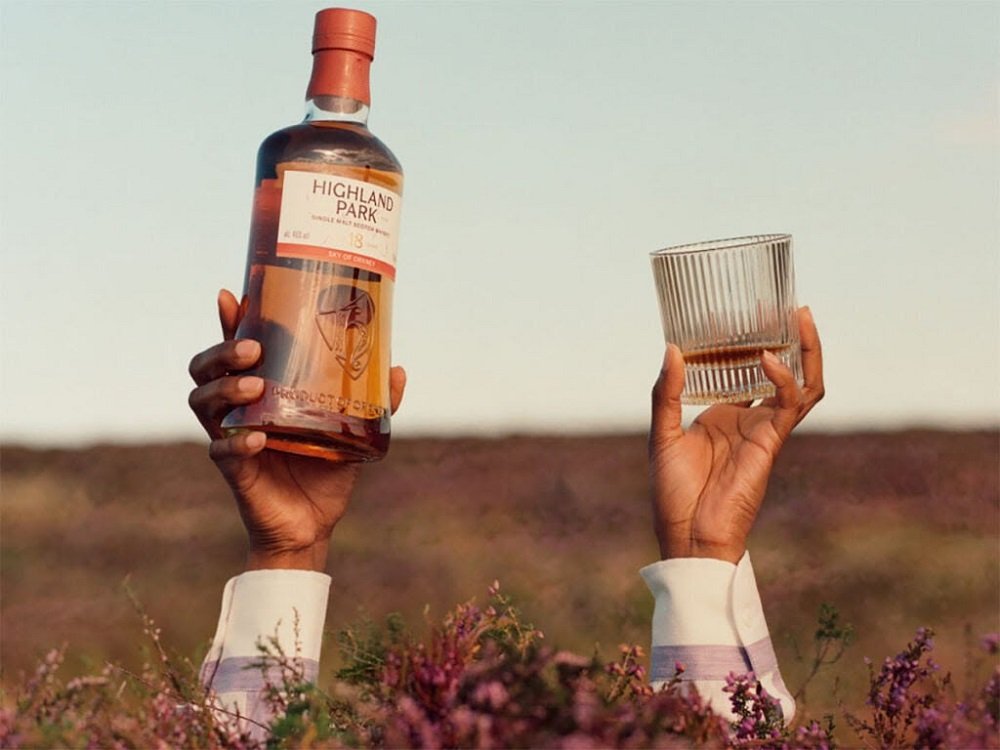
It is within that conversation that Highland Park has found a new kind of Nigerian consumer.
The distillery has been making whisky on Scotland’s Orkney Islands since 1798, in a landscape unlike anywhere else in the country. Strong winds sweep across open moorland where trees struggle to grow, leaving behind vast stretches of heather that have shaped the islands for centuries.
That landscape is far more than scenery. Highland Park remains the only distillery to use Orkney’s heather-rich peat, which contributes a gentle aromatic smoke found nowhere else. Geography is not simply the backdrop to the whisky. It is one of its defining ingredients.
The same philosophy extends to the way the whisky is made. Highland Park still turns barley by hand on its own floor maltings before drying it over peat fires, a practice many distilleries left behind decades ago in favour of faster, more industrial methods. The decision to retain these traditions is less about preserving history than recognising that the process shapes the final character of the whisky.
That long-term commitment has earned Highland Park international recognition, including being named the world’s best spirit three times. Its 25-Year-Old expression also became the first spirit to receive a perfect score at the Ultimate Spirits Challenge, reinforcing a reputation built patiently over generations rather than through passing trends.
Perhaps that is what resonates most with the Nigerian men increasingly drawn to it.
You see the same mindset reflected in many of the country’s most respected creatives and entrepreneurs. Designer Tunde Owolabi did not build his reputation by chasing every trend. Hospitality entrepreneur Mobolaji Johnson did not create Banana Island Social overnight. The founders, designers and creative directors shaping today’s cultural landscape have earned their place through patience, consistency and an obsession with getting the details right.
Highland Park has built its identity in much the same way. Its philosophy, Different by Nature, is not simply a brand line. It reflects the realities of where the whisky comes from and the choices that have defined how it is made for more than two centuries. Orkney’s remoteness was never something to overcome. It became the source of the distillery’s character.
The man who drinks what he actually likes has arrived at a similar place. He is not performing a departure from convention, nor is he trying to prove a point. He has simply done the quieter, harder work of understanding what he values and allowing those preferences to speak for themselves.
In a room full of noise, that kind of confidence rarely announces itself because It doesn’t need to.