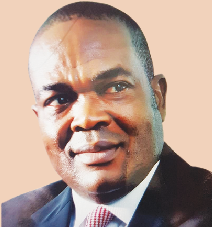
More than three years since the start of the implementation of a multi-faceted economic reforms, the Federal Government of Nigeria (FGN) is getting set to “introduce a system to track poverty levels and household incomes to measure whether its economic reforms are actually improving Nigerians’ lives.” The finance minister and coordinating minister of the economy, Taiwo Oyedele, who dropped this hint at a function in Lagos said the FGN cannot credibly “claim that reforms are working without data showing their impact on poverty, income levels and living standards,” pointing out that “measuring outcomes is as important as implementing policies.”
The tracking system, the minister said, would be drawing data from the National Bureau of Statistics (NBS), Nigeria Revenue Service (NRS), and other agencies “to produce regular assessments of welfare conditions across different income groups and regions.” He added that the government’s goal was not just macroeconomic stability but ensuring that growth translates into real improvements in the daily lives of ordinary Nigerians.
However, although it bodes well that these good intentions of the FGN are coming from a top official of the President Bola Ahmed Tinubu administration, it is shocking that the government claims not to know the level of impoverishment its reforms have brought upon ordinary Nigerians all these years. Almost every institution of consequence from across the globe has alerted the Tinubu administration on the pervasive poverty level engendered and sustained by its economic reforms.
The Bretton Woods institutions—the World Bank and the International Monetary Fund (IMF)—have for the umpteenth time given some credit to the FGN for the (bold) reforms but have also always warned that more and more Nigerians were being pushed into poverty by the outcomes of the reforms. The African Development Bank (AfDB), the African Export-Import Bank (AfreximBank), and groups like the Lagos Chamber of Commerce and Industry (LCCI), the Manufacturers Association of Nigeria (MAN), the Nigeria Employers Consultative Association (NECA), etc., have also similarly often flagged the impoverishing effects of the reforms.
In its latest ‘Country Partnership Framework for Nigeria’—2026 to 2032—the World Bank says “about 79 percent of Nigerians remain poor or vulnerable to falling into poverty,” highlighting the country’s deepening social and economic challenges. Giving a breakdown, the global Bank says “33 percent of its population is ultra-poor, 61 percent is below the poverty line, and 79 percent is near poor (below the poverty line or vulnerable to falling back into poverty).”
The World Bank stated that about 139 million Nigerians currently live below the national poverty line, with poverty concentrated largely in the northern part of the country. The report also noted that more than 86 million Nigerians remain without electricity, while three to four million young people enter the labour market every year with limited employment opportunities.
In its recent 2026 Article IV Consultation Report (released in June), the IMF acknowledged some of the gains of Nigeria’s economic reforms but warned that “poverty has hit 63 percent, based on the national poverty line at the end of 2025,” adding that “27 million Nigerians faced food insecurity in late 2025/26.” The IMF further noted that living conditions remained difficult for many Nigerians, “with poverty and food insecurity likely to worsen amid current global economic challenges.”
The IMF also warned in its July 2026 ‘World Economic Outlook Update’ that “higher prices for essentials are expected to further aggravate poverty and food insecurity in Nigeria.” It said although macro stability has improved, but “without targeted social protection and lower food prices, poverty and food insecurity will keep rising.”
The NBS June 2026 Consumer Price Index (CPI)—which measures the rate of inflation—shows that food inflation is biting much harder, with 19 (plus FCT) out of the 36 states hitting above 30 per cent. This is about 54 percent of the country’s 37 sub-national entities. This confirms that food inflation remains highly elevated in many parts of the country; with some states recording as high as 53 percent.
In the face of these worrisome figures from the World Bank, the IMF and the NBS, perhaps, the federal government has gotten aroused to initiate a process for tracking the level of poverty in order to gauge the efficacy of its reforms. But in the last three years it has been obvious even to the ‘uninitiated’ that Nigerians have been experiencing a deteriorating standard of living. The purchasing power of the vast majority (as IMF, World Bank and NBS’ figures show) has been crashing.
A few indicators, other than the ones usually paraded by the government, will show the decadence. While the price of petrol (Premium Motor Spirit, PMS) was below N200 per litre in May 2023, it has been above N1000 per litre for the better part of the life of the President Tinubu administration. This has triggered a runaway inflation rate that saw the CPI hitting almost 35 percent at a point. Although the inflation rate has somewhat been ‘brought down’, its underlying and driving factors remain intact and potent.
Similarly, the price of cement—a critical building material—was about N3000 per 50kg bag in May 2023, but for a long time, the price has risen to well over N12,000 for the same 50kg bag. In the same vein, the N30,000 minimum wage, as of May 2023, translated to about US$67 (at the then ruling exchange rate of about N450/$). Today, the subsisting minimum wage of N70,000 translates to only US$52, at an exchange rate of N1350/$. So, these salary earners have been left worse-off.
These are the obvious outcomes of the (bold) economic reforms of the FGN in the past three years. Without a doubt, the (unintended) outcomes of the reforms have largely made a vast majority of Nigerians worse off; impoverished so many, and institutionalised the JAPA phenomenon—under which young Nigerians are emigrating in droves. And this is when the FGN is considering tracking the level of poverty to gauge the success of its reforms! Sounds like another manifesto!
- business a.m. commits to publishing a diversity of views, opinions and comments. It, therefore, welcomes your reaction to this and any of our articles via email: comment@businessamlive.com

Marcel Okeke, a practising economist and consultant in Business Strategy & Sustainability based in Lagos, is a former Chief Economist at Zenith Bank Plc. He can be reached at: obioraokeke2000@yahoo.com; +2348033075697
(text only)