
Uber Launched a Women-Only Service. Will It Work?

Safety is a perennial issue for ride-hail companies. Wharton’s Lindsey Cameron looks at Uber’s pilot program to match women drivers with women riders.

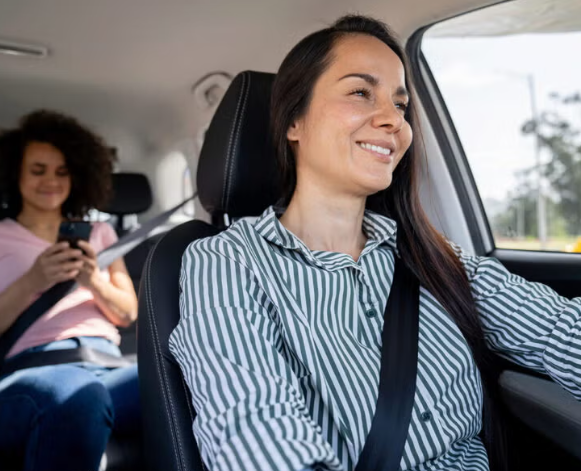
When Wharton management professor Lindsey Cameron heard about Uber’s pilot program matching women passengers with women drivers, she thought, “It’s about time.”
Cameron is an expert on the gig economy who’s taken countless ride-hail trips as part of her research and even worked as a driver to gain firsthand knowledge of the business. She said safety has been a perennial issue for the industry, with female passengers worrying about getting into a car with a strange man, and women drivers worrying about who is in the back seat. Safety concerns go beyond gender. Cameron said when she collected ride-hail data, men had also talked about being assaulted by both men and women.
Uber announced the program, called Women Preferences, in July and has since rolled it out in Los Angeles, Detroit, and San Francisco. The company said the initiative is in response to feedback from women saying they want the option to be matched to other women. Allegations of sexual assault have plagued the ride-hail industry almost since its inception. While a vast majority of Uber’s trips are without incident, court records revealed that more than 400,000 Uber trips between 2017 and 2022 resulted in reports of sexual assault or sexual misconduct, according to The New York Times.
Women Preferences isn’t new for the company. Uber first offered it in Saudi Arabia in 2019 after women were granted the legal right to drive. The program has expanded to 40 countries, including Australia, India, Spain, Germany, France, Mexico, Canada, and Brazil. But Cameron said for the program to succeed in the United States, Uber has to get enough women drivers on the road to meet the demand without significantly increasing wait times. That’s a challenge because the company has said most of its drivers are men.
“Making this work reliably — not just symbolically — required thoughtful design,” Uber said about the program’s success abroad. “We tested, listened, and refined it in markets like Germany and France, adapting the feature to real-world rider and driver behaviors.”
Lyft, the second-largest ride-hail operator in the U.S., already has a gender-based program called Women+ Connect that launched in 2023. It allows women and nonbinary drivers to match with women and nonbinary passengers. It said wait times were the same, although it did not provide details.
In an August 2024 press release, Lyft said there were early indications that the program was incentivizing more female drivers to get behind the wheel. When the program started, women and nonbinary drivers were getting matched with women and nonbinary riders 50% of the time. In a year, that number had increased to 66%.
Uber May Need to Incentivize Female Drivers
When Cameron drove for Uber, she recalled being one of the very few female drivers on the road and said many women drivers did not want to work at night or in locations where they may be picking up intoxicated passengers. She said the times and places where women customers are most likely to request rides from women drivers — such as leaving a bar on a Saturday night — coincide with the times and places where women drivers are least likely to take fares. Uber may have to incentivize female drivers to work those routes.
“The idea is if more women are requesting rides, maybe there will be more women on the road to meet that demand,” she said. “It’s a chicken-and-egg thing that I imagine these ride-hailing companies are trying to figure out right now.”
How Uber will go about that remains a mystery to observers like Cameron, who said the algorithm management systems of gig platforms are “rather opaque.” Matching riders and drivers is not as simple as proximity.
“If you get into the back seat of your cousin’s Uber car, the odds are you’re not about to be matched with him if you request a ride,” Cameron said. “The algorithm is using a lot of different factors in play.”
But Cameron said she will be keeping an eye on Uber’s progress and studying the results.
“I think it’s great that they are doing these pilot programs, and I look forward to seeing what’s happening next,” she said.

Lindsey Cameron

Assistant Professor of Management, Dorinda and Mark Winkelman Distinguished Faculty Scholar

Leave a Comment

Uber Launched a Women-Only Service. Will It Work?

Safety is a perennial issue for ride-hail companies. Wharton’s Lindsey Cameron looks at Uber’s pilot program to match women drivers with women riders.

When Wharton management professor Lindsey Cameron heard about Uber’s pilot program matching women passengers with women drivers, she thought, “It’s about time.”
Cameron is an expert on the gig economy who’s taken countless ride-hail trips as part of her research and even worked as a driver to gain firsthand knowledge of the business. She said safety has been a perennial issue for the industry, with female passengers worrying about getting into a car with a strange man, and women drivers worrying about who is in the back seat. Safety concerns go beyond gender. Cameron said when she collected ride-hail data, men had also talked about being assaulted by both men and women.
Uber announced the program, called Women Preferences, in July and has since rolled it out in Los Angeles, Detroit, and San Francisco. The company said the initiative is in response to feedback from women saying they want the option to be matched to other women. Allegations of sexual assault have plagued the ride-hail industry almost since its inception. While a vast majority of Uber’s trips are without incident, court records revealed that more than 400,000 Uber trips between 2017 and 2022 resulted in reports of sexual assault or sexual misconduct, according to The New York Times.
Women Preferences isn’t new for the company. Uber first offered it in Saudi Arabia in 2019 after women were granted the legal right to drive. The program has expanded to 40 countries, including Australia, India, Spain, Germany, France, Mexico, Canada, and Brazil. But Cameron said for the program to succeed in the United States, Uber has to get enough women drivers on the road to meet the demand without significantly increasing wait times. That’s a challenge because the company has said most of its drivers are men.
“Making this work reliably — not just symbolically — required thoughtful design,” Uber said about the program’s success abroad. “We tested, listened, and refined it in markets like Germany and France, adapting the feature to real-world rider and driver behaviors.”
Lyft, the second-largest ride-hail operator in the U.S., already has a gender-based program called Women+ Connect that launched in 2023. It allows women and nonbinary drivers to match with women and nonbinary passengers. It said wait times were the same, although it did not provide details.
In an August 2024 press release, Lyft said there were early indications that the program was incentivizing more female drivers to get behind the wheel. When the program started, women and nonbinary drivers were getting matched with women and nonbinary riders 50% of the time. In a year, that number had increased to 66%.
Uber May Need to Incentivize Female Drivers
When Cameron drove for Uber, she recalled being one of the very few female drivers on the road and said many women drivers did not want to work at night or in locations where they may be picking up intoxicated passengers. She said the times and places where women customers are most likely to request rides from women drivers — such as leaving a bar on a Saturday night — coincide with the times and places where women drivers are least likely to take fares. Uber may have to incentivize female drivers to work those routes.
“The idea is if more women are requesting rides, maybe there will be more women on the road to meet that demand,” she said. “It’s a chicken-and-egg thing that I imagine these ride-hailing companies are trying to figure out right now.”
How Uber will go about that remains a mystery to observers like Cameron, who said the algorithm management systems of gig platforms are “rather opaque.” Matching riders and drivers is not as simple as proximity.
“If you get into the back seat of your cousin’s Uber car, the odds are you’re not about to be matched with him if you request a ride,” Cameron said. “The algorithm is using a lot of different factors in play.”
But Cameron said she will be keeping an eye on Uber’s progress and studying the results.
“I think it’s great that they are doing these pilot programs, and I look forward to seeing what’s happening next,” she said.

Lindsey Cameron

Assistant Professor of Management, Dorinda and Mark Winkelman Distinguished Faculty Scholar

[quads id=1]

Get Copy

Leave a Comment
