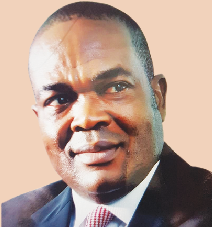
“Every time we celebrate a rescue without fixing the incentive structure behind it, we are borrowing against the next crisis,” Dr Joshua Awesome
For 56 days, 44 pupils and teachers sat in the custody of gunmen deep inside the Old Oyo National Park, taken on May 15 when armed men stormed three schools — Community Grammar School, Baptist Nursery and Primary School, and L.A. Primary School — in the Ahoro-Esiele and Yawota communities of Oriire Local Government Area, Oyo State. The assistant headmaster, Joel Adesiyan, was killed on the spot trying to escape. A teacher, Michael Oyedokun, was later beheaded in captivity. The rest — 39 pupils and five surviving teachers, by the Army’s final count of 44 — walked free on July 10, following what the Nigerian Army described as an intelligence-driven operation lasting more than a month.
In a statement issued by the acting deputy director of Army public relations, 2 Division, Lieutenant Colonel Danjuma Jonah Danjuma, the military said troops led by the General Officer Commanding 2 Division, Major General C.R. Nnebeife, working alongside the Office of the National Security Adviser, the National Counter Terrorism Centre, the Defence Headquarters’ special forces elements from the Army, Navy and Air Force, the Police, the DSS, the NIA, the NSCDC, and local hunters and vigilante groups including Amotekun, methodically identified the kidnappers’ kingpins, dismantled their logistics network, and arrested informants before the terrorists released the victims unconditionally. Security personnel, the Army disclosed, suffered casualties in the process.
It is precisely the kind of operation President Bola Ahmed Tinubu has invoked in pledging to modernise the Nigerian Army — better equipment, sharper intelligence capacity, and a force built to match the geography of a security crisis that now spans banditry in the northwest, insurgency in the northeast, and, as Oyo shows, an alarming southward creep of mass abduction as a terror tactic. The Oyo rescue will be cited, understandably, as proof that reform and resolve can work. But it also throws into sharp relief a less comfortable fact: the soldiers who spent a month combing forest terrain for kidnappers are, on paper, among the worst-compensated in any economy of Nigeria’s size on the continent — and by a wide margin, worst-compensated relative to the world’s largest militaries.
A Nigerian Army private earns roughly ₦104,500 a month — about $65 to $70 at prevailing exchange rates — a figure barely distinguishable from what it was before recent minimum-wage adjustments. Compare that to South Africa, whose economy is only slightly larger than Nigeria’s but whose army privates earn the rand equivalent of roughly $290 a month. Compare it further to the United States, where an entry-level E-1 private’s base pay alone is $2,407 a month, climbing past $3,500 once housing and food allowances are added — for a soldier facing, on any given deployment, comparable risk to the one who just spent a month in Old Oyo’s forests.
This is not merely an accounting curiosity. Behavioural economics offers a useful, if uncomfortable, lens. Soldiers judge their pay not against an abstract global benchmark but against a reference point — what police earn, what peers in comparable danger earn, what dignity in their own economy costs. Prospect theory tells us that when the potential loss (injury, death, prolonged bush operations against armed kidnappers) is so catastrophic and the pay so modest, the risk-reward ledger becomes structurally lopsided. Self-determination theory suggests that morale and institutional loyalty depend on autonomy, competence and relatedness — psychological needs that are difficult to sustain when a soldier’s basic financial security, the precondition beneath Maslow’s hierarchy, is barely met. And Amartya Sen’s capability approach reframes the comparison usefully: it is not simply what a soldier is paid, but whether that pay lets him or her — and dependents — actually live with dignity inside Nigeria’s own cost structure. By that measure, ₦104,500 falls short even before any cross-border comparison is made.
None of this diminishes what 2 Division accomplished in Oyo. Intelligence-led, multi-agency operations of that complexity — coordinating the Army, Navy, Air Force, police, DSS, NIA, civil defence corps and community vigilante networks over a month of forest operations — represent precisely the kind of institutional capability Tinubu’s modernisation agenda says it wants to build. Equipment and doctrine matter. But equipment does not fight alone. The men who walked into Old Oyo National Park to extract 44 hostages did so on a salary that a junior soldier in almost any G7 economy, and several African peers, would consider unliveable.
If Nigeria’s modernisation pledge is to mean more than new hardware, it will eventually have to reckon with pay — not as a welfare gesture to soldiers, but as a structural input into the very security outcomes the country is asking its army to deliver. Retention, morale, and resistance to corruption are not separable from compensation; behavioural economics has spent decades demonstrating that they are downstream of it.
“A soldier’s pay is not a cost line — it is a signal about how much the state values the risk it is asking that soldier to absorb. Get the signal wrong for long enough, and you do not just lose morale, you lose the soldiers themselves, to attrition, to corruption, to indifference. Nigeria cannot equip its way out of an incentive problem.
The next mass-abduction crisis is being decided now, in a budget line, not in a forest, by soldiers earning less in a month than an American recruit earns in two weeks. That gap is not a footnote to the modernisation story. It is close to the centre of it.
- business a.m. commits to publishing a diversity of views, opinions and comments. It, therefore, welcomes your reaction to this and any of our articles via email: comment@businessamlive.com

Dr. Joshua Awesome is a Coaching Psychologist/Executive and Business Performance Coach who has supported over 100,000 professionals across Africa and the globe. He can be reached via: joshua@africainmind.org