Oluwadara Omiyale
Obiora Okonkwo, the chairman of United Nigeria Airlines, has called for a review of Nigeria’s aviation revenue remittance structure, warning that current deductions from industry-generated income are weakening the financial capacity of key aviation agencies and limiting sectoral development.
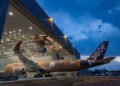
Okonkwo made the appeal in Lagos during the unveiling of two Boeing 737-800NG aircraft, where he said agencies such as the Nigerian Civil Aviation Authority (NCAA) and the Federal Airports Authority of Nigeria (FAAN) require stronger financial autonomy to effectively discharge their regulatory and operational responsibilities.
He argued that a significant portion of revenues generated within the aviation sector is currently remitted to the Federal Government, leaving agencies with insufficient funds to maintain infrastructure, strengthen oversight and meet growing operational demands.
According to him, predictable and adequate funding is essential for sustaining safety standards, improving airport infrastructure and ensuring efficiency across Nigeria’s aviation ecosystem. He added that industry agencies should be allowed to retain a larger share of their internally generated revenue in order to address funding gaps that continue to affect service delivery.
The United Nigeria Airlines chairman maintained that the aviation sector plays a far broader role in the economy beyond passenger transportation, particularly in supporting critical industries such as oil and gas, logistics and international business operations.
He noted that many offshore oil and gas activities depend heavily on aviation services for personnel movement and equipment support, making the sector strategically important to national development.
Okonkwo also highlighted access to financing as a major constraint facing local operators, citing high interest rates from commercial banks as a barrier to fleet expansion and modernization.
He called for the introduction of single-digit interest financing for aviation operators, arguing that cheaper credit would enable airlines to invest in new aircraft, improve operations and remain competitive.
“In conclusion, we would also like to see policies that provide access to single-digit interest loans for aviation operators. As things stand today, loans from commercial banks are extremely expensive, making it difficult for operators to invest and grow their businesses,” he said.
He further urged the government to adopt policy frameworks that strengthen aviation institutions, improve infrastructure funding and enhance the overall competitiveness of the sector.
Okonkwo stressed that stronger financial systems within aviation agencies would translate into improved airport facilities, better safety oversight and more efficient service delivery.
He added that addressing both revenue retention challenges and financing constraints would significantly strengthen Nigeria’s aviation industry and improve its contribution to economic growth.