Africa’s development debate has been shaped for years by the same tired assumptions. The continent is often spoken about as if its future depends on the generosity of Western taxpayers. It does not. And it never has.
Let us be clear from the beginning. I am not against foreign aid. Humanitarian aid does save lives during emergencies and anyone who has worked in conflict or disaster settings knows its value. But humanitarian aid is not development. And development is not humanitarian aid. Mixing both is how we ended up with the confused narrative that Africa’s progress rises and falls with donor budgets.
The latest claim making the rounds is that aid cuts are causing deaths in Africa. There is modelling behind that claim. WHO and Global Fund projections do exist, and I won’t pretend otherwise. But projections are not verdicts, and modelling is not a substitute for governance. Even if the worst projections prove accurate, the issue is not whether aid cuts hurt. Of course they do. The question we should be asking is why African health systems remain structured in ways that a shift in a foreign budget cycle can be a matter of life and death for our own citizens. That is not a donor failure. That is a sovereignty failure.
The responsibility for preventing unnecessary deaths in Africa rests with African governments. Not with taxpayers in the United States, the United Kingdom or Europe. Sovereignty means responsibility. Governance means accountability. And accountability cannot be outsourced.
So if aid is not what Africa needs to develop, what does Africa actually need.
Institutions that work
Every serious study of development points to one conclusion. Institutions matter. Countries with predictable regulatory systems, credible judicial processes and competent public administrations attract investment, mobilise domestic resources and create jobs.
The African Development Bank estimates Africa’s infrastructure financing needs at $181 to $221 billion annually through 2030. The African Economic Outlook shows that countries with stronger institutions have significantly higher investment to GDP ratios than those with weak governance. That is not ideology. That is backed up by data.
Aid cannot build institutions but it can support them. It can train civil servants. But the political will to reform institutions must come from within. If donors could build institutions, Haiti would be Switzerland by now.
Africa needs institutions that enforce contracts, protect property rights, regulate markets fairly, manage public finances transparently and deliver services without drama. Institutions that work even when donors are not watching.
Investment not charity
Africa’s development must be driven by investment. Not charity. Foreign direct investment into Africa reached more than 50 billion dollars in 2023 and could double by 2030 if regulatory and infrastructure bottlenecks are addressed.
Meanwhile, global aid flows to Africa have been declining for a decade. Even if donors suddenly became generous again, aid would still be a fraction of what Africa needs. The continent requires close to $200 billion dollars annually in infrastructure financing alone. No donor conference is raising that.
Africa needs investment ready pipelines in energy, logistics, agriculture and digital infrastructure. It needs clear regulatory frameworks that reduce investor risk. It needs to deepen regional integration through the African Continental Free Trade Area. It needs public private partnerships that are transparent and bankable.
Charity is not a development strategy. If charity built nations, the Democratic Republic of the Congo would be a superpower.
Smarter use of sovereign assets
Africa is not poor. Africa is poorly leveraged. The continent holds enormous mineral reserves, vast uncultivated arable land, the youngest workforce on earth and some of the fastest growing cities. Yet many African countries still behave as if their development depends on external generosity.
Development depends on how well Africa structures, values and manages its sovereign assets. This means modernising land registries, digitising mineral licensing, reforming state owned enterprises, unlocking pension funds for infrastructure and building sovereign wealth funds that actually generate returns.
Countries like Botswana and Mauritius have shown what disciplined asset management can achieve. Africa does not need aid to do this. It needs leadership, competence and seriousness.
Domestic resource mobilisation
According to UNCTAD, African countries lose more than $88.6 billion dollars annually to illicit financial flows. That is more than the continent receives in aid. If Africa simply plugged half of these leakages, aid dependency would collapse overnight.
Domestic resource mobilisation requires efficient and progressive tax systems, modern customs operations, digital revenue collection and reduced corruption in procurement. The IMF estimates that African countries could increase tax to GDP ratios by several percentage points through reforms alone. That is billions of dollars every year without a single donor workshop or capacity building retreat in a five star hotel.
Human capital development
Africa’s greatest asset is its people. By 2050, 1 in 4 humans will be African. The continent will have the largest workforce in the world. But a workforce is only an asset if it is skilled, healthy and productive.
The continent needs quality education, vocational training, digital literacy, universal healthcare and labour market reforms that match skills to opportunities. Aid can support these areas but the scale required is far beyond donor budgets. Human capital development is a domestic responsibility that cannot be designed and implemented from the outside.
Narrative power
One of our insidious and biggest development challenges on the continent is not poverty. It is perception. The continent is often framed as a charity case. A place where survival depends on Western generosity. This narrative is not only inaccurate. It is harmful. It undermines investor confidence, erodes African agency and infantilises entire societies.
The obsession with aid cuts is not Africa’s obsession. It is the obsession of institutions whose business models depend on aid. They panic because their funding is threatened. Not because Africans are dying.
Africa needs to reclaim its narrative. To tell stories of innovation, resilience, entrepreneurship and structural reform. Narrative power attracts investment. Aid dependency repels it.
Strategic wit
Development debates can be painfully solemn. If you read certain donor reports, you might think Africans wake up every morning waiting for someone in Brussels or Washington to switch on the continent’s electricity.
Strategic wit helps expose contradictions without trivialising the issues.
Consider this. If aid truly caused development, Somalia would be Dubai by now. If projections counted as evidence, Africa would have died at least two hundred times since 1980. If donors could build institutions, Ethiopia would have Singaporean level bureaucracy by now. And if aid cuts caused deaths, African governments would be innocent bystanders in their own countries.
Strategic wit is not frivolous. It is a diagnostic tool. It reveals the absurdity of certain narratives and forces a more honest conversation about responsibility, agency and governance.
To conclude, our progress will come from clear choices made by our leaders and citizens. It will come from institutions that function, from governments that take responsibility for the security and welfare of our people, from smarter use of the continent’s assets and from a generation of young Africans who are ready to build, innovate and compete.
Aid can save lives in moments of crisis and it has its place, but it cannot carry a continent into the future. That work belongs to us Africans. The moment we stop describing Africa as a problem and start organising it as a powerhouse, everything changes because narratives matter more than many think.
The continent has the talent, the resources and the ambition. What remains is the discipline to turn potential into progress and the confidence to stop waiting for permission.
As a great man once said:
“It is in your hands to make a better world for all who live in it.” — Nelson Mandela
- business a.m. commits to publishing a diversity of views, opinions and comments. It, therefore, welcomes your reaction to this and any of our articles via email: comment@businessamlive.com

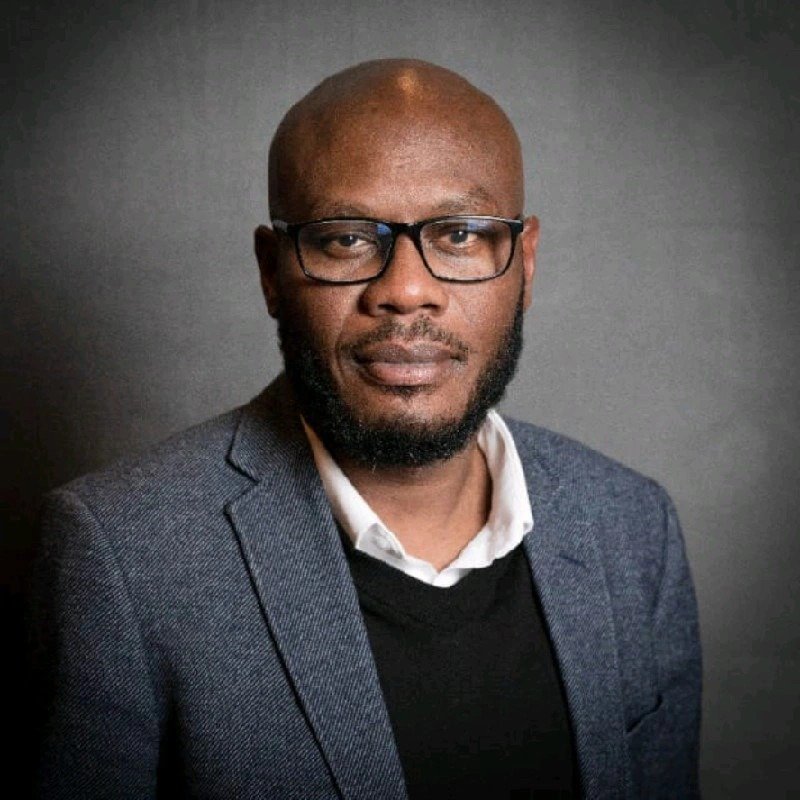
Dr. Wale Osofisan, PhD, is a seasoned governance strategist and policy analyst with over 23 years of experience advancing African-led, evidence-based solutions to political transitions, humanitarian crises and development challenges.