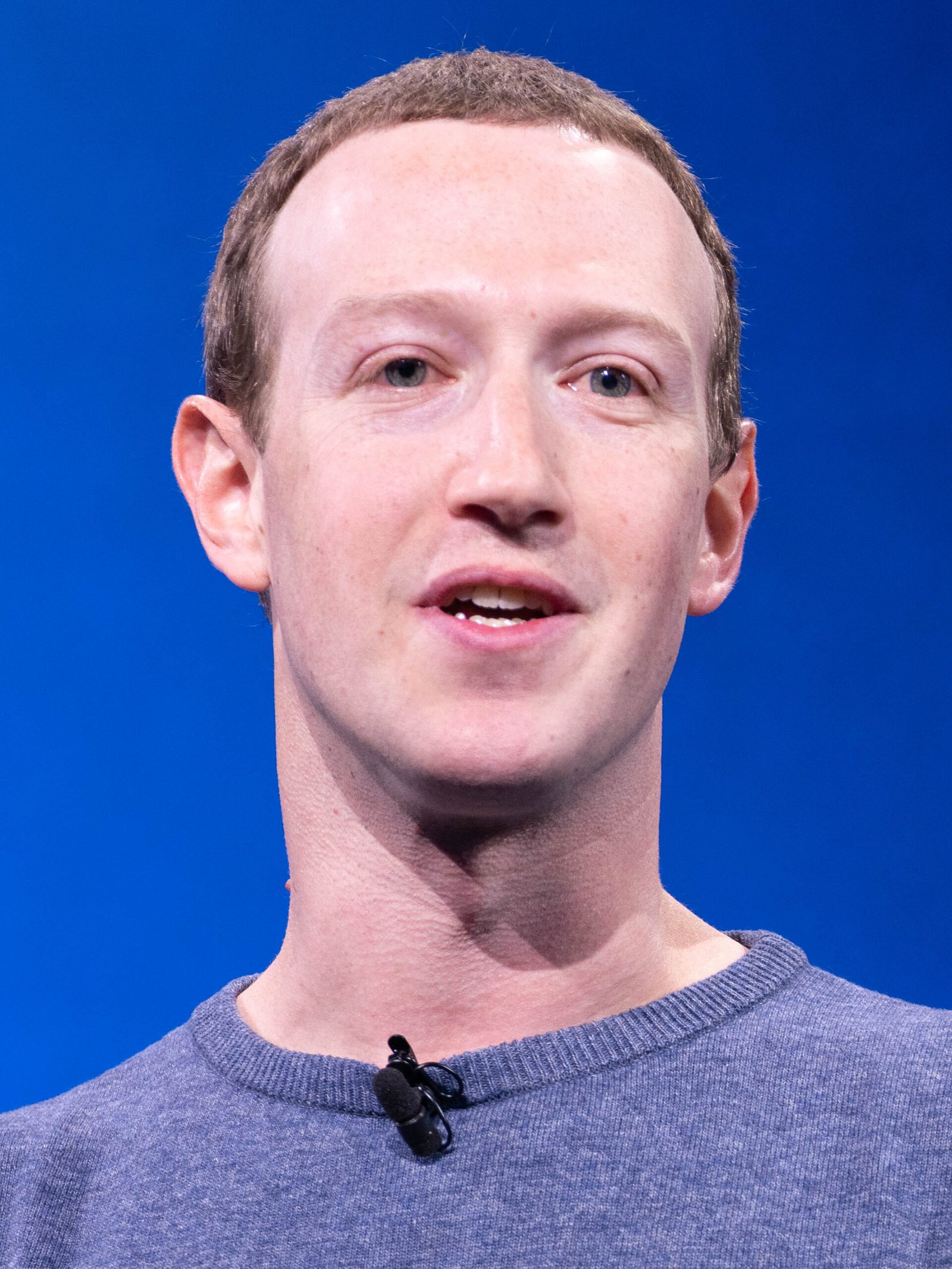
Meta CEO Mark Zuckerberg, has rejected predictions that artificial intelligence will trigger mass unemployment, arguing that the technology could ultimately create more jobs by giving individuals the ability to build new businesses, develop new products and take on work that is currently beyond their reach.
Zuckerberg made the projection in a new essay published on Monday titled “The Future is for Everyone,” in which he laid out his vision for advanced AI and what he calls “personal superintelligence”.
The Meta chief argued that the impact of AI on employment would depend largely on whether the technology is developed primarily to automate existing jobs or to expand the capabilities of individuals.
He said widespread access to powerful AI tools could tilt that balance towards job creation by allowing people to invent new products and services, develop businesses with smaller teams and acquire new skills faster.
“I predict that this will not only lead to much greater economic growth, but also more employment over time rather than less,” Zuckerberg said.
His comments come as concerns over AI-driven job displacement continue to grow, with businesses increasingly deploying AI to automate tasks previously performed by human workers.
Zuckerberg, however, argued that there is no rule that AI must increase automation faster than it increases people’s ability to perform new tasks.
“People have an infinite demand for new experiences and have always found new problems to tackle,” he said, arguing that the economy would continue to generate demand for new skills and services as technology evolves.
According to him, the outcome will depend on maintaining a balance between automation and what he described as “individual empowerment and invention”.
AI could turn more people into entrepreneurs
Zuckerberg said advanced AI could significantly lower the barriers to starting a business by allowing individuals to develop ideas without raising large amounts of capital or assembling sizeable teams.
He predicted that people would increasingly be able to use AI to design products, develop applications, create content and solve complex problems on their own.
“Many ideas that would have been too hard or expensive to try before will now be possible,” he said.
The development, he argued, could result in a larger number of smaller companies, with individuals and small teams using AI to achieve an economic impact that previously required much larger organisations.
“Small businesses will continue to be the backbone of the economy, but each small business will be able to have a much larger impact,” Zuckerberg said.
He also expects entirely new occupations to emerge as AI expands the range of activities people can undertake.
Among the examples he cited were small product studios producing customised goods, world builders and experience designers creating games and digital experiences, and individuals using AI to develop personalised scientific and health solutions.
Zuckerberg compared the transition to previous technological shifts, noting that many occupations that are now common did not exist or were not widespread before the arrival of computers, the internet and other technologies.
Central to Zuckerberg’s argument is his belief that the most significant economic contribution of advanced AI will eventually move beyond automating existing work.
“Invention, not automation, will be the greatest contribution of superintelligence,” he said.
He expects future AI systems to help people discover new medicines, develop scientific breakthroughs, improve businesses and create new products.
The technology, he said, would also allow individuals to work with personal AI agents capable of helping them manage their careers, finances, education, health and other aspects of their lives.
Zuckerberg said Meta intends to make such tools available to billions of people, including through free versions, while offering more advanced computing capacity to users willing to pay.
He also said Meta would develop private modes for personal AI agents designed so that users’ information would remain inaccessible to Meta or other service providers.
The Meta CEO’s argument extends beyond employment to the question of who controls increasingly powerful AI systems.
He warned that concentrating advanced AI in a handful of companies, governments or institutions could create an imbalance of power and potentially make society less safe.
Instead, he advocated for broad distribution of AI capabilities, arguing that individuals, businesses and institutions should have access to powerful systems capable of checking and competing with one another.
“The key to a positive future for everyone is achieving a balance of power that favors individuals,” Zuckerberg said.
He argued that a world in which only one company or institution controls superintelligence could create greater economic, political and security risks than one in which advanced AI is widely available.
The approach also underpins Meta’s continued support for open-source AI, with Zuckerberg saying the company plans to resume releasing some open-source models following the establishment of its Meta Superintelligence Labs.
AI risks will remain
Despite his optimistic outlook, Zuckerberg acknowledged that advanced AI could create serious risks, including job displacement, cybersecurity threats, biological risks, government surveillance and the possibility of AI systems becoming difficult for humans to control.
He argued that restricting access to AI capabilities could itself create risks by concentrating power in the hands of a small number of institutions.
Instead, he called for stronger safeguards and closer cooperation between frontier AI companies and governments.
Zuckerberg proposed that leading AI laboratories provide governments with access to intermediate training versions of advanced models, alongside technical expertise, to help identify and address threats to critical infrastructure before the systems are released publicly.
He also called for faster development of energy infrastructure and data centres to maintain US leadership in AI, while warning against policies that could unnecessarily slow American AI companies.
He further described the development of superintelligence as one of the most significant technological advances of the current era and argued that its success should ultimately be measured by how much power it gives individuals to create, innovate and shape the future.