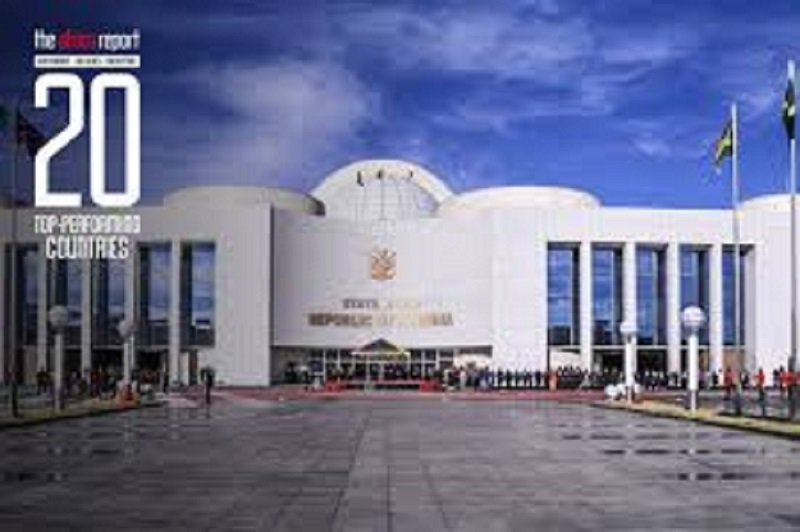
A country’s ability to innovate, govern effectively and project influence may now matter more than its economic size, according to a new assessment of Africa’s top-performing nations.
The latest edition of Africa’s Best-Performing Countries ranking, published by Jeune Afrique and The Africa Report, reveals a continent in transition, where institutional strength, investment attractiveness and innovation ecosystems are becoming as important as gross domestic product in determining long-term national performance.
South Africa retained its position as Africa’s highest-performing country in the 2026 rankings, leveraging its diplomatic influence, scientific research capacity, entrepreneurial ecosystem and global standing as a member of both the G20 and BRICS bloc.
However, the report suggests that the continent’s competitive landscape is becoming increasingly dynamic, with smaller economies demonstrating that strong governance, policy consistency and economic diversification can rival the advantages traditionally associated with large markets.
Mauritius emerged as one of the strongest performers, climbing to second place, while Namibia recorded the most dramatic rise in the rankings, jumping from 15th position last year to third place in what analysts describe as one of Africa’s most notable governance and economic success stories.
The ranking’s authors attributed Namibia’s rise to improvements in political stability, tax administration, infrastructure development, financial market performance and institutional governance.
The findings underscore a trend across the continent: countries that strengthen institutions, improve fiscal management and create investor-friendly environments are increasingly outperforming peers regardless of population size or resource endowment.
“This ranking demonstrates that national performance cannot be measured solely by economic size or demographic weight. It reflects the consistency of long-term policy choices, the robustness of institutions, innovation capacity and a country’s ability to project influence,”said Julien Wagner, director of special content, partnerships and media diversification at Jeune Afrique Media Group.
Unlike conventional rankings that rely primarily on GDP growth or income indicators, the 2026 index evaluates countries across three broad pillars: governance, influence and innovation.
Governance, which accounts for half of the overall score, measures factors including tax collection efficiency, GDP per capita growth, foreign direct investment performance, debt sustainability, political stability, rule of law and institutional effectiveness.
Influence contributes 25 percent of the ranking and evaluates diplomatic reach, cultural exports, tourism appeal, international representation and participation in global institutions.
Innovation, also weighted at 25 percent, assesses educational outcomes, startup financing, patent activity, research capacity and academic competitiveness.
The methodology reflects growing recognition among investors and policymakers that sustainable economic performance increasingly depends on institutional quality and knowledge-driven growth rather than resource wealth alone.
Morocco secured fourth position, benefiting from sustained investments in manufacturing, logistics infrastructure, renewable energy and sports development, reinforcing its status as one of Africa’s most diversified economies.
Nigeria ranked fifth, climbing four places from the previous edition despite persistent governance challenges.
The report noted that Africa’s largest economy continues to benefit from its vast market size, entrepreneurial ecosystem, technological innovation and regional influence.
The country’s improved standing comes amid growing international recognition of Nigeria’s fintech sector, startup ecosystem and expanding digital economy, which continue to attract investment despite broader macroeconomic headwinds.
Egypt, by contrast, moved in the opposite direction, falling four places to sixth position.
Analysts attributed the decline to deteriorating economic indicators, including falling GDP per capita, elevated debt levels exceeding 90 percent of GDP, weak regional integration and governance concerns.
The contrasting trajectories of Nigeria and Egypt sowcase how investor perceptions are increasingly shaped by institutional reforms and innovation potential rather than economic scale alone.
The remainder of the top 10 was occupied by Rwanda, Ghana, Côte d’Ivoire and Kenya, highlighting the growing economic significance of both East and West Africa.
Particularly noteworthy is the emergence of West Africa as a major centre of economic dynamism.
The report points to intensifying competition and complementarity among Nigeria, Ghana and Côte d’Ivoire, which are increasingly establishing themselves as regional hubs for trade, investment and entrepreneurship.
Côte d’Ivoire’s continued rise reflects years of economic reforms and infrastructure investments that have strengthened Abidjan’s position as one of the continent’s most important commercial gateways.
Beyond the top tier, the rankings reveal developments in Africa’s economic geography.
Algeria advanced significantly to 12th position, benefiting from improved relative performance as several previously higher-ranked economies lost momentum.
Mauritania entered the top 20 for the first time, supported by gains in diplomatic influence, while Mozambique also secured a place among the continent’s best-performing nations.
Conversely, Ethiopia recorded one of the sharpest declines, weighed down by concerns surrounding governance, fiscal transparency and institutional effectiveness.
Botswana, Tanzania and Kenya also slipped in the rankings as the revised methodology placed greater emphasis on tax mobilisation, regional integration and measures of soft power.
The report arrives at a time when African governments are increasingly competing not only for foreign direct investment but also for talent, technology, startup capital and geopolitical influence.
As global investors place greater emphasis on governance standards, regulatory predictability and innovation capacity, the rankings suggest that future economic leadership on the continent may be determined less by natural resources and population size and more by the ability of countries to build resilient institutions, foster entrepreneurship and position themselves within emerging global economic networks.