Africa’s drive to build and control its own artificial intelligence infrastructure, data systems and research capacity will take centre stage in Lagos in August as the continent’s largest grassroots machine learning movement convenes more than 1,000 participants for its eighth annual gathering.
The Deep Learning Indaba (DLI), Africa’s premier grassroots movement for machine learning and artificial intelligence, will hold its 2026 continent-wide gathering from August 2 to 7 at Pan-Atlantic University (PAU), Lagos.
The event, themed “Sovereign Intelligence,” comes as the global technology industry accelerates investment in artificial general intelligence (AGI), raising fresh questions about who will own the data, infrastructure, intellectual property and scientific capabilities that will power the next generation of AI systems.
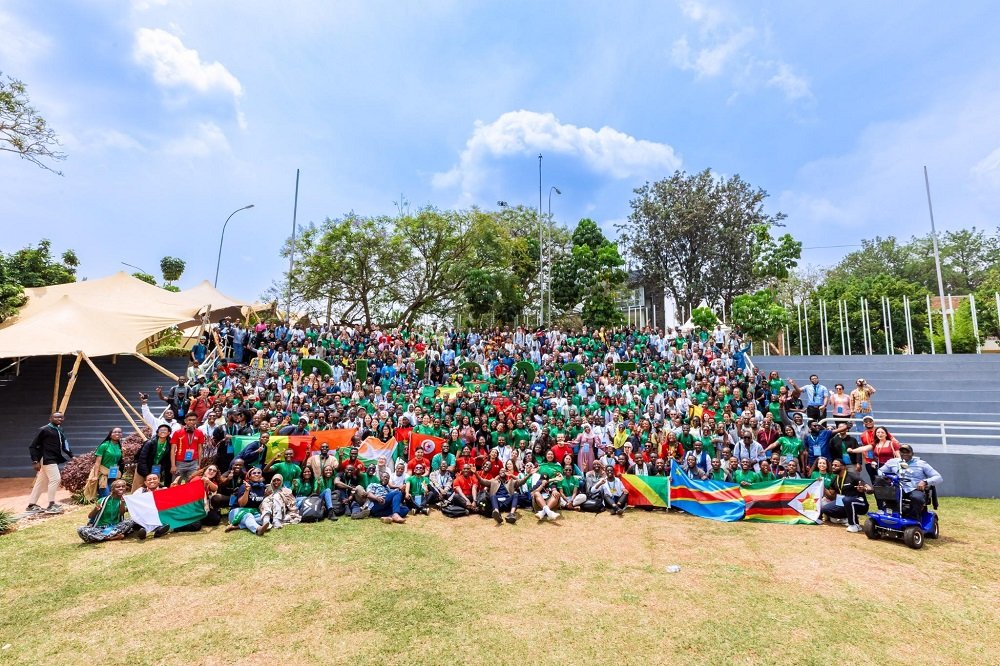
The 2026 gathering is expected to attract engineers, researchers, students, startups and policymakers from 45 African countries and the global diaspora.
The event will feature technical tutorials, workshops, research showcases, keynote sessions and the launch of the annual pan-African Hackathon. The gathering will also focus on reducing barriers to participation through scholarships, localised mentorship programmes and international partnerships.
Founded in 2017 by a group of researchers, the Deep Learning Indaba has grown from a local initiative into a registered charity supported by more than 60 organisers and a wider network of researchers and practitioners across the continent.
Its stated ambition is to drive Africa from being primarily a consumer of imported technology to becoming an active participant in the design, development and ownership of advanced AI systems.
The 2026 programme will focus on six areas viewed as central to the development of Africa’s AI ecosystem.
These include African language processing and evaluation, community-led data infrastructure, AI safety and model alignment, applied AI for climate and healthcare, intellectual property and digital public infrastructure, and advanced machine learning engineering and computing.
The language track, supported by Masakhane workshops, will focus on community-led data collection for African languages and challenge the adequacy of global benchmarks that may not reflect the continent’s linguistic diversity.
Other sessions will explore how African communities can develop sustainable datasets and reduce dependence on data frameworks shaped primarily by Western technology ecosystems.
The programme will also address AI safety and red-teaming, with a focus on building testing and model-evaluation capabilities suited to African cultural and systemic contexts.
The Indaba will offer training in areas including GPU kernel programming, the use of Triton to develop faster Transformers, and quantum machine learning through the QML4Africa programme.
The organisers also plan sessions on the legal and policy dimensions of AI, including intellectual property and the integration of digital public infrastructure into government systems.
Applied AI will receive attention through initiatives focused on healthcare delivery and climate action, reflecting the growing push to move African AI research beyond prototypes and into real-world applications.
The decision to host the 2026 gathering in Nigeria places Africa’s third largest economy at the centre of discussions on the continent’s technology future.
Nigeria has emerged as one of Africa’s most active technology ecosystems, with a large pool of developers, startups, researchers and technology entrepreneurs.
The country is also seeking to strengthen its digital economy and develop a larger role in the global AI ecosystem.
The speaker line-up includes Bosun Tijani, Nigeria’s minister of communications, innovation and digital economy; Olatunbosun Alake, Lagos State commissioner for science and technology; Akua Gyekye, Microsoft’s head of government affairs for Africa; and technology and research leaders from institutions including the University of Maryland, McGill University, the University of Barcelona and the University of Pretoria.
Other speakers include Margaret Mitchell, chief ethics scientist at Hugging Face; Kate Kallot, founder and chief executive officer of Amini; and Vukosi Marivate, chair of data science and professor of Computer Science at the University of Pretoria.
The organisers said hosting the event in Nigeria reflected the country’s contribution to the development of the African AI ecosystem.
“Nigeria represents scale, imagination, and a fearless belief in what is possible,” the DLI General Chairs said.
They described the gathering as a collective effort to ensure African talent is not left at the periphery of global AI development.
Enase Okonedo, vice-chancellor of Pan-Atlantic University, said hosting the event reflected the university’s commitment to advancing knowledge, innovation and collaboration that contributes to Africa’s development.
The 2026 Indaba is supported by a wide network of international technology companies, research institutions, development organisations and African technology ventures.
Among the sponsors and partners are Google DeepMind, Google Research, Microsoft Research, Apple, Cohere, Cambridge University Press, Mila, the International Development Research Centre, the International Telecommunication Union, Wellcome, Kenya Airways, Ventures Platform, Masakhane, Zindi and other organisations..
The Deep Learning Indaba operates IndabaX local chapters across 47 African countries, enabling locally organised events, knowledge transfer and community building.
It also runs research and community awards, including the Maathai Impact Award, Anta Diop Community Hero Award and Kambule Research Awards.
The model is designed to create a distributed network of AI talent rather than concentrate expertise in a few major technology hubs.