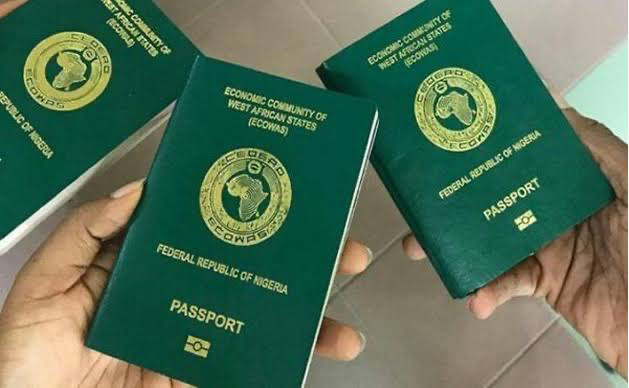
Visa restrictions are putting another brake on Nigeria’s international travel and aviation ambitions, with the country’s passport slipping to 90th place in the latest global mobility ranking.
Nigerian passport holders can now access only 44 destinations without obtaining a visa in advance, while travel to major markets across Europe, North America and parts of Asia remains subject to additional costs, documentation and processing delays.
The Henley Passport Index, which uses exclusive data from the International Air Transport Association (IATA), ranks 199 passports according to the number of destinations their holders can access without obtaining a visa before departure.
Christian H. Kaelin, chairman of Henley & Partners and creator of the index, said passport strength was closely connected to a country’s international relationships.
“The world’s strongest passports belong to nations that other countries want as partners for trade, investment, security or cooperation,” Kaelin said.
His assessment highlights the wider economic significance of Nigeria’s ranking. A weak passport is not simply a travel inconvenience; it can signal the extent to which a country’s citizens benefit from diplomatic agreements, reciprocal visa arrangements and international confidence.
For Nigerian businesses seeking to operate across borders, the implications are substantial. Executives travelling for negotiations, entrepreneurs attending investment meetings and professionals participating in global conferences may face weeks of visa processing before they can access commercial opportunities abroad. In fast-moving business environments, such delays can mean missed meetings, postponed deals and higher transaction costs.
The effect is also felt across the travel industry. Travel agencies and tour operators are forced to face complex visa procedures on behalf of customers, while airlines can face weaker demand on international routes when prospective passengers are discouraged by the cost and uncertainty associated with obtaining visas.
For a country seeking to attract investment, increase exports and deepen its participation in global value chains, limited passport mobility can therefore become an indirect barrier to economic engagement.
The contrast with some other African countries is particularly significant. Seychelles and Mauritius continue to rank among the continent’s strongest passports, providing their citizens with access to substantially more destinations without advance visas. That mobility gives their citizens easier access to tourism markets, international business events, investment meetings and commercial networks.
It also supports the development of tourism and aviation. When travellers can move more easily, airlines have a stronger basis for expanding routes, while hotels, tour operators and other tourism businesses benefit from greater visitor flows. Business mobility can similarly support foreign investment, professional exchange and cross-border entrepreneurship.
Nigeria, despite being one of Africa’s largest economies and one of the continent’s most important aviation markets, continues to face higher travel friction.
The country has invested in expanding airport infrastructure and increasing passenger traffic, but improved physical connectivity cannot fully overcome the constraints created by visa barriers.
A new airport terminal or an additional international route may expand capacity, but travellers still require the ability to move efficiently between markets. This is particularly relevant for Nigerian businesses that increasingly operate in a global environment.
A company seeking to meet a foreign supplier, negotiate an export contract, attend an industry exhibition or secure investment may need to plan travel weeks or months in advance. The additional administrative burden can be particularly damaging to small businesses, which often lack dedicated travel and compliance teams.
For larger corporations, visa restrictions can raise the cost of deploying executives and technical personnel. For smaller businesses, they may prevent international participation altogether.
The ranking also has implications for Nigeria’s outbound tourism market. Nigerian travellers seeking international leisure opportunities face application charges, documentation requirements and uncertain processing times. These costs are added to airfares, accommodation and other travel expenses, making international trips more expensive.
Travel agencies and tour operators are consequently required to devote greater resources to visa processing and customer support, while airlines may face weaker demand for destinations where visa procedures are perceived as particularly difficult.
The ranking also points to a diplomatic dimension. Countries with extensive bilateral relationships, reciprocal visa agreements and strong international cooperation generally provide their citizens with greater freedom of movement. As a result, improving passport mobility is not simply an administrative task for immigration authorities. It requires sustained diplomatic engagement and negotiations with other governments.
Nigeria’s position also comes at a time when African countries are seeking to improve regional economic integration.
The Single African Air Transport Market (SAATM), which aims to remove barriers to air connectivity across the continent, is intended to make it easier for airlines to operate across African markets and improve passenger movement.
Greater implementation of such initiatives could help reduce some of the barriers facing African travellers. However, improved air connectivity alone will not solve the wider problem of international mobility.
According to industry analysts, for Nigerian citizens to participate more fully in global business and tourism, the country will also need stronger diplomatic engagement around visa arrangements. This is particularly important as Nigeria seeks to diversify its economy.
A country attempting to expand non-oil exports needs entrepreneurs who can meet international buyers, attend trade fairs and negotiate commercial agreements. A country seeking foreign investment needs businesspeople and investors to be able to meet with potential partners. A tourism sector seeking to attract visitors must also ensure that its citizens can participate in international networks that promote destinations and build commercial relationships. In each case, the ability to travel is an economic asset.
Nigeria’s position at 90th on the Henley Passport Index therefore raises questions beyond the immediate one-place decline.
The more important issue is whether the country can convert its economic size and strategic importance into greater international mobility for its citizens.
Nigeria remains one of Africa’s largest economies, with a substantial population, a large consumer market and significant commercial relationships across the world. Yet the ability of its citizens to access international markets remains comparatively restricted.
When Nigerian businesspeople must spend more time and money obtaining permission to travel than their competitors in countries with stronger passports, the cost of international engagement rises.
Over time, those costs can influence where businesses choose to hold meetings, attend conferences, seek investment and establish partnerships.
The impact may be particularly significant for emerging businesses. Large corporations can often absorb the costs of international travel and deploy multiple executives when necessary. Smaller firms and entrepreneurs are less able to withstand the financial and administrative burden of repeated visa applications.
This could limit their access to international markets precisely at the stage when they need global exposure to grow.
The aviation sector could also benefit from stronger passport mobility.
As countries compete for investment, talent, tourism and international business, the ability of their citizens to move efficiently across borders can become a competitive advantage.
For now, Nigeria’s fall to 90th place serves as a reminder that the country’s economic ambitions are being pursued in a world where access to markets increasingly depends not only on what a country produces, but also on how easily its people can reach the people and institutions with whom they need to do business.