African banks are generating returns on equity of about 19 percent, nearly twice the global average, while pension funds, insurers and other institutional investors oversee more than $2 trillion in assets.
Yet the strength of the continent’s financial institutions has not translated into sufficient long-term financing for businesses and infrastructure, prompting calls for changes to investment rules and greater development-finance support.
Hicham Al Morabet, director of the Africa Financial Industry Summit (AFIS), said African banks, pension funds, insurers and other institutional investors have accumulated substantial financial resources, but regulatory constraints, limited investment-ready projects and risk considerations continue to keep much of the capital away from the real economy.
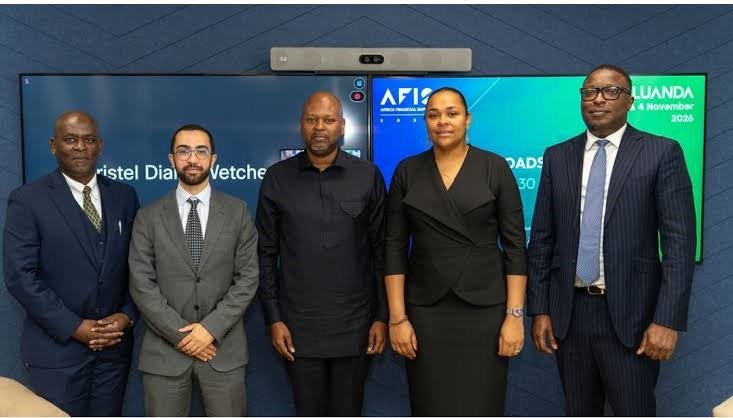
Speaking in Lagos at a media parley organised by the International Finance Corporation (IFC) and AFIS ahead of the sixth edition of the summit in Luanda, Angola, Al Morabet said the challenge was no longer simply about mobilising savings, but about redirecting existing capital towards productive investment.
African banks currently record an average return on equity of about 19 percent, almost twice the global average, while institutional investors manage more than $2 trillion in assets, he said.
Yet businesses and infrastructure projects across the continent continue to face high borrowing costs and limited access to affordable long-term financing.
The mismatch is particularly significant because institutional investors such as pension funds and insurers manage long-duration liabilities that could, in principle, provide a natural source of funding for infrastructure, industrial projects and other long-term investments.
Instead, Al Morabet said, a substantial proportion of institutional capital remains concentrated in short-term government securities.
The AFIS director identified investment regulation as one of the key constraints preventing a greater flow of institutional capital into productive assets.
He said regulators should examine sector exposure limits applicable to pension funds, insurance companies and other institutional investors to determine whether more capital could be allocated to productive sectors without compromising the financial stability of institutions responsible for citizens’ savings.
The objective, he said, should be to create greater room for investment while maintaining appropriate prudential safeguards.
Al Morabet also pointed to the need to expand the underlying pool of savings through deeper pension systems, higher insurance penetration and digital savings products.
The third requirement, he said, is a larger pipeline of bankable projects capable of meeting the risk, return and governance requirements of institutional investors.
The scale of the mismatch is underscored by the financing deficit confronting sub-Saharan Africa.
Dafe Oraka, principal investment officer at IFC, said the region’s financing gap exceeds $400 billion despite the availability of significant pools of domestic and institutional capital.
“We see opportunities in connecting capital more effectively to finance businesses, to finance infrastructure, and to create jobs in Africa,” Oraka said.
Olivier Buyoya, IFC’s division director for Nigeria and Central Africa, said stronger collaboration among financial institutions, regulators and development finance institutions would be necessary to unlock capital for strategic sectors.
He noted that the decisions of major Nigerian banks have implications beyond the domestic market because of their growing role in African financial markets.
The debate over capital allocation is expected to feature prominently at the sixth AFIS, scheduled to hold in November in Luanda, where industry leaders are expected to examine how Africa’s financial architecture can better support economic development and industrialisation.
The summit has expanded from about 700 participants at inception to nearly 1,500 participants, with more than 65 partners and over 50 sessions planned for this year’s programme.
The agenda will cover banking, insurance, private capital and capital markets, with a particular focus on financing industrialisation, agriculture and the energy transition.
The gathering is expected to bring together senior executives from IFC, the African Development Bank and major pan-African banks, alongside insurance companies and capital-market operators.
Chief executives of the BRVM, NGX and the stock exchanges of Angola and Egypt are expected to participate, alongside more than 30 senior public-sector representatives, including nearly 20 governors and financial-sector supervisors.