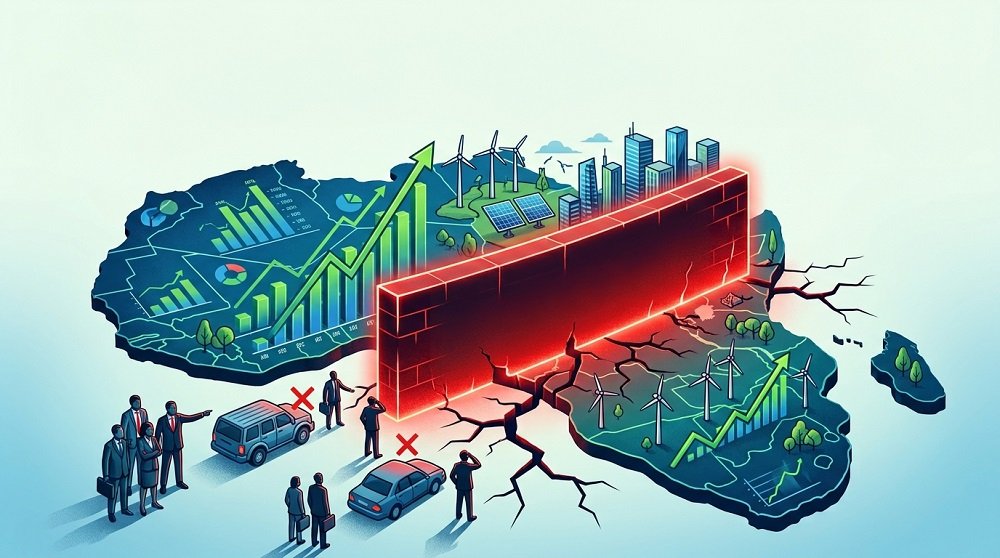
Africa is paying an estimated $74.5 billion in additional debt-service costs because of exaggerated risk perceptions and what development finance institutions describe as biased credit ratings, even as the continent records lower infrastructure-loan default rates than several other emerging regions.
The financing penalty, disclosed at the 2026 Invest Nigeria Conference and Expo in Lagos, highlights the extent to which the cost of capital is undermining infrastructure investment, industrialisation and private-sector expansion across African economies.
At the same conference, the International Finance Corporation (IFC) disclosed that only 16 percent of Africa’s exports were traded within the continent at the end of 2025, compared with 67 percent in Europe and 63 percent in Asia.
Taken together, the figures reveal Africa’s expensive access to capital and weak economic integration, both of which limit the continent’s ability to convert its large market, natural resources and growing consumer base into sustained investment and industrial growth.
Kudawashe Matereke, director, Regional Operations, African Export-Import Bank (Afreximbank), said Africa was paying significantly more to borrow despite recording a comparatively stronger infrastructure-loan performance.
He cited a recent Moody’s Analytics study showing that infrastructure-loan default rates in Africa averaged above 1.9 percent, compared with 4.6 percent in Asia, 10 percent in Latin America and 12.4 percent in Eastern Europe.
“Africa loses an estimated $74.5 billion in additional debt-service costs due to exaggerated risk perceptions and biased credit ratings,” Matereke said.
According to him, subjective credit assessments and financial frameworks are contributing to a higher cost of borrowing for African governments and businesses, increasing the amount of scarce public revenue that must be committed to servicing debt rather than financing productive investment.
The scale of the penalty becomes more apparent when measured against potential reductions in borrowing costs. Matereke said Africa could save about $1.12 billion if borrowing costs were reduced by two percentage points over three years across an $18.6 billion portfolio.
“We pay more for credit even though our default rate is lower,” he said.
Matereke said the high cost of credit was complicating efforts to finance the infrastructure and productive capacity needed to support Africa’s industrialisation.
In response to external shocks, Afreximbank approved a $10 billion Gulf crisis response programme in March 2026, aimed at supporting African and Caribbean economies, financial institutions and businesses exposed to imported fuel, food, liquefied natural gas and fertiliser.
The programme combines short-term foreign-exchange and liquidity support to keep critical supply chains operating with longer-term financing for regional energy, logistics and port infrastructure.
Afreximbank is also deploying guarantees to reduce transaction risks, unlock private capital and attract international financing into African projects.
Matereke said the continent’s industrialisation strategy could not be separated from the development of logistics networks, railways, ports, highways and energy grids, as well as access to financing, common quality standards and more predictable regulatory systems.
The bank, he said, was placing greater emphasis on African-owned enterprises, patents, brands, technology and logistics capacity as part of an effort to ensure that industrialisation produces more value within the continent.
It has also established African Quality Assurance Centres to provide testing, inspection and certification services for goods produced in Africa, with two facilities already operating in Nigeria.
While expensive capital constrains the supply side of African growth, weak intra-African trade is limiting the scale available to businesses on the demand side.
Olivier Buyoya, division director, West Africa, IFC, said only about 16 percent of Africa’s exports were destined for other African countries at the end of 2025.
The comparison with other regions is stark. About 67 percent of European exports remain within Europe, while 63 percent of Asian exports are traded within Asia.
For Buyoya, the disparity represents a substantial unrealised opportunity for the African Continental Free Trade Area (AfCFTA), which is designed to create a single continental market and provide businesses with the scale required to compete more effectively.
But the size of the market alone will not be sufficient, he said.
The challenge is to convert AfCFTA’s theoretical scale into connected markets, competitive regional value chains and investable opportunities.
A more integrated African economy would allow countries to specialise according to their comparative advantages, with one country producing raw materials, another processing them, and others supplying logistics, technology, finance or specialised services.
Such integration could also change the investment proposition for Nigeria, whose large domestic market gives businesses a potential base for regional expansion.
Buyoya said Nigerian companies were already expanding across Africa in financial services, telecommunications, consumer goods and technology, but deeper integration could enable more domestic companies to become regional champions while making Nigeria a stronger entry point for international investors seeking access to the wider African market.
The financing and trade constraints are particularly significant for Nigeria, where businesses face the dual challenge of accessing affordable capital and expanding beyond a large but increasingly competitive domestic market.
Buyoya said IFC was supporting supply-chain finance platforms in Nigeria that allow smaller suppliers to receive early payment against approved invoices.
The model is intended to provide working capital to smaller businesses, enabling them to fulfil larger orders and participate more effectively in regional supply chains.
The extended objective, he said, should be to move Africa beyond exporting raw agricultural, mineral and energy resources and towards capturing a greater share of the value generated from those resources.