President Bola Ahmed Tinubu’s foreign-investment campaign has generated more than $50 billion in pledged investments, but only $2.06 billion has so far entered Nigeria as actual foreign direct investment, exposing a huge gap between government announcements and capital deployed in the economy.
The commitments, contained in 87 MOUs signed or secured since May 2023, span oil and gas, manufacturing, infrastructure, agriculture, logistics and technology.
The government has repeatedly pointed to the deals as proof that investor confidence in Nigeria is returning. But the FDI figures present a more measured picture, showing that only a fraction of the promised capital has been realised.
The disparity does not necessarily mean the commitments have failed, as large projects can take years to reach financial close and implementation. It does, however, put the emphasis on execution and the ability of the administration to move investors from pledges to actual investment.
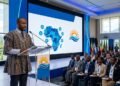
President Tinubu has undertaken more than 36 foreign trips since assuming office, travelling across Africa, Europe, Asia, the Middle East, the Caribbean and the Americas for bilateral engagements, investment summits, multilateral meetings and diplomatic activities.
The trips, which reportedly cost about N37.6 billion in travel-related expenses, have been a prominent feature of the administration’s economic diplomacy, with investment mobilisation frequently featuring in meetings with multinational corporations, sovereign investors and foreign governments.
ALSO : N2.15trn Dangote IPO puts refining giant within reach of retail investors
Among the major commitments announced are ExxonMobil’s $10 billion plan to expand deepwater oil production; APPL’s €9.2 billion Hydrogen Polis project in Akwa Ibom State; and Indorama’s $8 billion proposed expansion of petrochemical and fertiliser facilities in Rivers State.
Other headline pledges include Jindal Steel’s $3 billion investment in iron ore processing and steel production, Shell’s $3 billion oil and gas investment commitment, and Arise Integrated Industrial Platforms’ $3.5 billion commitment to infrastructure and industrial development.
But the scale of these announcements contrasts with official capital-importation data.
Nigeria attracted about $47.6 billion in foreign capital between May 2023 and the first quarter of 2026, according to National Bureau of Statistics (NBS) data, putting the period among the country’s stronger three-year stretches for capital inflows since 2019.
However, the headline capital-importation figure masks a crucial distinction.
Most of the inflows were not FDI. Foreign direct investment, which represents longer-term capital committed to businesses and productive assets, accounted for only a small portion of the total.
Quarterly FDI inflows stood at $86.03 million in Q2 2023, $59.77 million in Q3 and $183.97 million in Q4, before reaching $119.18 million in Q1 2024.
The pace remained modest through much of 2024, with FDI of $29.83 million in Q2, $103.82 million in Q3 and $421.88 million in Q4; the highest quarterly inflow recorded within the period.
FDI subsequently stood at $126.29 million in Q1 2025, $142.67 million in Q2, $296.25 million in Q3, $357.8 million in Q4 and $135.08 million in Q1 2026.
Aggregated, the figures amount to about $2.06 billion, a fraction of the more than $50 billion in investment commitments announced by the administration.
The disparity does not necessarily mean that the commitments have failed. Large-scale investments typically move through several stages before capital is deployed, including feasibility studies, financing arrangements, regulatory approvals, final investment decisions, construction and commissioning.
The federal government has therefore maintained that MOUs should not be interpreted as immediate cash inflows.
Investors still weighing Nigeria’s risk
Muda Yusuf, economist and founder/chief executive officer of the Centre for the Promotion of Private Enterprise (CPPE), said the long-term nature of FDI means investors typically require considerably more time to assess a market before committing substantial capital.
He said foreign investors evaluate country risks, competing investment destinations and the long-term economic outlook before making decisions because, unlike portfolio investments, FDI is relatively illiquid and difficult to reverse quickly.
He pointed to previous corporate divestments and other economic conditions as factors that could influence investment decisions, with some investors choosing to wait before committing funds.