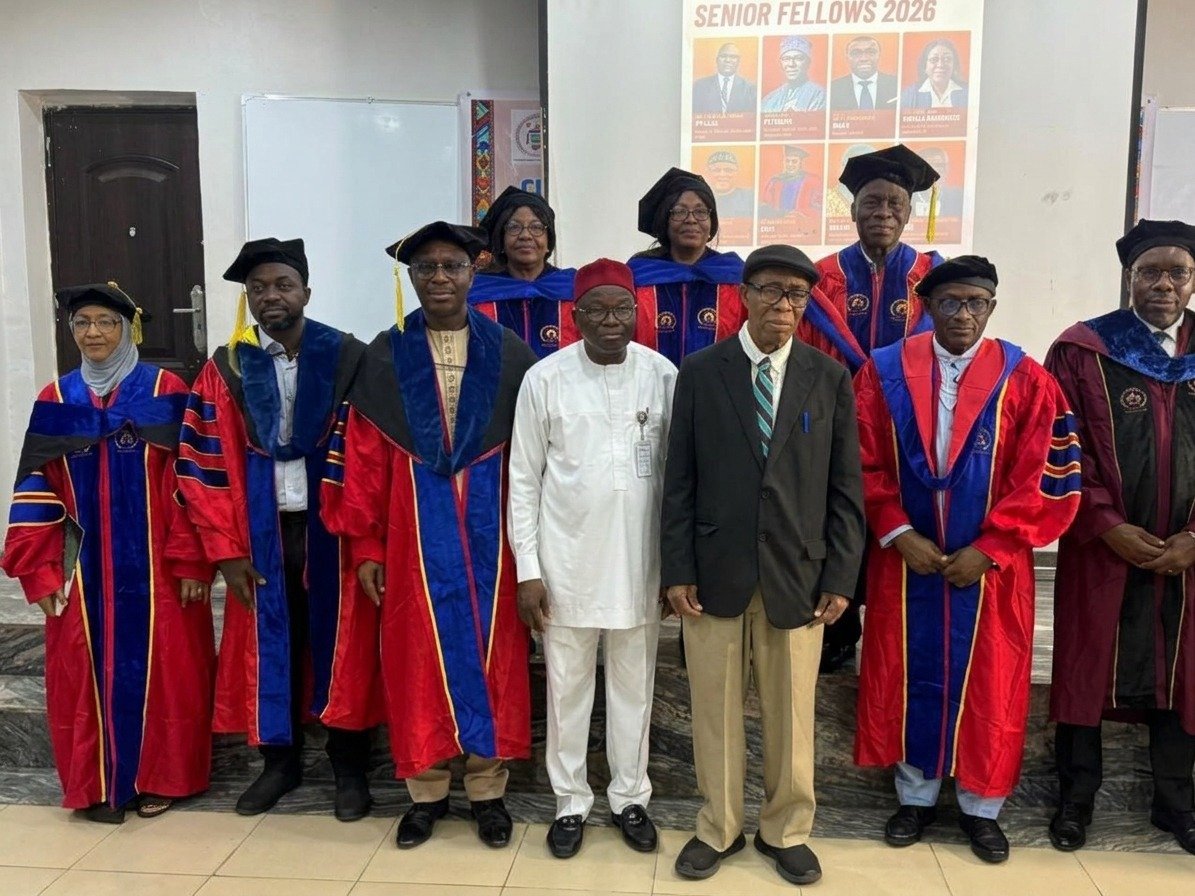
The African University of Science and Technology (AUST), Abuja, has launched a pan-African leadership research initiative aimed at addressing persistent governance gaps, strengthening institutional continuity and improving accountability in public and private-sector leadership across the continent.
The initiative, known as the African Leadership Legacy Project (AFRILEAP), is being implemented through the university’s Centre for Pan-African and Peace Studies (CePAPS). It will develop evidence-based tools for measuring leadership impact beyond individual tenures, with the ultimate goal of helping African institutions sustain reforms, policies and development programmes despite changes in leadership.
Dakuku Peterside, a leadership and public policy expert and former director-general of the Nigerian Maritime Administration and Safety Agency (NIMASA), has been appointed director of the project, while Bosco Chukwudumebi Okolo-Obi, centre leader of CePAPS, will serve as programme manager.
AFRILEAP’s launch comes amid continuing concerns over policy reversals, weak institutional memory and the discontinuity of development programmes following changes in political leadership and executive management across many African countries.
Speaking on the initiative, Peterside said its central objective was to encourage leaders to consider the long-term consequences of their decisions and the institutions they leave behind.
“AFRILEAP asks every leader one fundamental question: What do you want to be remembered for long after you are gone?” he said.
The project will seek to move leadership assessment beyond immediate accomplishments and short-term performance indicators to examine whether leaders establish durable systems, develop human capacity and create measurable socioeconomic value that persists after their departure.
Commissioning the initiative, Azikiwe Peter Onwualu, president of AUST, pledged the university’s full support, assuring that it would provide an enabling environment for senior fellows and researchers to deliver on the project’s objectives.
Onwualu said AFRILEAP aligned with the university’s founding ideals and its commitment to advancing Africa’s development through research, innovation and human capacity development. He also commended the initiative’s conceptualisation and its potential contribution to addressing the continent’s leadership challenges.
Chudi Uwazurike, director of CePAPS, similarly pledged the centre’s commitment to ensuring the project’s successful implementation, adoption and impact across Africa.
A central component of AFRILEAP is the development of the African Leadership Legacy Index, a proposed assessment framework intended to provide a structured basis for evaluating leadership effectiveness and long-term institutional impact.
Over the next 18 months, the project will prioritise the development of mathematical, psychometric and qualitative indicators to measure leadership legacy across five dimensions: values transmission, institutionalisation of systems, human capacity development, socioeconomic impact, and public and organisational memory.
The framework will examine the legacies of historical figures, contemporary public-sector leaders and private-sector executives, generating comparative insights into leadership effectiveness, organisational resilience and the conditions required for lasting institutional performance.
Nigeria to lead research, five countries planned
AFRILEAP will begin its fieldwork in Nigeria, with comparative studies planned in Ghana, Kenya, South Africa, Egypt and Rwanda.
The cross-country approach is intended to help researchers examine different leadership experiences, governance systems and institutional arrangements, identifying practices that may support more accountable and sustainable leadership across the continent.
Its multidisciplinary research team comprises scholars and practitioners based in Africa and the United Kingdom, bringing together expertise in governance, technology, sustainability, peacebuilding, communications, environmental systems and leadership development.
Among the team members are Aminu Bello Usman, a computer science and cybersecurity specialist; Mohammed Dahiru Aminu, an expert in sustainability, governance and public policy; Richard Ali, a specialist in peacebuilding and institutional resilience; Jeff Ukachukwu, a communications and management strategist; and Sam Danso, an artificial intelligence researcher and strategic research leader.
Other members include Olalekan Adekola, an expert in geography, environmental systems and climate adaptation; David Molapo, a South African leadership strategist and human capital development specialist; and ZohAkiy Mbi-njifor Mbapeh, an expert in governance, executive leadership and organisational development.
Beyond the proposed index, AFRILEAP plans to produce an African Leadership Legacy Framework, an open-access knowledge hub and policy briefs aimed at informing governance reforms and institutional decision-making.
The initiative will also introduce Executive Legacy Masterclasses and a 12-month Future Legacy Leaders Fellowship to equip emerging leaders with the knowledge and skills required to build resilient institutions and sustain development outcomes.
These programmes are intended to translate research findings into practical tools for policymakers, corporate executives, public institutions and other organisations seeking to improve leadership succession, strengthen institutional learning and develop future generations of leaders.
The open-access knowledge hub is expected to provide a platform for disseminating research findings and supporting wider engagement with the project’s evidence and policy recommendations.
AFRILEAP is also inviting development institutions, philanthropic foundations, corporate organisations and strategic partners to support its research, policy engagement and leadership development programmes.