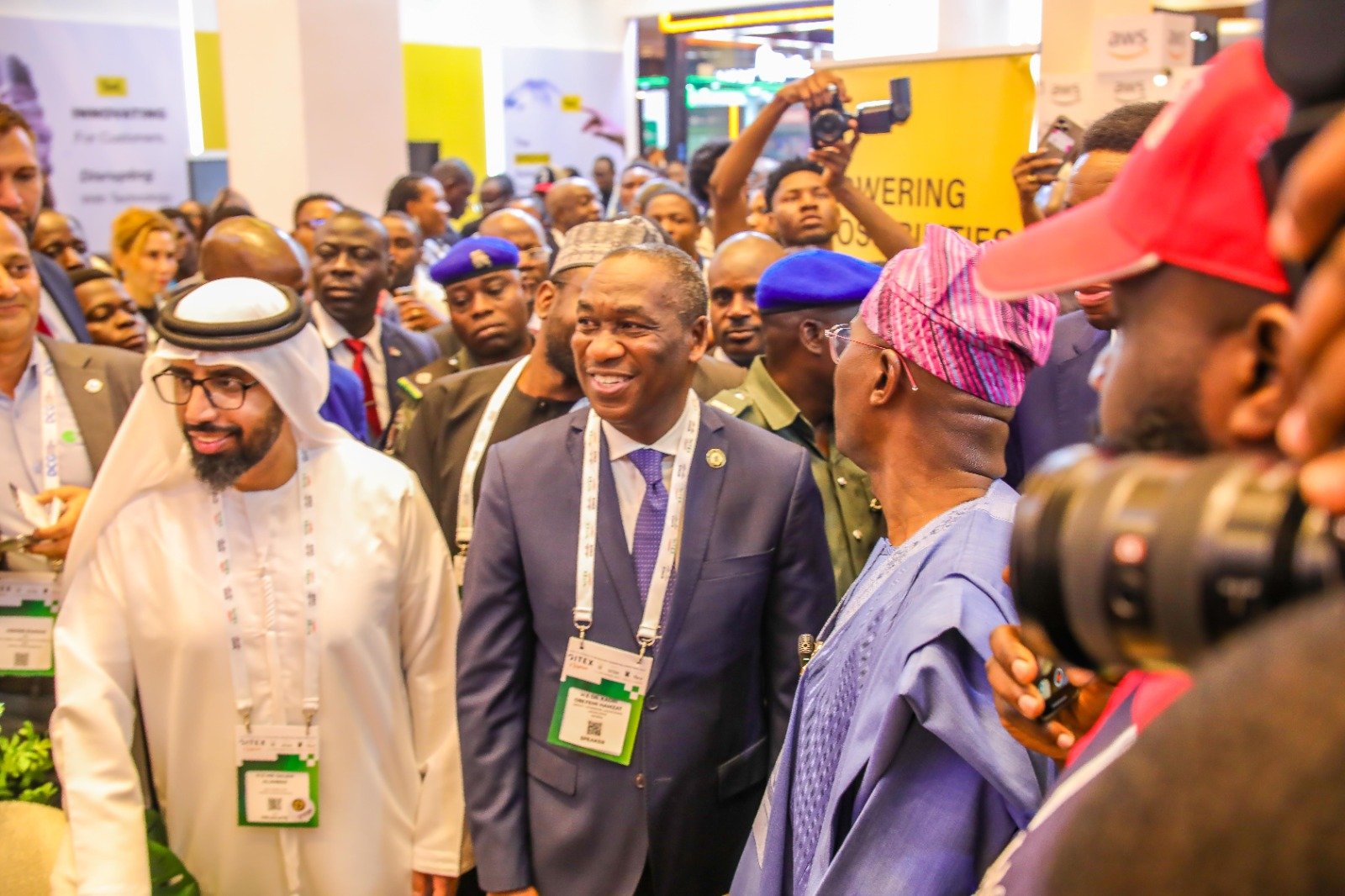
Africa’s financial sector is set for deeper discussions around digital payments, financial inclusion, capital mobilisation and regulatory reform as FDX by GITEX brings regulators, investors, financial institutions and technology startups together in Lagos.
The financial technology platform, which forms part of GITEX NIGERIA, will hold on September 3, 2026,in Lagos, with a focus on how technology, capital and policy can reshape Africa’s financial ecosystem.
The event comes as Africa’s digital payments economy is projected to reach $1.5 trillion by 2030, reflecting the growing role of digital platforms and financial technologies in expanding access to financial services and enabling cross-border transactions.
FDX by GITEX is designed to connect policymakers and regulators with institutional investors, enterprises and high-growth startups, with discussions expected to centre on digital assets, capital markets, cross-border finance, financial infrastructure and the technologies required to widen participation in the formal financial system.
The second edition of GITEX NIGERIA will take place across Abuja and Lagos from August 31 to September 3, 2026, supported by the Federal Ministry of Communications, Innovation and Digital Economy in collaboration with the National Information Technology Development Agency (NITDA). The event is also endorsed by the Lagos State Government and organised by KAOUN International, the global organiser of GITEX events.
Speaking on the significance of the event, Obafemi Hamzat, deputy Governor of Lagos State, said the state was focused on developing a technology-driven financial ecosystem capable of expanding access while supporting economic growth.
He said aligning financial policies with digital infrastructure could help deepen financial inclusion, facilitate cross-border trade and support Nigeria’s ambition of building a $1 trillion economy.
The summit will also examine the role of institutional capital in financing Africa’s economic transformation.
Ahead of his keynote address, Armstrong Ume Takang,managing director and chief executive officer of the Ministry of Finance Incorporated (MOFI), said achieving Nigeria’s $1 trillion economic ambition would require more effective mobilisation of institutional capital.
According to him, MOFI is working towards professionalising the management of government-owned assets while pursuing a long-term goal of building a ₦100 trillion portfolio capable of attracting investment into strategic sectors and creating sustainable national value.
He said FDX by GITEX would provide an avenue for policymakers, investors and innovators to develop the partnerships needed to accelerate Nigeria’s economic transformation and strengthen its position as a financial and investment hub.
The summit will explore several emerging areas, including intelligent payments, digital assets, decentralised finance, institutional investment and next-generation financial infrastructure.
Discussions will also focus on trust, compliance, digital identity, borderless payments, financial inclusion and policy coordination, particularly as financial institutions across emerging markets transition from legacy systems to digitally enabled platforms.
One of the key sessions, titled “Access to Real World Assets and the Rewiring of Capital Markets in Africa,” will examine ways to connect the continent’s underlying assets and expanding pools of capital with investable markets.
Another session, “Trust by Design: Navigating the Security Paradoxes Holding Back Digital Assets and CBDCs,” will consider how financial institutions can balance innovation with security, regulatory compliance and consumer confidence as digital assets and central bank digital currencies gain greater attention.
International speakers scheduled to participate include Jean Kambuni, deputy director, capital markets, Nairobi International Financial Centre, Kenya; Erwin Anet N’guetta, chief digital officer for operational excellence, digital transformation and innovation at National Bank of Investment, Côte d’Ivoire; and Henry Amadiegwu, chief information officer at Zenith Bank UK.
Amadiegwu said the adoption of artificial intelligence, automation and modern digital infrastructure would be critical to developing financial systems that are secure, resilient and compliant.
He said the significance of FDX by GITEX lies in its ability to bring global stakeholders together to support Africa’s transition from legacy financial platforms to modern systems while ensuring that technological innovation translates into greater access and sustainable economic value.
The event will also feature global technology companies working to expand digital payment acceptance and cross-border commerce.
Mastercard, which has operated in Africa for more than five decades, is expected to showcase solutions aimed at reducing friction in cross-border transactions and extending digital payment access to underserved communities.
Folasade Femi-Lawal, country manager, West Africa at Mastercard, said Nigeria’s technology ecosystem made GITEX NIGERIA an important platform for public and private sector stakeholders to collaborate on the future of digital transformation.
She identified trusted technology, secure digital infrastructure and strategic partnerships as critical to achieving more inclusive growth across businesses and communities.
Other exhibitors in the banking and digital finance segment include BMONI, Edge Penny, GOSAR, Monica Technologies, Moove Payment, Raenest Technology Services and Softgem.
The organisers said the broader objective of FDX by GITEX is to move conversations around financial innovation beyond technology adoption towards practical outcomes in investment, market participation, financial inclusion and economic growth across Africa.