

Onome Amuge
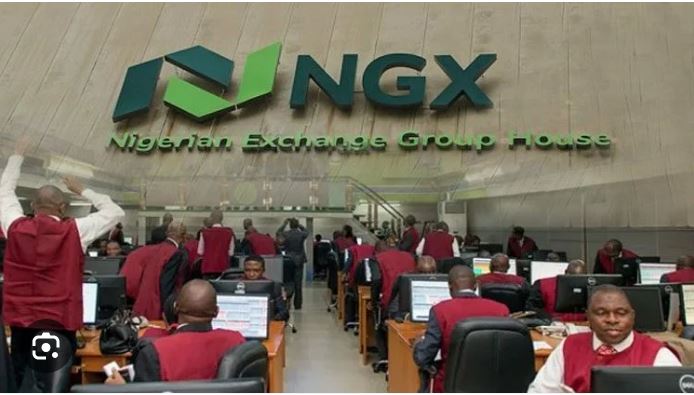
Nigeria’s equities market closed the week on a downbeat note as losses in John Holt Plc and Lasaco Assurance dragged the benchmark index lower, with investors shedding N165 billion in value on Friday amid weakening activity and broad-based selling pressure.
The Nigerian Exchange’s All-Share Index (ASI) slipped 0.19 per cent to 140,248.90 points, reducing year-to-date gains to 36.30 per cent. Market capitalisation declined to N88.77 trillion from N88.94 trillion in the previous session. Turnover was lower, with total volume tumbling 50.8 per cent to 435.14 million units and value sliding 63.3 per cent to N10.39 billion across 25,609 deals.
Market breadth remained negative, with 31 decliners outweighing 18 gainers. While consumer goods stocks eked out gains, losses in banking, insurance, oil and gas and industrial counters underscored fragile sentiment ahead of month-end positioning.
John Holt, one of Nigeria’s oldest conglomerates with operations spanning engineering, leasing and power solutions, was the heaviest casualty. Its share price slumped 10 per cent to close at N6.30 from N7.00. The sharp single-session drop wiped out several days of prior gains and marked its steepest fall since July.
Analysts said the slump underscored investor unease over thin liquidity in the stock and broader worries about the outlook for Nigeria’s manufacturing and distribution segments, where companies continue to face headwinds from high borrowing costs, currency volatility and weak consumer demand.
The group, founded in the late 19th century, has in recent years sought to reposition itself with a focus on engineering solutions and power systems. But analysts argue that foreign exchange instability has weighed heavily on import-dependent firms like John Holt, leaving earnings recovery vulnerable.
Insurance stocks were also weak, with Lasaco Assurance the second heaviest loser. The counter shed 9.64 per cent to close at N3.00 from N3.32, extending a volatile week for the mid-tier insurer.
The company, which provides life and general insurance, has been in the spotlight as the sector grapples with low penetration, pricing pressure, and a regulatory push to strengthen capital bases. Despite reporting growth in gross written premiums earlier this year, investors appear sceptical about near-term profitability amid rising claims costs and inflation-driven operational expenses.
The insurance sector index closed down 1.54 per cent on the day, the steepest among sectoral peers, with Guinea Insurance also sliding 7.79 per cent to N1.42.
The day’s sectoral performance reflected a cautious tone across the board. Banking stocks fell 0.88 per cent, weighed down by profit-taking in tier-one lenders such as Zenith Bank and Access Holdings, despite both recording strong trading volumes. Oil and gas equities shed 0.51 per cent, with investors trimming positions in downstream players. Industrial stocks slipped marginally by 0.01 per cent.
Consumer goods provided the only bright spot, gaining 0.14 per cent on selective demand for food producers. The commodities sector was flat.
Among the session’s top gainers were Learn Africa, which rose 9.86 per cent to N7.80; Union Dicon Salt, up 8.04 per cent at N12.10; and Prestige Assurance, rising 6.75 per cent to N1.74.
On the activity chart, VFD Group led in volume with 49 million shares traded in 227 deals, followed by Secure Electronic Technology with 31 million shares. Access Holdings exchanged 26 million shares across 1,476 deals.
By value, Guaranty Trust Holding Company topped the table with N1.9 billion worth of trades, trailed by Zenith Bank at N1.1 billion and Lafarge Africa at N932 million.
Market operators said the decline in turnover reflected both investor caution ahead of next week’s trading and a lull in fresh catalysts following a spate of earnings releases earlier in the month.
The NGX has delivered one of the strongest equity performances globally this year, buoyed by domestic liquidity, local institutional participation and bargain hunting by retail investors. But recent sessions have revealed mounting fragility as investors weigh persistent inflation, a volatile naira, and policy uncertainty ahead of the Central Bank of Nigeria’s next rate decision.

